Zimbabwe concluded its participation in the 56th World Economic Forum (WEF), held in Davos from 19 to 23 January 2026, with a focus on economic diplomacy and multilateral engagement. According to Foreign Minister Professor Amon Murwira, the country’s presence aimed to extract actionable insights from global policy debates, strengthen trade partnerships and reinforce Zimbabwe’s re-engagement agenda within the international community.
The annual Forum, attended by more than 3,000 participants from over 130 countries, took place amid complex global headwinds. Issues discussed included geopolitical volatility, trade fragmentation, energy transitions and the role of artificial intelligence in shaping economies. Against this backdrop, Zimbabwe’s delegation engaged in a series of bilateral and multilateral discussions with government, business and institutional representatives.
Professor Murwira, speaking after the event, stated that Zimbabwe’s engagements at Davos were shaped by the need to understand emerging global economic patterns and to navigate shifts in trade and investment frameworks. He noted that while the Forum is often perceived as elite-driven, it provides a space where key decisions influencing global flows of capital, technology and regulation are debated.



Among the concrete engagements reported were meetings with Gavi, the Global Alliance on Vaccines, focused on enhancing cooperation in health systems development and the possibility of supporting regional vaccine manufacturing. Officials also held discussions with Philip Morris International centred on Zimbabwe’s continued role in the global tobacco value chain. The country is projected to produce around 500 million kilograms of tobacco in 2026, and there are stated interests in expanding beyond raw exports towards increased domestic processing and beneficiation.

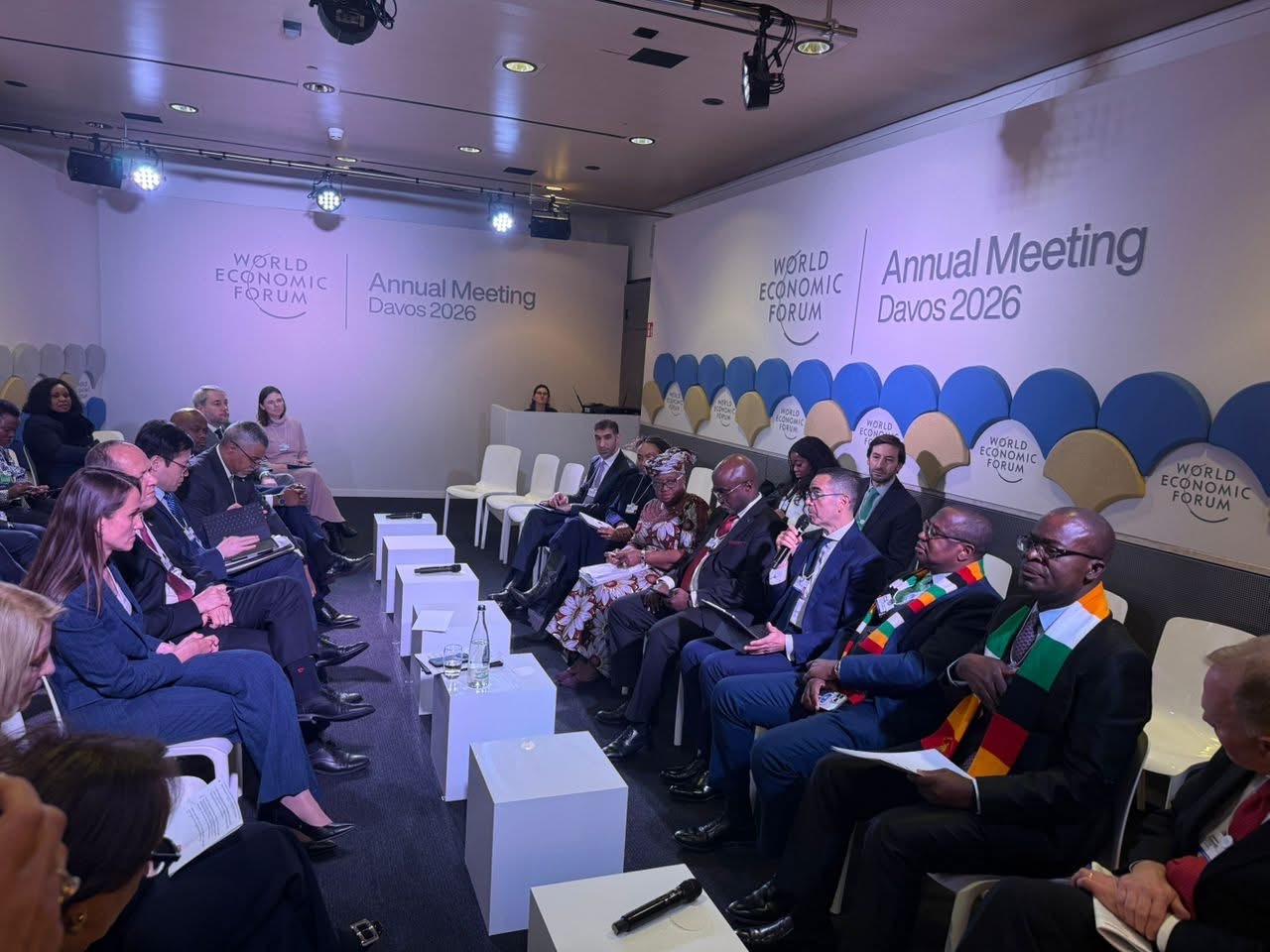
Energy dialogue featured prominently in the country’s engagements, with exchanges between Zimbabwe and Indian stakeholders on expanding cooperation in energy infrastructure. Zimbabwe also joined broader discussions on nuclear energy and energy diversification, marking the first time it formally engaged in this stream of WEF programming. Energy remains a priority area for Zimbabwe’s industrial and agricultural sectors, particularly as it seeks more reliable and lower-emission power sources.
The Foreign Minister indicated that Zimbabwe’s external engagement is increasingly structured around trade diplomacy, reflecting the repositioning of the Ministry of Foreign Affairs and International Trade in recent years. He reiterated Zimbabwe’s call for reforms within the global trading system, particularly through the World Trade Organization, to support more equitable participation by developing economies.
Beyond national interests, Zimbabwe’s delegation aligned its participation with broader continental goals. The African Continental Free Trade Area (AfCFTA), viewed as a key mechanism for advancing intra-African trade and regional industrialisation, featured prominently in discussions. Officials reaffirmed Zimbabwe’s commitment to integrating AfCFTA into its own economic planning, though acknowledged the challenges of implementation across member states.
While there was no immediate announcement of investment deals resulting from Davos, government representatives stressed that Zimbabwe’s presence served strategic long-term objectives. Professor Murwira described the forum as an environment for information gathering, positioning and relationship-building, which he argued are essential to unlocking future economic opportunities.

Commentary following the event was cautious, with analysts noting that Zimbabwe’s engagement in such international spaces must be matched by clear domestic policy implementation, investment governance, and institutional reform if intended outcomes are to materialise. The country continues to face structural constraints including foreign currency instability, power shortages and regulatory uncertainty, which impact its attractiveness to external investors.
Davos 2026 unfolded under the theme “A Spirit of Dialogue”, with sessions exploring global risk management, trade realignment, multilateralism and sustainable development. For Zimbabwe, participation signalled an intention to remain visible in international policy forums while articulating its interests within a shifting geopolitical and economic context.