

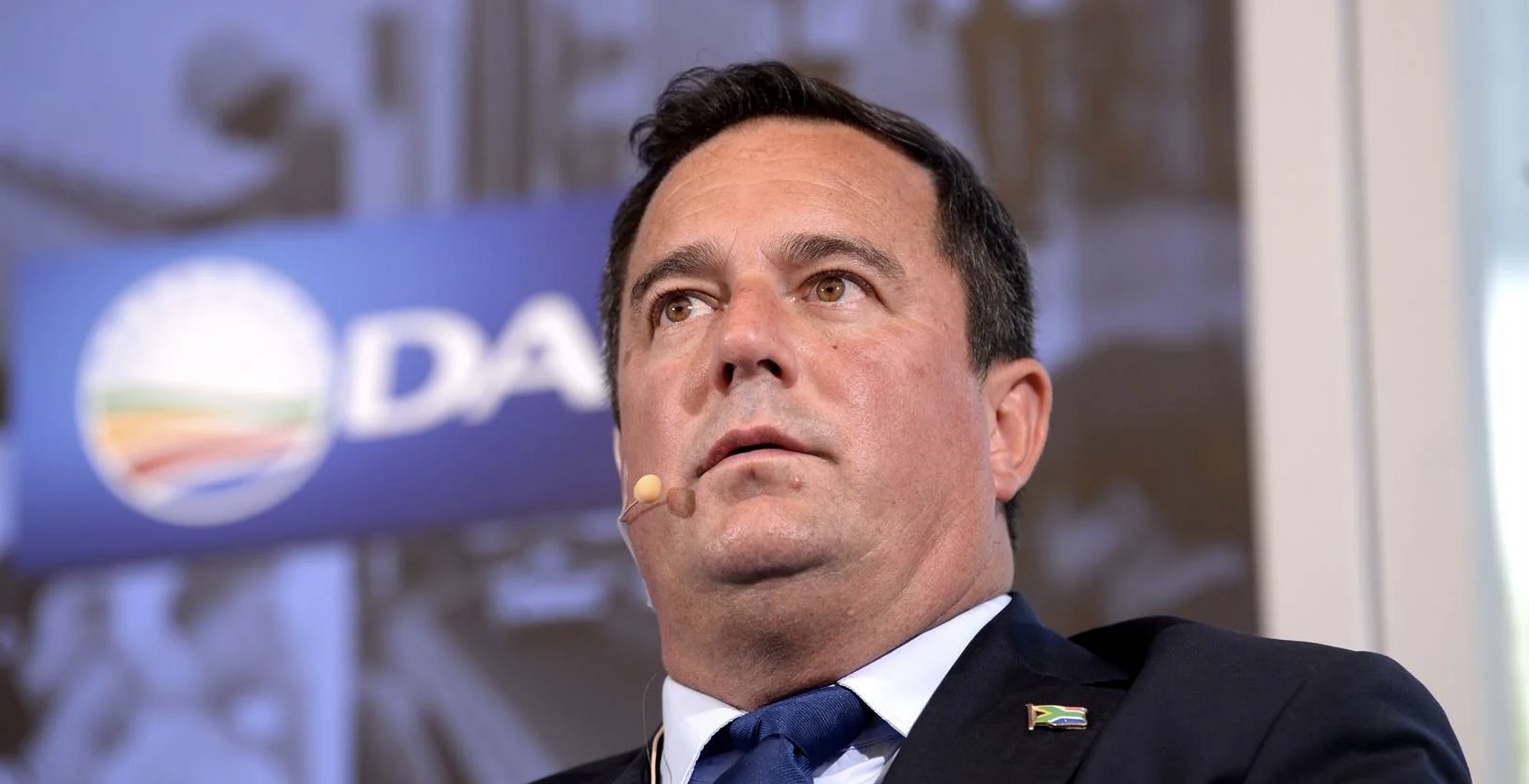
In a firm dismissal of a narrative that has gained traction in some international political circles, John Steenhuisen, leader of South Africa’s Democratic Alliance, has categorically rejected the notion of a so-called “white genocide” occurring in the country. His comments come in the wake of renewed claims made by United States President Donald Trump at the World Economic Forum in Davos, where the American head of state alleged the systemic targeting and victimisation of white South Africans, particularly Afrikaners.
Addressing journalists in Johannesburg at the Press Gallery Association on Thursday, Steenhuisen asserted that South Africa’s crime problem is both complex and wide-ranging and should not be understood through a singular racialised lens. He called for a departure from reductionist interpretations that ignore the experiences of the country’s broader population.
“If one looks at the cold, hard statistics, it becomes very clear where the crime problem lies and who is bearing the burden,” said Steenhuisen. “This is not a white genocide. We have white people who are murdered, yes, but we also have coloured and black South Africans, as well as Indian South Africans and individuals of South Asian descent, who are being affected.”



This insistence on a comprehensive reading of the country’s crime data reflects longstanding critiques of narratives that overemphasise racial targeting while underplaying the socio-economic drivers of violence. According to official statistics released by the South African Police Service, the country faces high levels of violent crime, including murder, armed robbery and gender-based violence, which disproportionately impact poorer and historically marginalised communities.
Steenhuisen maintained that the use of the term “white genocide” misrepresents the reality on the ground and propagates a divisive discourse that lacks empirical support. “Despite all the evidence to the contrary, including hard statistics and numerous efforts to demonstrate that this is not the case in South Africa, that is his [Trump’s] perception of the country,” Steenhuisen said. “He is not going to believe it because he has to push that agenda.”
His comments reflect broader concerns about the politicisation of crime data and the dangers of external narratives being imposed onto African contexts without adequate understanding. Analysts have pointed out that framing South African violence through a racialised lens can obscure the broader realities of inequality, structural violence and post-apartheid socio-economic challenges that affect all communities.

South Africa’s crime rate, while a source of national concern, has been scrutinised internationally in ways that often centre white victimhood. This tendency has led many scholars and civil society organisations to caution against what they describe as narrative capture, where select forms of suffering are elevated while others are silenced. The National Development Plan, along with academic reviews such as those from the Institute for Security Studies, emphasises the need for community-based solutions, improved policing and an equitable justice system rather than divisive rhetoric.
In his address, Steenhuisen further contextualised the country’s social realities, stating that South Africa remains a place of profound opportunity and resilience. “South Africa is a wonderful country. There are incredible things happening here, alongside the challenges, just as there are in the United States,” he said.
His rejection of the “white genocide” narrative aligns with a growing chorus of voices across the continent that advocate for grounded, context-sensitive analyses rather than externally imposed frameworks. Such voices underscore the importance of moving beyond racial binaries and toward a human-centred discourse that prioritises justice, dignity and structural transformation for all communities.
As debates over security, race and political perception continue to evolve, the remarks from South Africa’s official opposition leader may serve as a pivotal intervention in reclaiming the integrity of national discourse from global mischaracterisation. Rather than allowing fear-based narratives to dictate public perception, the emphasis remains on inclusive truth-telling that holds space for all who are affected by violence in its many forms.


