The United Kingdom has signed a landmark agreement to transfer sovereignty of the Chagos Archipelago to the Republic of Mauritius, bringing a pivotal geopolitical dispute closer to resolution while safeguarding the operational continuity of the Diego Garcia military installation.
Announced on 22 May 2025, British Prime Minister Keir Starmer hailed the deal as “absolutely vital” to the UK’s defence and intelligence framework. Speaking from a military headquarters in London, he confirmed that the United Kingdom will retain joint operational control with the United States of the strategic airbase on Diego Garcia under a 99-year lease, citing the base’s continued relevance to national and allied security interests.
The agreement follows years of international pressure on Britain to decolonise the territory. The Chagos Islands, which were separated from Mauritius in 1965 to form the British Indian Ocean Territory, have been at the centre of legal and diplomatic contention. Mauritius has long argued that the separation was unlawful and a violation of United Nations resolutions on decolonisation.




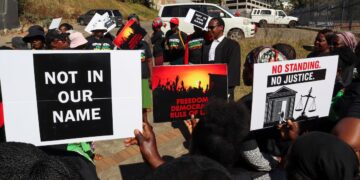
The deal had briefly been delayed by a UK High Court injunction issued earlier on the same day. Two British citizens of Chagossian descent, Bernadette Dugasse and Bertrice Pompe, had filed a legal challenge contending that the agreement could undermine the rights of the Chagossian community—many of whom were forcibly removed from their homeland in the 1960s and 1970s to facilitate the establishment of the Diego Garcia base. Their claim raised concerns that the sovereignty shift could further complicate prospects for resettlement and restitution.
Justice Martin Chamberlain later lifted the injunction following an expedited hearing, thereby permitting the UK government to proceed with the formal signing of the agreement. However, the plaintiffs expressed profound disappointment. Speaking outside the High Court, Ms Pompe described the development as “a very sad day”, stating, “We do not want to hand over our rights to Mauritius. We are not Mauritians. The rights we are asking for now, we have been fighting for for 60 years.”
Despite these domestic objections, the government of Mauritius has welcomed the accord. Prime Minister Navin Ramgoolam, who returned to office in late 2024, described the agreement as marking the “total process of decolonisation” and affirmed Mauritian sovereignty over the Chagos Islands, including Diego Garcia. His televised remarks in Creole were symbolically resonant for many Mauritians, who regard the Chagos issue as a lingering colonial injustice.
The United States, a key stakeholder in the regional security architecture of the Indian Ocean, has endorsed the agreement. US Secretary of State Marco Rubio praised the accord as “historic” and commended both governments for their “leadership, vision, and commitment to ensure that Diego Garcia remains fully operational.”
Diego Garcia, the largest island in the Chagos Archipelago, serves as a vital hub for US and UK military operations, including logistics, surveillance, and rapid response capabilities across the Indo-Pacific and Middle East. The current agreement ensures continuity of these functions under a renewed lease arrangement, thereby preserving the base’s role in regional stability and international maritime security.
While the deal concludes a major chapter in the geopolitical narrative of British colonial legacy, it leaves unresolved the fate of the displaced Chagossian population. The question of their right to return and the nature of reparations, if any, remains a matter of ongoing advocacy and potential legal scrutiny.
The UK had previously resisted calls from the International Court of Justice and United Nations General Assembly to relinquish the territory, arguing that its continued possession served global security interests. However, the evolving geopolitical landscape, coupled with legal pressures and diplomatic negotiations, eventually led to the formalisation of this agreement.

The finalisation of this arrangement demonstrates a significant recalibration of post-colonial governance and military strategy in the Indian Ocean. Yet, as the UK hands over formal sovereignty, the interplay between historical responsibility, strategic imperatives, and human rights will likely continue to shape the discourse on the Chagos Islands for decades to come.