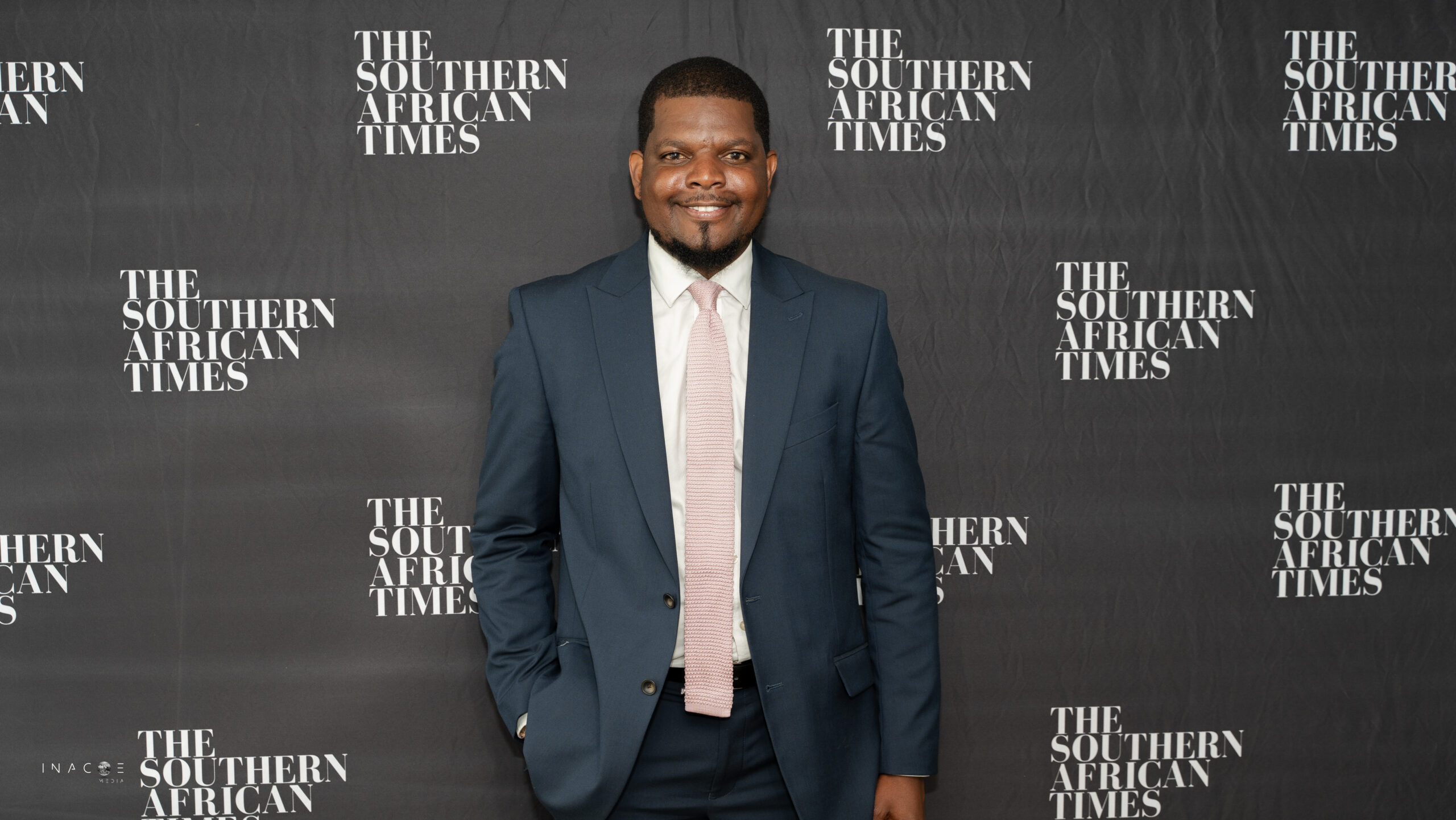
This Africa Day, as flags rise across the continent and its diasporas to honour freedom, unity, and cultural heritage, the need for one liberty remains glaringly unresolved: the liberty of narrative. Africa continues to be interpreted through foreign gazes, filtered through outdated tropes and reductive stereotypes that eclipse the continent’s complexity and potential. The time has come for us, as Africans, to take back control of our stories — not only for dignity’s sake but to unleash the full force of our agency, innovation, and ambition.
As the CEO of The Southern African Times, I am acutely aware of the imperative of editorial sovereignty. Our mandate is not merely to report Africa to the world, but to offer Africa to itself — unfiltered, unflattened, and unapologetically self-defined. The stakes are high. As long as others hold the pen, Africa will remain a caricature rather than a character, reduced to a continent of crises rather than a mosaic of civilisation, creativity and capability.
The mischaracterisation of Africa is neither new nor accidental. Edward Said’s theory of “Orientalism” (1978) — a study on how Western discourse constructed the ‘East’ as inferior, exotic, and irrational — extends quite comfortably to Africa. The academic field of “Afropessimism,” a term used since the 1980s, further encapsulates the bleak narrative lens through which Africa was viewed post-independence: a site of perpetual war, disease, and dysfunction (Griffiths & O’Callaghan, 2002; Mbembe, 2001).




Even today, mainstream global media coverage remains disproportionately focused on the continent’s calamities. A 2019 study by the University of Southern California’s Norman Lear Center found that 62% of Africa-related news in US outlets involved terrorism, disease, or poverty. Less than 5% of stories focused on African successes or innovation. This skewed reportage fosters a public perception of Africa as stagnant or regressive, a perception that obstructs investment, diminishes morale, and distorts policy discourse.
It is against this backdrop that narrative reclamation becomes not a luxury, but a necessity.
Contrary to popular myth, Africa is not a single undifferentiated entity. It is a continent of 54 sovereign states, with over 2,000 languages and some of the most rapidly developing markets in the world. Rwanda, for instance, ranks second globally in gender parity in politics, with women occupying more than 60% of its parliament (Inter-Parliamentary Union, 2023). Ghana is recognised as a stable democracy and was among the first countries to ratify the African Continental Free Trade Area (AfCFTA). Botswana has enjoyed decades of political stability and economic prudence, with its diamond wealth managed transparently through the Debswana partnership.


These are not anomalies. Kenya’s mobile banking revolution via M-Pesa is now studied in Harvard Business School case studies. Nigeria and South Africa boast tech start-up ecosystems that rival those in Europe, while renewable energy projects in Morocco, Egypt and Namibia are drawing international accolades.
Yet such achievements struggle for airtime in international narratives dominated by conflict and corruption. The problem is not merely perception, but power — the power to frame, and therefore to define.
Interestingly, Africa’s youth are not waiting for permission to set the record straight. Social media has become a digital battleground where young Africans challenge caricatures with humour, pride, and precision. Nigerian TikToker Charity Ekezie has gone viral for her witty takedowns of absurd stereotypes — from queries about Africans riding elephants to whether they have internet access. Her satire is emblematic of a growing wave of digital resistance: memes of lions driving taxis, zebras as Uber chauffeurs, and cheetahs overtaking sedans on the N1 tell the world, in no uncertain terms, that Africa is watching — and laughing back.
This form of ‘narrative clapping back’ isn’t just comedy; it’s communication warfare fought with emojis instead of ammunition. And it works. According to research by the African Centre for Strategic Studies (2022), digital storytelling is increasingly shaping perceptions among the African diaspora and global youth.
At The Southern African Times, we believe the antidote to narrative theft is not simply rebuttal, but production — telling our stories before others can misappropriate them. Our goal is to become Africa’s primary conduit of truth — a platform where rigour meets relevance, and where the kaleidoscope of African reality is captured, not erased.

We are growing this platform with a singular mission: to ensure that no African child ever has to explain that their country has skyscrapers, stable Wi-Fi, or sweets in the shops. More than that, we are committed to amplifying voices from underserved regions and minority groups — women entrepreneurs, rural innovators, cultural custodians, and the countless changemakers whose lives never make the headlines, but who are the headlines.
The task of narrative decolonisation is not trivial, and it is far from complete. It requires policy frameworks that support local media, academic curricula that re-centre African thought, and funding models that don’t tie editorial content to donor preferences. Above all, it requires belief — belief that our stories are worth telling, and that they are best told by us.
We are seeing progress. UNESCO’s 2021 “Re|Shaping Policies for Creativity” report calls for equitable visibility for African content on global platforms. Initiatives like Africa No Filter and the African Narrative Project are also mobilising resources and research to correct long-standing distortions.
Still, the burden remains on us. Africa will not be fully free until it is free to tell its own truths — complex, contradictory, colourful truths. As we mark Africa Day, let us do more than wave flags or don kente. Let us write. Let us film. Let us publish. Let us invest in the very machinery of storytelling that can build minds, markets and movements.
Because if we do not define ourselves, others will continue to do it for us — inaccurately, incompletely, and often injuriously.
And as The Southern African Times, we refuse to let that happen.

Written by Farai Ian Muvuti, the Chief Executive Officer of The Southern African Times, 2023 winner of the Young Entrepreneur of the Year award by the South African Chamber of Commerce UK, an advisor on the board of the Africa Chamber of Commerce, and a contributor to Arise News, Al Jazeera, and the BBC.