Friday, June 12, 2026
  • Login
The Southern African Times
  • Home
  • Southern Africa
  • Business
    • African Start ups
    • African Continental Free Trade Area
  • Technology
    • Lifestyle
      • Health
      • Culture
      • Food and Drink
      • Entertainment
  • Opinion
  • Sports
  • SAT Jobs
    • Events
  • About Us
    • Advertise with Us
    • Contact Us
No Result
View All Result
  • Home
  • Southern Africa
  • Business
    • African Start ups
    • African Continental Free Trade Area
  • Technology
    • Lifestyle
      • Health
      • Culture
      • Food and Drink
      • Entertainment
  • Opinion
  • Sports
  • SAT Jobs
    • Events
  • About Us
    • Advertise with Us
    • Contact Us
No Result
View All Result
The Southern African Times
No Result
View All Result
Home International Relations

China and US Consider Extending Rare Earth Truce as Global Supply Pressures Persist

by SAT Reporter
May 13, 2026
in International Relations
0
China and US Consider Extending Rare Earth Truce as Global Supply Pressures Persist

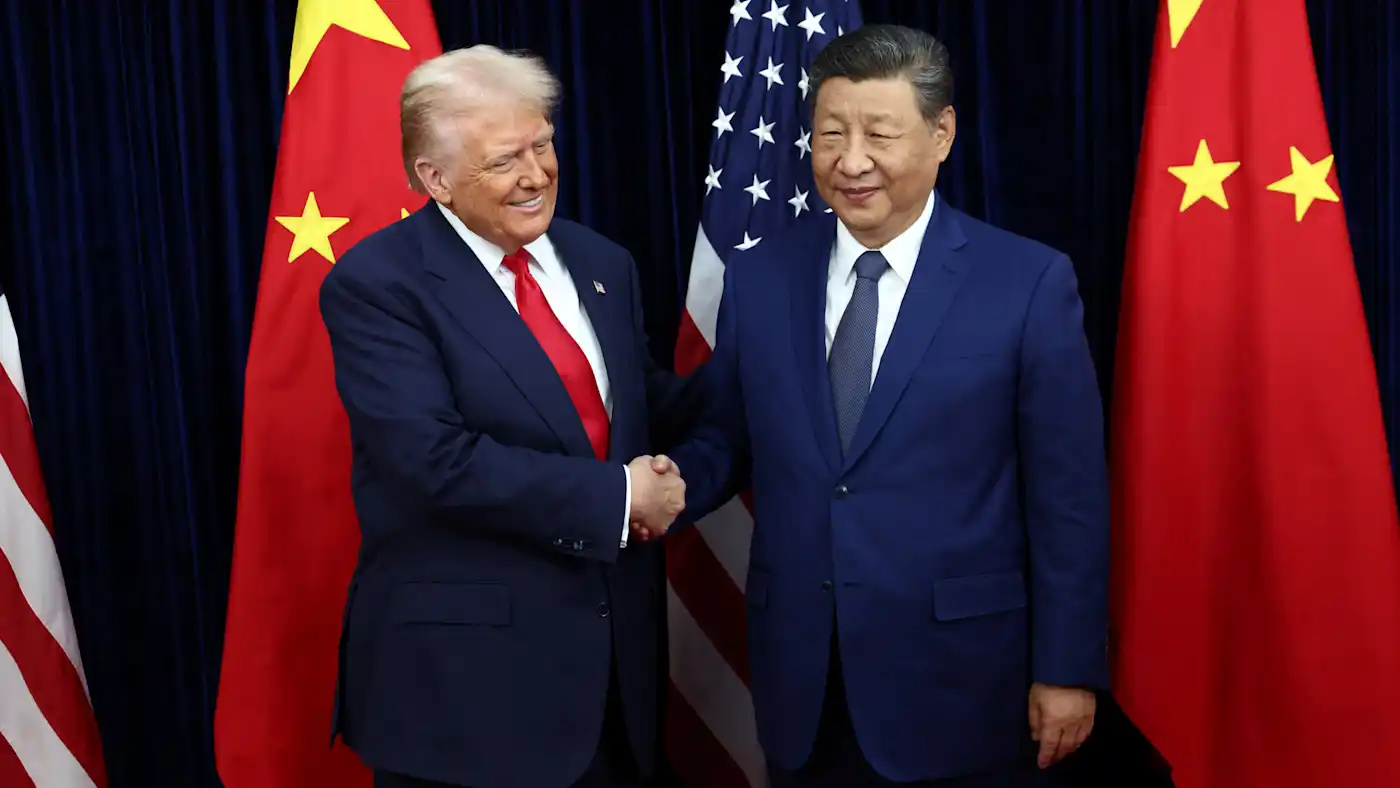
China and the United States are expected to discuss the possible extension of an existing rare earth export truce during high level talks between President Donald Trump and President Xi Jinping this week, amid continuing concerns over restricted supplies of strategically important minerals that are central to global manufacturing and advanced technologies.

The discussions come as new trade data from Chinese customs authorities indicates that exports of several specialised rare earth elements remain significantly below levels recorded before export controls were introduced by Beijing in April 2025. The restrictions were initially implemented in response to tariff measures announced by the United States during what Washington termed “Liberation Day” trade actions.

Rare earth elements such as yttrium, dysprosium and terbium are essential components in aerospace systems, defence manufacturing, semiconductor production and high performance magnets used in electric vehicles and consumer electronics. Industry analysts note that while overall Chinese rare earth exports have largely recovered over the past year, supplies of these specific heavy rare earths remain constrained.


ADVERTISEMENT

According to trade figures reviewed by Reuters, exports of the three minerals remain approximately 50 percent lower than the average volumes recorded during the twelve months preceding the controls. Market observers suggest the reduced flow reflects a selective licensing system that prioritises strategic and domestic interests.

The issue has become increasingly significant for global industries because China remains the dominant processor and supplier of rare earth materials. Data from the International Energy Agency and other international market bodies indicate that China controls much of the world’s rare earth refining capacity, giving Beijing considerable influence over supply chains linked to clean energy technologies and advanced industrial production.

The White House has previously stated that discussions held between the two governments in South Korea in October 2025 resulted in an understanding that China would ease restrictions affecting rare earth exports. While some controls were subsequently relaxed, Beijing retained measures affecting several heavy rare earth categories. Chinese authorities have consistently maintained that export approvals remain available for eligible applications.

US officials have acknowledged that shortages continue to affect industrial operations. Reuters reported earlier this year that some aerospace manufacturers temporarily slowed production because of difficulties securing yttrium supplies used in thermal barrier coatings for turbine blades. Additional reports indicate that Washington recently intervened diplomatically to facilitate export approvals for a major American firm with both civilian and defence operations.

The implications extend far beyond the United States. Major industrial economies including Japan and Germany have also experienced supply disruptions and rising costs. Market intelligence firms tracking mineral prices report substantial increases in international prices for dysprosium, terbium and yttrium since the restrictions were introduced.

Japan, which hosts one of the largest rare earth magnet manufacturing sectors outside China, has reportedly received only a small fraction of its previous dysprosium imports over the past year. Germany has also faced severe reductions in supply. Manufacturers dependent on specialised magnets have consequently encountered rising production costs across the automotive, renewable energy and electronics sectors.

The situation is increasingly relevant for African economies seeking to strengthen their position within global mineral supply chains. Several African countries possess significant reserves of rare earths and other critical minerals used in battery technologies, renewable energy infrastructure and electronics manufacturing. Governments across Southern Africa have intensified discussions around beneficiation, local processing and industrial development in response to shifting geopolitical competition over strategic resources.

Countries including South Africa, Namibia, Tanzania and Malawi have all advanced projects linked to rare earth extraction and critical mineral exploration. Policymakers within the region continue to emphasise that Africa’s role in global mineral markets should extend beyond raw material exports toward broader participation in manufacturing, technology transfer and value addition.

Recent initiatives by the G7 and other international blocs aimed at diversifying mineral supply chains away from China have also increased international interest in African resource partnerships. However, analysts caution that building alternative refining and processing systems remains a long term undertaking requiring infrastructure investment, technical expertise and stable regulatory frameworks.

The African Development Bank has repeatedly highlighted the importance of ensuring that African mineral wealth contributes to inclusive industrial growth rather than reinforcing patterns of extraction that provide limited domestic economic transformation.

Industry specialists argue that while diversification efforts are accelerating, China’s central role in rare earth processing is unlikely to diminish rapidly. Research groups monitoring the sector continue to warn that supply constraints and market volatility may persist for several years as governments and industries adapt to changing geopolitical realities.

The forthcoming discussions between Washington and Beijing are therefore being closely monitored not only by major industrial economies but also by resource rich developing nations assessing how strategic minerals may shape future trade alignments, industrial policy and economic sovereignty in an increasingly fragmented global economy.

Tags: africaChinacritical mineralsdefence industryelectric vehiclesGeopoliticsglobal tradeindustrial policymanufacturingrare earth mineralsSouthern African Timesstrategic mineralssupply chainsTrade RelationsUnited States
Previous Post

Tanzania’s Songo Songo Gas Output Reaches 84.7 Million Cubic Feet Per Day

Next Post

Oil Slips as Iran Ceasefire Holds and Trump Heads to China

SAT Reporter

Related Posts

China-Africa Trade Expo in Morocco Seeks to Deepen Economic Cooperation and Market Access
International Relations

China-Africa Trade Expo in Morocco Seeks to Deepen Economic Cooperation and Market Access

by Times Reporter
June 10, 2026
Zimbabwe Wins Seat on UN Security Council in Diplomatic Milestone
Diplomacy

Zimbabwe Wins Seat on UN Security Council in Diplomatic Milestone

by SAT Reporter
June 4, 2026
Eswatini Moves Early on Controversial US Deportation Plan
International Relations

Eswatini Moves Early on Controversial US Deportation Plan

by SAT Reporter
May 21, 2026
DR Congo, Rwanda face off over Francophonie leadership race
International Relations

DR Congo, Rwanda face off over Francophonie leadership race

by SAT Reporter
May 16, 2026
Zimbabwe and Equatorial Guinea Deepen Bilateral Cooperation
Diplomacy

Zimbabwe and Equatorial Guinea Deepen Bilateral Cooperation

by SAT Reporter
May 11, 2026
Next Post
Oil Slips as Iran Ceasefire Holds and Trump Heads to China

Oil Slips as Iran Ceasefire Holds and Trump Heads to China

Browse by Category

  • Africa AI
  • African Continental Free Trade Area
  • African Debt
  • African Start ups
  • Agriculture
  • AI Africa
  • Algeria
  • All News
  • Analysis
  • Angola
  • Arts / Culture
  • Asia
  • Botswana
  • BOTSWANA
  • BREAKING NEWS
  • BRICS
  • Burkina Faso
  • Burundi
  • Business
  • Business
  • Business Wire
  • Cameroon
  • Central Africa
  • Chad
  • China
  • Climate Change
  • Climate Changev
  • Community
  • Congo Republic
  • Conservation
  • Côte d’Ivoire
  • COVID 19
  • CRYPTOCURRENCY
  • Culture
  • Democratic Republic of Congo
  • Diplomacy
  • Eastern Africa
  • Economic Development
  • Economy
  • Education
  • Egypt
  • Elections 2024
  • Energy
  • Entertainment
  • Environment
  • Eritrea
  • Ethiopia
  • Europe
  • Fashion
  • Feature
  • Finance
  • Financial Inclusion
  • Food
  • Food and Drink
  • Foods
  • GABON
  • Ghana
  • Global
  • Global Africa
  • Guinea
  • Health
  • Humanitarian Aid
  • Immigration
  • in Southern Africa
  • International news
  • International Relations
  • Investment
  • Ivory Coast
  • Just In
  • Kenya
  • Lesotho
  • Libya
  • Life Style
  • Lifestyle
  • Literature
  • Malawi
  • Malawi
  • Mali
  • Markets
  • Mauritius
  • Middle East
  • Mining in Africa
  • Morocco
  • Mozambique
  • Namibia
  • Niger
  • niger
  • Nigeria
  • North Africa
  • North-Eastern Africa
  • Obituaries
  • Obituary
  • Opinion
  • PARTNER CONTENT
  • Politics
  • Property
  • Racism
  • Rwanda
  • Rwanda
  • SADC
  • SAT Interviews
  • SAT Investigation
  • SAT Jobs
  • Saudi Arabia
  • Senegal
  • Seychelles
  • Somaliland
  • South Africa
  • South Sudan
  • Sports
  • Startup Africa
  • STOCK EXCHANGE
  • Sudan
  • Sustainability
  • Sustainablity
  • Tanzania
  • Technology
  • Telecommunications
  • The Editorial Board
  • The Power Of She
  • Togo
  • Trade
  • Travel
  • Travel
  • Tunisia
  • Uganda
  • Uncategorized
  • Wealth
  • West Africa
  • World
  • World
  • ZAMBIA
  • Zambia
  • ZIMBABWE
  • Zimbabwe

Browse by Tags

#NewsUpdate #SouthAfrica #SouthernAfricanTimes #TheSouthernAfricanTimes AfCFTA africa African Continental Free Trade Area African development African Development Bank African economies African economy African Union Agriculture Angola Botswana China Climate change Cyril Ramaphosa Economic Development economic growth energy transition governance IMF industrialisation Inflation Infrastructure Infrastructure Development International relations Investment Kenya Mozambique Namibia news Nigeria Regional Integration renewable energy Rwanda SADC South Africa Southern Africa sustainable development Tanzania United States Zambia Zimbabwe
ADVERTISEMENT

WHO WE ARE

The Southern African Times is a regional bloc digital newspaper that covers Southern African and world news. The paper also gives a nuanced analysis on news and covers a wide range of reporting which include sports, entertainment, foreign affairs, arts and culture.

Welcome Back!

Login to your account below

Forgotten Password?

Retrieve your password

Please enter your username or email address to reset your password.

Log In
  • Home
  • Southern Africa
  • Business
    • African Start ups
    • African Continental Free Trade Area
  • Technology
    • Lifestyle
      • Health
      • Culture
      • Food and Drink
      • Entertainment
  • Opinion
  • Sports
  • SAT Jobs
    • Events
  • About Us
    • Advertise with Us
    • Contact Us
Not enough quota to unlock this post
Unlock left : 0
Are you sure want to cancel subscription?