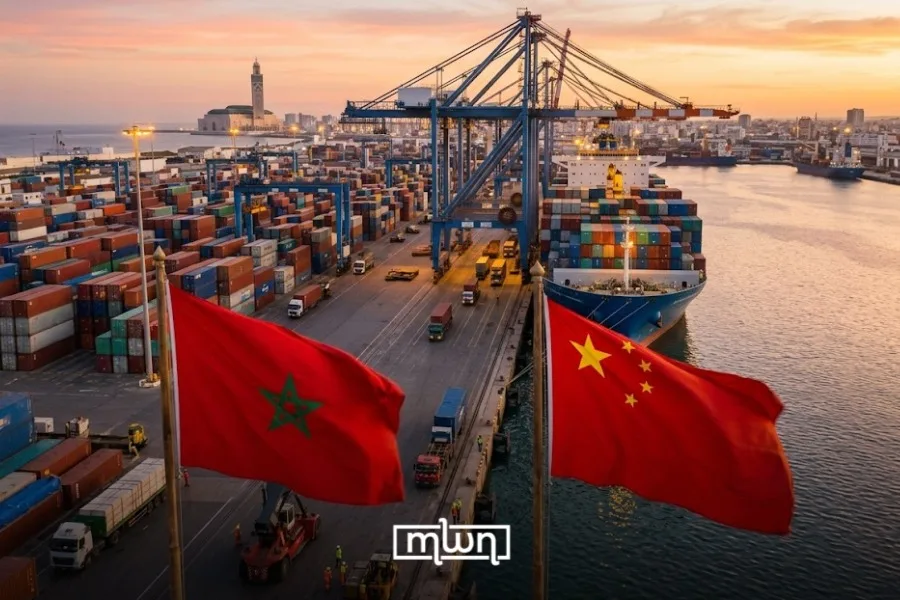
The Morocco session of the China-Africa Economic and Trade Expo opened in Casablanca on Wednesday, bringing together government officials, business leaders and trade representatives seeking to expand commercial ties between China and African economies amid evolving global trade dynamics.
The event marks the first major economic and trade initiative organised by China’s Hunan Province on the African continent since Beijing implemented a zero tariff policy covering products from 53 African countries with which it maintains diplomatic relations. The policy has been presented by Chinese authorities as part of broader efforts to facilitate market access for African exports and strengthen economic engagement across the continent.
Held against the backdrop of the tenth anniversary of the strategic partnership between China and Morocco, the expo is expected to serve as a platform for business matchmaking, investment discussions and trade promotion between African and Chinese enterprises.



Moroccan economic analysts and business leaders attending the event described the gathering as a timely opportunity to translate policy commitments into commercial outcomes. They argued that enhanced access to the Chinese market could create new opportunities for African producers seeking to diversify export destinations and increase the value of goods traded internationally.
Nasser Bouchiba, President of the Morocco based Africa China Cooperation Association for Development, said the expo could help accelerate the practical implementation of trade measures announced by Beijing while supporting the expansion of Moroccan exports into China.
According to Bouchiba, the initiative also offers opportunities for Chinese firms to strengthen their presence in North Africa through local partnerships and investment, potentially contributing to greater integration of industrial and supply chains across the region.

Trade figures illustrate the growing economic relationship between China and Morocco. According to official data released during the event, bilateral trade reached approximately US$10.96 billion in 2025, compared with US$9.04 billion in 2024. China remains Morocco’s third largest trading partner globally and its largest trading partner in Asia.
Chinese exports to Morocco accounted for approximately US$9.88 billion in 2025, while Moroccan exports to China were valued at around US$1.08 billion. While the figures highlight expanding commercial engagement, they also underscore continuing discussions around trade balance and the need to increase the volume and diversity of African exports entering Chinese markets.
For many African economies, the challenge is not merely increasing trade volumes but ensuring that participation in international trade supports industrialisation, value addition and long term economic transformation. Across the continent, policymakers have increasingly emphasised the importance of moving beyond the export of raw materials towards the development of manufacturing capacity and regional value chains.
Jawad Kerdoudi, President of the Moroccan Institute of International Relations, described China’s tariff measures as a potentially significant development for African economies seeking greater access to international markets. He argued that increased trade and investment flows could contribute to industrial development while supporting employment creation in sectors ranging from renewable energy to manufacturing.
Morocco has emerged as one of several African countries attracting growing levels of Chinese investment in recent years. Projects involving renewable energy technologies, green industries, automotive manufacturing and textiles have featured prominently in bilateral economic cooperation initiatives.
Observers note that such investments form part of a wider trend in which African states are seeking partnerships that align with national development priorities while expanding economic links across multiple global markets.
Mohamed Khalil, President of the Morocco China Friendship and Exchange Association, said the expo provides an opportunity to strengthen cooperation beyond trade by encouraging policy coordination, industrial partnerships and people to people exchanges.
For Africa, the significance of such engagements increasingly lies in how effectively they support locally defined development objectives. As governments across the continent pursue industrialisation strategies under frameworks such as the African Continental Free Trade Area, external partnerships are being assessed not only on the basis of trade volumes but also on their contribution to skills development, technology transfer, infrastructure growth and sustainable economic transformation.
The Casablanca gathering therefore reflects broader shifts in Africa’s engagement with global economic partners. Rather than being viewed solely through the lens of external investment, such forums are increasingly evaluated according to their ability to support African production, strengthen regional competitiveness and create opportunities for businesses and communities across the continent.
As discussions continue throughout the expo, attention will remain focused on whether the combination of tariff preferences, investment commitments and commercial partnerships can deliver tangible benefits for both African and Chinese stakeholders in an increasingly interconnected global economy.