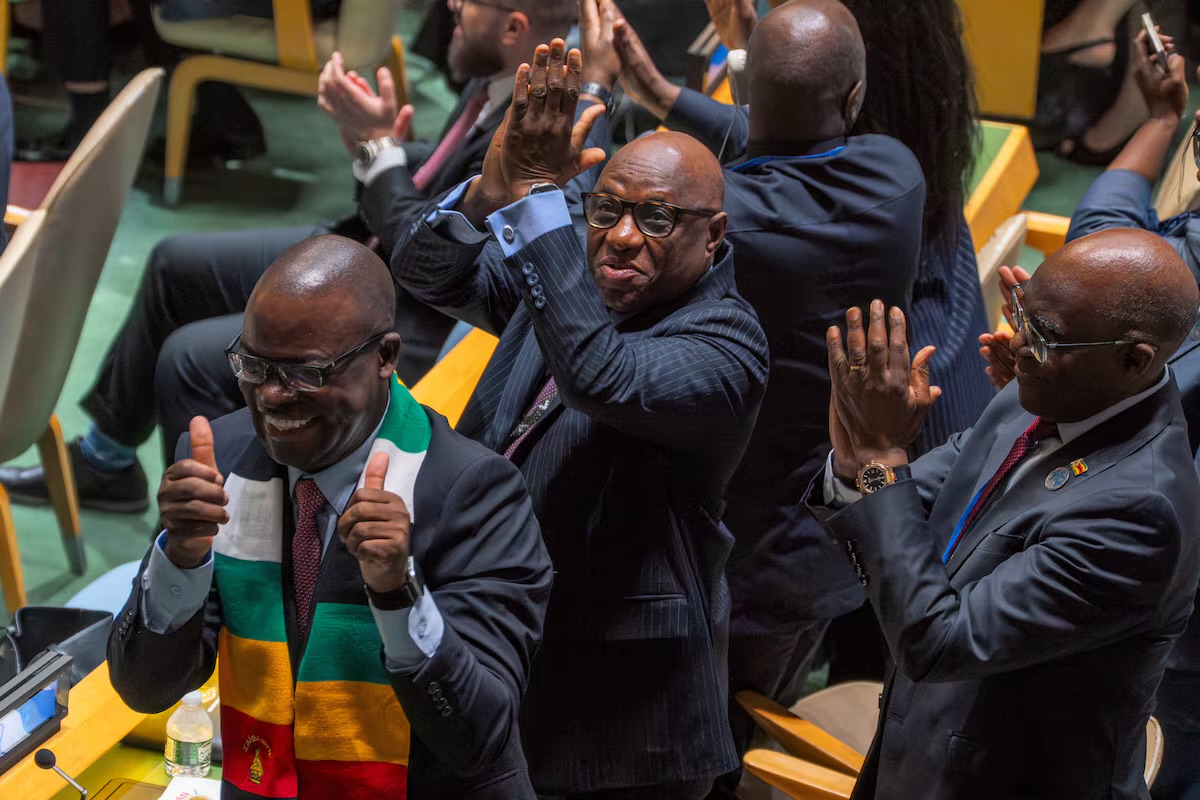
Zimbabwe has secured a non permanent seat on the United Nations Security Council after being elected by the UN General Assembly on Wednesday, marking a significant diplomatic achievement for the Southern African nation and providing it with a greater voice in global peace and security matters.
The election, held at United Nations headquarters in New York, saw Zimbabwe chosen to represent the African Group on the 15 member council for a two year term beginning on 1 January 2027.
Zimbabwe was elected alongside Austria, Kyrgyzstan, Portugal, and Trinidad and Tobago, which will also join the council as non permanent members. The five countries will replace Somalia, Pakistan, Panama, Denmark and Greece when their terms expire at the end of 2026.



The Security Council is regarded as the most powerful organ of the United Nations. It is responsible for maintaining international peace and security and is the only UN body with the authority to adopt legally binding resolutions, impose sanctions and authorise the use of military force.
Zimbabwe’s election gives the country an opportunity to participate directly in discussions and decisions on some of the world’s most pressing security challenges, including armed conflicts, peacekeeping operations, terrorism, humanitarian crises and international sanctions regimes.
The achievement is also likely to be viewed as a diplomatic success for Harare, which has sought in recent years to strengthen its engagement with the international community and increase its visibility within multilateral institutions.
The election process saw intense competition in some regional groups. Germany, which had campaigned vigorously for a seat, failed to secure election in the Western European and Others Group. Portugal and Austria won the two available seats with 134 and 131 votes respectively, while Germany received 104 votes.
The contest for the Asia Pacific Group seat proved particularly competitive, requiring four rounds of voting before Kyrgyzstan secured the necessary two thirds majority. The Central Asian nation ultimately won its first ever seat on the Security Council with 142 votes, defeating the Philippines, which received 49 votes.
The Security Council consists of 15 members. Five countries hold permanent seats and possess veto powers: the United Kingdom, China, France, Russia and the United States. The remaining ten seats are allocated to elected members who serve two year terms, with five new members joining each year under a system designed to ensure regional representation.
As part of the transition, Zimbabwe will take over the seat currently held by Somalia. Trinidad and Tobago will replace Panama, Portugal and Austria will succeed Denmark and Greece, while Kyrgyzstan will take over from Pakistan.
Several countries will continue serving on the council until the end of 2027. These include Bahrain, Colombia, the Democratic Republic of Congo, Latvia and Liberia.
Zimbabwe’s tenure on the Security Council will place the country at the centre of major international debates and negotiations at a time when global security challenges continue to evolve. Analysts say the role presents an opportunity for Harare to contribute to discussions on African peace and security issues while advancing broader priorities of the continent within the United Nations system.

The election comes just a day after the General Assembly elected Bangladeshi Foreign Minister Khalilur Rahman as president of the 193 member body for its 81st session, which begins in September.
For Zimbabwe, the Security Council seat represents both a diplomatic endorsement from the international community and a chance to shape global conversations on peace, security and development over the next two years.