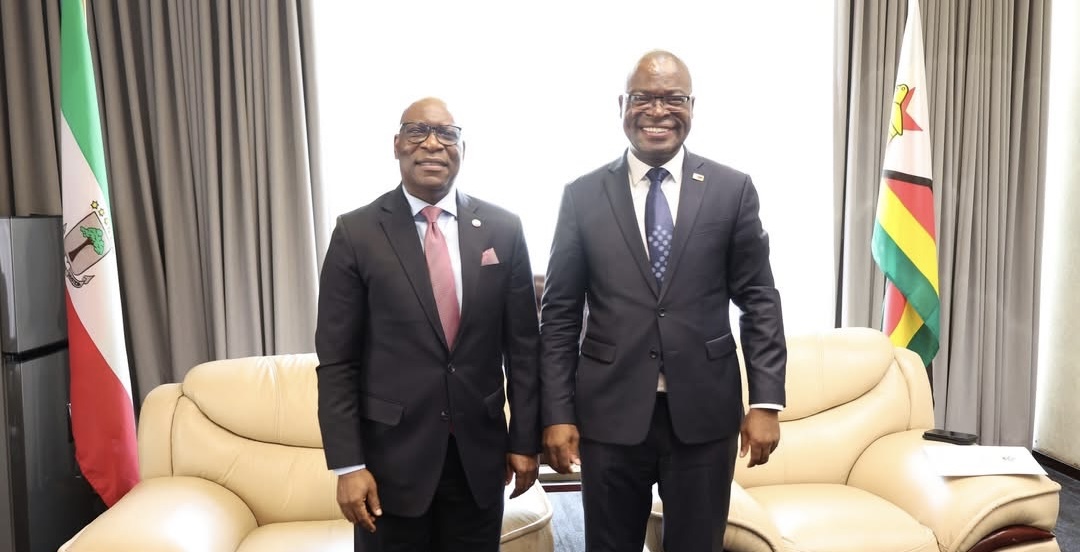
Zimbabwe and Equatorial Guinea have reaffirmed their commitment to strengthening diplomatic and economic relations following ministerial discussions held in Harare under the inaugural session of the Joint Permanent Commission on Cooperation. The talks, which took place from Thursday to Saturday, preceded the anticipated state visit of Equatorial Guinea’s President Teodoro Obiang Nguema Mbasogo to Zimbabwe.
The meeting brought together senior government officials from both countries to explore avenues for expanded collaboration across sectors including trade, mining, tourism, agriculture, energy, education, transport and security. According to statements issued during the proceedings, the discussions also focused on advancing African led approaches to development, governance and regional cooperation.
Zimbabwe’s Minister of Foreign Affairs and International Trade, Amon Murwira, said both countries were seeking to strengthen economic ties through increased trade and investment opportunities within the framework of the African Continental Free Trade Area. He noted that reducing tariff and non tariff barriers could create broader commercial opportunities for businesses operating across the continent.



Murwira stated that Zimbabwe and Equatorial Guinea were examining ways to deepen cooperation in manufacturing, natural resource management and tourism, while also encouraging stronger engagement between the private sectors of both countries. He further highlighted ongoing educational cooperation and indicated that discussions had included the possible mutual recognition of academic qualifications to facilitate skills mobility and institutional partnerships.
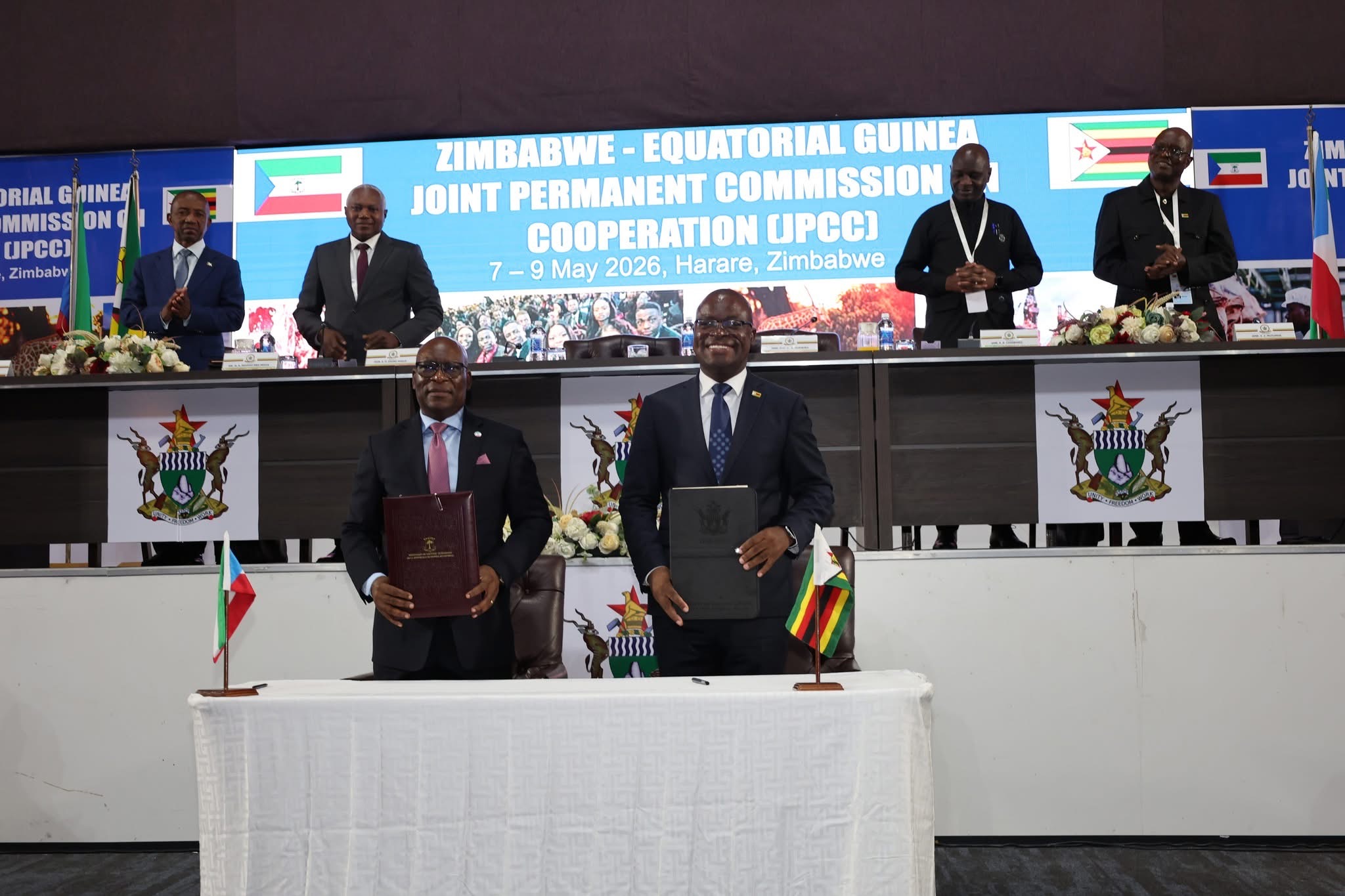
The Zimbabwean minister also referred to existing collaboration in wildlife conservation and environmental management, describing sustainable resource governance as an area of shared interest between the two nations. Zimbabwe and Equatorial Guinea are both members of the African Union and have increasingly aligned their diplomatic positions on questions relating to continental integration and multilateral representation.
Murwira additionally acknowledged Equatorial Guinea’s support for Zimbabwe’s longstanding call for the removal of sanctions imposed by Western countries, as well as its endorsement of Zimbabwe’s candidature for a non permanent seat on the United Nations Security Council for the 2027 to 2028 term.
Equatorial Guinea’s Minister of Foreign Affairs, International Cooperation and Diaspora, Simeon Oyono Esono Angue, said the two countries shared common positions on regional stability, African unity and institutional reform within the international system. He emphasised the importance of strengthening cooperation in agriculture, mining, energy and transport as part of broader efforts to expand intra African economic exchange.
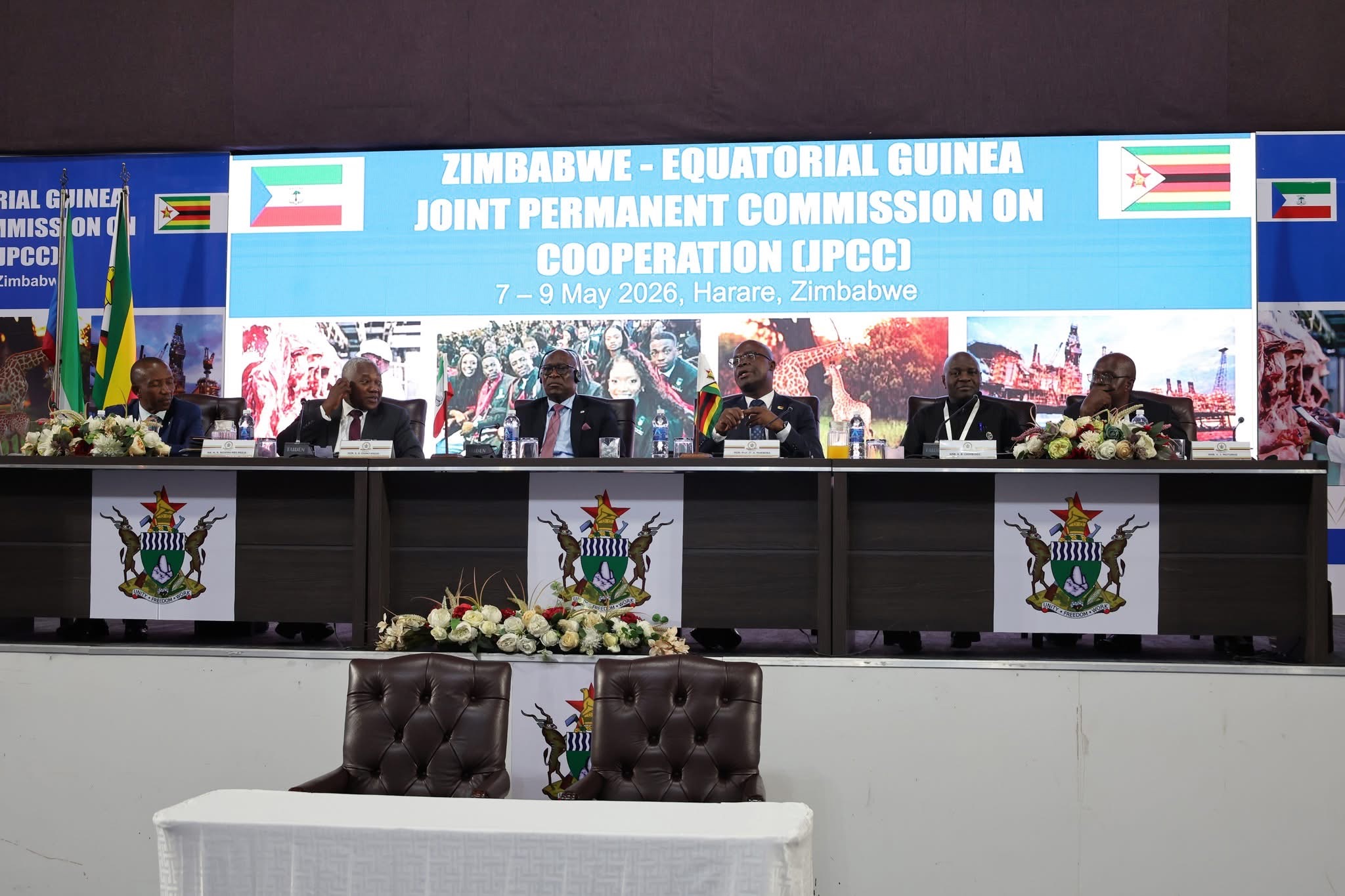
Angue also stated that African countries continued to advocate for greater representation within global governance institutions, arguing that the continent should play a more influential role in shaping international policy debates and development priorities.

The Joint Permanent Commission on Cooperation mechanism forms part of a wider diplomatic framework increasingly utilised by African states to formalise bilateral engagement and coordinate long term development initiatives. Analysts note that such platforms have become more prominent as governments across the continent seek to diversify partnerships, strengthen regional value chains and reduce dependence on external markets.
Zimbabwe has in recent years expanded diplomatic and economic engagement with several African states as part of its broader re engagement strategy, while Equatorial Guinea has sought to consolidate partnerships across Southern and Central Africa through infrastructure, energy and investment cooperation.
The Harare discussions reflected a broader continental emphasis on regional solidarity and institution building, particularly as African governments continue to pursue integration initiatives under frameworks such as the African Continental Free Trade Area and Agenda 2063 of the African Union.
While concrete implementation timelines were not publicly announced during the ministerial session, officials from both countries indicated that technical committees would continue engagements aimed at operationalising agreed areas of cooperation.