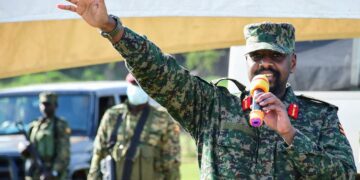
President Yoweri Museveni has been officially declared the winner of Uganda’s 2026 presidential election, according to the country’s Electoral Commission. The announcement was made at the National Tally Centre in Kampala on 17 January.
In an address delivered from his home district of Kiruhura in western Uganda, President Museveni outlined his administration’s proposed focus areas for the coming term. The address, delivered shortly after the confirmation of the electoral results, emphasised continued economic development, public service reform and efforts to address corruption.
The president indicated that policy support would be directed toward individuals and groups involved in commercial farming, manufacturing, tourism and investment, identifying these sectors as central to Uganda’s broader development objectives. Institutions such as the Uganda Development Bank were referenced as key channels for enabling access to capital and supporting enterprise growth.



Regarding socioeconomic challenges, Museveni acknowledged that a substantial proportion of the population remains in conditions of poverty. He stated that his administration intends to expand interventions aimed at enabling sustainable livelihoods, with particular emphasis on rural households.
Public service delivery, including free education at government primary and secondary schools, was reaffirmed as a continuing government responsibility. Additional commitments were made to improve healthcare delivery, particularly in relation to the availability of medical supplies in public health facilities. The president also referenced the importance of greater oversight and administrative accountability within public institutions.
Corruption, a recurrent issue in national discourse, was noted as a priority area. Museveni stated that measures to address corruption and reinforce judicial processes would remain integral to the functioning of the state. While specific mechanisms were not elaborated, the emphasis on institutional performance suggests a recognition of persistent public concerns regarding governance.
Appealing for calm following the election, Museveni urged Ugandans from across the political spectrum to reject violence and maintain national unity. He also made reference to the importance of safeguarding national sovereignty and avoiding external interference. These remarks come in the context of international and domestic observations of the electoral environment, which has at times drawn scrutiny in past cycles.
In terms of economic development, the president confirmed that Uganda anticipates the commencement of oil production later this year. The development of the petroleum sector marks a significant shift in Uganda’s economic outlook, with potential implications for both domestic revenue and the country’s position in the regional energy landscape.

Within the wider African context, Uganda’s political and economic direction continues to be shaped by intersecting pressures, including demographic growth, youth employment demands and evolving regional partnerships. The priorities outlined by Museveni reflect long-standing debates across the continent regarding the balance between state-led development, institutional reform and inclusive economic participation.
The electoral outcome, and the policy trajectory that follows, will remain subjects of attention both within Uganda and among regional stakeholders. While the address by the president highlights continuity in several areas, its implementation will be observed closely by constituencies seeking tangible progress on longstanding governance and development challenges.