Wednesday, June 10, 2026
  • Login
The Southern African Times
  • Home
  • Southern Africa
  • Business
    • African Start ups
    • African Continental Free Trade Area
  • Technology
    • Lifestyle
      • Health
      • Culture
      • Food and Drink
      • Entertainment
  • Opinion
  • Sports
  • SAT Jobs
    • Events
  • About Us
    • Advertise with Us
    • Contact Us
No Result
View All Result
  • Home
  • Southern Africa
  • Business
    • African Start ups
    • African Continental Free Trade Area
  • Technology
    • Lifestyle
      • Health
      • Culture
      • Food and Drink
      • Entertainment
  • Opinion
  • Sports
  • SAT Jobs
    • Events
  • About Us
    • Advertise with Us
    • Contact Us
No Result
View All Result
The Southern African Times
No Result
View All Result
Home Opinion

U.S. foreign policy pivot and future of Eurasian integration

by SAT Reporter
August 25, 2021
in Opinion
0
U.S. foreign policy pivot and future of Eurasian integration

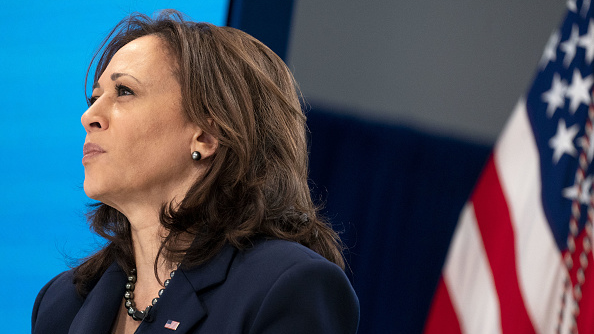
U.S. Vice President Kamala Harris on August 24 delivered her sharpest comments about China yet in a speech in Singapore designed to showcase the current administration’s full pivot to East Asia. 

Calling the region “critically important to our nation’s security and prosperity,” the U.S. appears to be fully shifting gears toward maintaining its global hegemony by trying to contain Russia, and China, as it completes its wind-down of military adventurism in the Middle East seen with its recent (and controversial) withdrawal from Afghanistan, which is sometimes considered part of that region. 

This marks a landmark geopolitical shift, because it has brought full circle the so-called global “war on terror,” which Afghanistan was a part of, that was sparked by the 9/11 terrorist attacks and ushered in the beginning of a new core U.S. strategic focus, namely the U.S. pivot to East Asia. This policy had begun several years ago, but we are now entering its apex.


ADVERTISEMENT

This East Asia policy is part of Washington’s main focus in countering the integration of Eurasia. 

Washington’s dilemma today is the fundamental issue of geopolitics, going all the way back to its foundation. As Sir Halford John Mackinder had argued in 1904 when presenting his landmark paper “The Geographical Pivot of History,” the British Empire’s focus at that time on naval power – the cudgel of its global hegemony – would be rendered meaningless with sufficient development of land transport that could integrate Eurasia, what he called the “World-Island.”

The obvious historical parallel here is the U.S., its reliance on naval power and its military supremacy over the periphery of the Eurasian landmass compared to China and its Belt and Road Initiative (BRI) that seeks to build infrastructure to integrate Eurasia and the world. 

Countering the integration of this “World-Island” must be done in a way that could keep the U.S. from spreading itself too thin – mainly by avoiding a two-front conflict with Russia and China, two major powers in the core of Eurasia, since Washington no longer has the capability to win such a conflict. 

In managing this situation, Washington faces a unique and unprecedented set of challenges as was pointed out in a recent feature for The National Interest by A. Wess Mitchell, a former Assistant Secretary of State for European and Eurasian Affairs. 

He said, “Rather than trying to contain Russia and China simultaneously, the United States needs to find a way to stagger its contests with these two powers to ensure that it does not face both at the same time in a war,” which he says could theoretically be achieved in three ways: detente with Russia, deferring competition with China or co-opting both through win-win policies on common forums. 

The problem, he notes, is that none of the historical examples to draw from in any of these options align perfectly with the current situation faced by Washington’s imperial planners. 

Instead, he advocates for essentially a version of the first option aimed at corralling Russia out of an unwinnable two-front war by “giving Russia incentives to be less of a European power – and more of an Asian one.” This, he believes, could be achieved by playing on perceived fears of Russian over-dependence and potential subordination to China.

While indeed this could be a point for U.S. diplomacy to play on, it remains to be seen if this fear is actually as much of a motivating factor as people like Mitchell believe – plus whether or not the Russian leadership believes that emboldening U.S. global hegemony in any way is actually desirable or necessary, which I suspect is not the case. (Mitchell’s analysis also leaves out the potential for a third front with a major Middle East regional power, Iran, as tensions between Washington and Tehran flare). 

With regards to what was included in Mitchell’s piece, it does appear to some extent that the administration of President Joe Biden is pursuing this plan which was seen in the summit between Biden and Russian President Vladimir Putin. 

We saw in that summit what could be openings for mutual points of interest, such as cybersecurity and arms control. But these are, to put it bluntly, no-brainer points of mutual interest that will probably not lead to any significant realignment – at least not in any time that would fit Washington’s window of opportunity. 

On the other hand, the U.S. withdrawal from Afghanistan itself provides Russia and China a serious opportunity to cooperate on maintaining security and stability in that country and the Central Asian region altogether, as well as furthering the integration of Eurasia.

Bradley Blankenship is a Prague-based American journalist, political analyst and freelance reporter.

Previous Post

President Cyril Ramaphosa participates in G20 Compact with Africa meeting in Germany, 26-27 Aug

Next Post

Vaccine collaboration is essential to beat Covid-19

SAT Reporter

Related Posts

Faith, Miracles and the Crisis of Religious Authenticity
Opinion

Faith, Miracles and the Crisis of Religious Authenticity

by Brendan Amadi
June 10, 2026
How DRC President Leveraged Geopolitics to Secure Political Survival
Opinion

How DRC President Leveraged Geopolitics to Secure Political Survival

by Dr. Alex Ntung
June 9, 2026
Zimbabwe’s Child Online Safety Moment and Why It Matters Beyond 2030
Opinion

Zimbabwe’s Child Online Safety Moment and Why It Matters Beyond 2030

by Kundai Vambe
June 5, 2026
The Southern African Times Announces 2026 Editorial Recognition List (Shortlist Phase)
The Editorial Board

The Southern African Times Announces 2026 Editorial Recognition List (Shortlist Phase)

by The Editorial Board
June 2, 2026
Education and the Making of Responsible Citizens
Opinion

Education and the Making of Responsible Citizens

by Brendan Amadi
June 2, 2026
Next Post
Vaccine collaboration is essential to beat Covid-19

Vaccine collaboration is essential to beat Covid-19

Browse by Category

  • Africa AI
  • African Continental Free Trade Area
  • African Debt
  • African Start ups
  • Agriculture
  • AI Africa
  • Algeria
  • All News
  • Analysis
  • Angola
  • Arts / Culture
  • Asia
  • Botswana
  • BOTSWANA
  • BREAKING NEWS
  • BRICS
  • Burkina Faso
  • Burundi
  • Business
  • Business
  • Business Wire
  • Cameroon
  • Central Africa
  • Chad
  • China
  • Climate Change
  • Climate Changev
  • Community
  • Congo Republic
  • Conservation
  • Côte d’Ivoire
  • COVID 19
  • CRYPTOCURRENCY
  • Culture
  • Democratic Republic of Congo
  • Diplomacy
  • Eastern Africa
  • Economic Development
  • Economy
  • Education
  • Egypt
  • Elections 2024
  • Energy
  • Entertainment
  • Environment
  • Eritrea
  • Ethiopia
  • Europe
  • Fashion
  • Feature
  • Finance
  • Financial Inclusion
  • Food
  • Food and Drink
  • Foods
  • GABON
  • Ghana
  • Global
  • Global Africa
  • Guinea
  • Health
  • Humanitarian Aid
  • Immigration
  • in Southern Africa
  • International news
  • International Relations
  • Investment
  • Ivory Coast
  • Just In
  • Kenya
  • Lesotho
  • Libya
  • Life Style
  • Lifestyle
  • Literature
  • Malawi
  • Malawi
  • Mali
  • Markets
  • Mauritius
  • Middle East
  • Mining in Africa
  • Morocco
  • Mozambique
  • Namibia
  • Niger
  • niger
  • Nigeria
  • North Africa
  • North-Eastern Africa
  • Obituaries
  • Obituary
  • Opinion
  • PARTNER CONTENT
  • Politics
  • Property
  • Racism
  • Rwanda
  • Rwanda
  • SADC
  • SAT Interviews
  • SAT Investigation
  • SAT Jobs
  • Saudi Arabia
  • Senegal
  • Seychelles
  • Somaliland
  • South Africa
  • South Sudan
  • Sports
  • Startup Africa
  • STOCK EXCHANGE
  • Sudan
  • Sustainability
  • Sustainablity
  • Tanzania
  • Technology
  • Telecommunications
  • The Editorial Board
  • The Power Of She
  • Togo
  • Trade
  • Travel
  • Travel
  • Tunisia
  • Uganda
  • Uncategorized
  • Wealth
  • West Africa
  • World
  • World
  • ZAMBIA
  • Zambia
  • ZIMBABWE
  • Zimbabwe

Browse by Tags

#NewsUpdate #SouthAfrica #SouthernAfricanTimes #TheSouthernAfricanTimes AfCFTA africa African Continental Free Trade Area African development African Development Bank African economies African economy African Union Agriculture Angola Botswana China Climate change Cyril Ramaphosa Economic Development economic growth energy transition governance IMF industrialisation Inflation Infrastructure Infrastructure Development International relations Investment Kenya Mozambique Namibia news Nigeria Regional Integration renewable energy Rwanda SADC South Africa Southern Africa sustainable development Tanzania United States Zambia Zimbabwe
ADVERTISEMENT

WHO WE ARE

The Southern African Times is a regional bloc digital newspaper that covers Southern African and world news. The paper also gives a nuanced analysis on news and covers a wide range of reporting which include sports, entertainment, foreign affairs, arts and culture.

Welcome Back!

Login to your account below

Forgotten Password?

Retrieve your password

Please enter your username or email address to reset your password.

Log In
  • Home
  • Southern Africa
  • Business
    • African Start ups
    • African Continental Free Trade Area
  • Technology
    • Lifestyle
      • Health
      • Culture
      • Food and Drink
      • Entertainment
  • Opinion
  • Sports
  • SAT Jobs
    • Events
  • About Us
    • Advertise with Us
    • Contact Us
Not enough quota to unlock this post
Unlock left : 0
Are you sure want to cancel subscription?