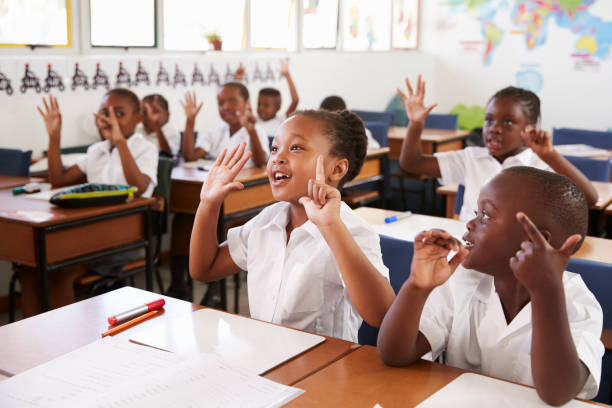
Education remains one of humanity’s greatest instruments of transformation. It is the force that shapes individuals, strengthens societies, and lays the foundation for national development. Long before economies are built, institutions strengthened, or democracies consolidated, education performs the quiet but essential work of preparing citizens capable of carrying those responsibilities.
The German philosopher Immanuel Kant famously argued that human beings become fully human through education. His observation remains relevant today. Education is not merely the acquisition of facts or the pursuit of certificates. At its best, it develops character, sharpens judgement, expands opportunity, and equips individuals to navigate an increasingly complex world.
Yet despite its immense value, education is often misunderstood. In many societies, it has become narrowly associated with examinations, qualifications, and employment prospects. While these outcomes are important, they represent only part of education’s purpose. True education cultivates critical thinking, moral responsibility, civic awareness, and the ability to contribute meaningfully to society.



This broader understanding is particularly important at a time when many countries are grappling with declining educational standards, youth unemployment, political polarisation, and growing social fragmentation. These challenges cannot be addressed solely through infrastructure investment or curriculum reforms. They require a renewed conversation about what education is ultimately meant to achieve.
An educated individual is not simply someone who has spent years in a classroom. Education should produce citizens capable of distinguishing between knowledge and wisdom, rights and responsibilities, ambition and integrity. It should nurture individuals who can engage constructively with different perspectives, contribute to public discourse, and make decisions that advance the common good.
History provides numerous examples of how education can shape leadership and national consciousness. Across Africa, many of the figures who championed independence, self determination, and political participation drew their confidence and conviction from education. It equipped them not only with knowledge but with the courage to challenge injustice and imagine alternative futures for their societies.
Education also carries obligations. Those fortunate enough to receive it owe a responsibility to the communities and nations that invested in them. Patriotism, public service, and civic responsibility should not be treated as outdated concepts. They remain essential ingredients of nation building.
This is why the words often attributed to former United States President Abraham Lincoln continue to resonate. In a letter widely associated with his hopes for his son’s education, Lincoln emphasised qualities that remain timeless: resilience in adversity, humility in success, confidence in one’s convictions, and the willingness to work honestly for achievement. His vision extended beyond academic excellence. He wanted education to produce character.
That lesson remains relevant for parents, teachers, and policymakers alike.
In an era where success is frequently measured through wealth, social status, or public visibility, character formation can easily become secondary. Yet societies ultimately depend on citizens who possess integrity, discipline, perseverance, and empathy. Schools cannot shoulder this responsibility alone. Families, communities, religious institutions, and public leaders all play a role in shaping the values young people carry into adulthood.
The challenges confronting education today are considerable. Political interference, inadequate funding, declining standards, and unequal access continue to undermine educational systems across many parts of the world. In some countries, education has become heavily politicised, weakening its ability to serve as an independent force for social advancement and critical inquiry.
These realities should concern anyone invested in the future.
However, despair is neither justified nor productive. The solutions are neither mysterious nor unattainable. They begin with restoring respect for education as a public good rather than treating it solely as a pathway to employment. They require investment in teachers, stronger accountability, and a renewed emphasis on character development alongside academic achievement.
Most importantly, they require a collective commitment to raising expectations.
The future of any nation depends largely on the quality of its citizens, and the quality of its citizens depends significantly on the quality of their education. If educational institutions succeed in producing knowledgeable, ethical, and resilient individuals, the benefits will extend far beyond classrooms.
The task before us is not simply to educate more people. It is to educate better citizens.
That responsibility belongs to all of us.

Brendan Amadi is a Nigerian‑born scholar, writer, and public intellectual based in the United Kingdom, whose work traverses the intersecting fields of politics, religion, philosophy, history, and African identity.