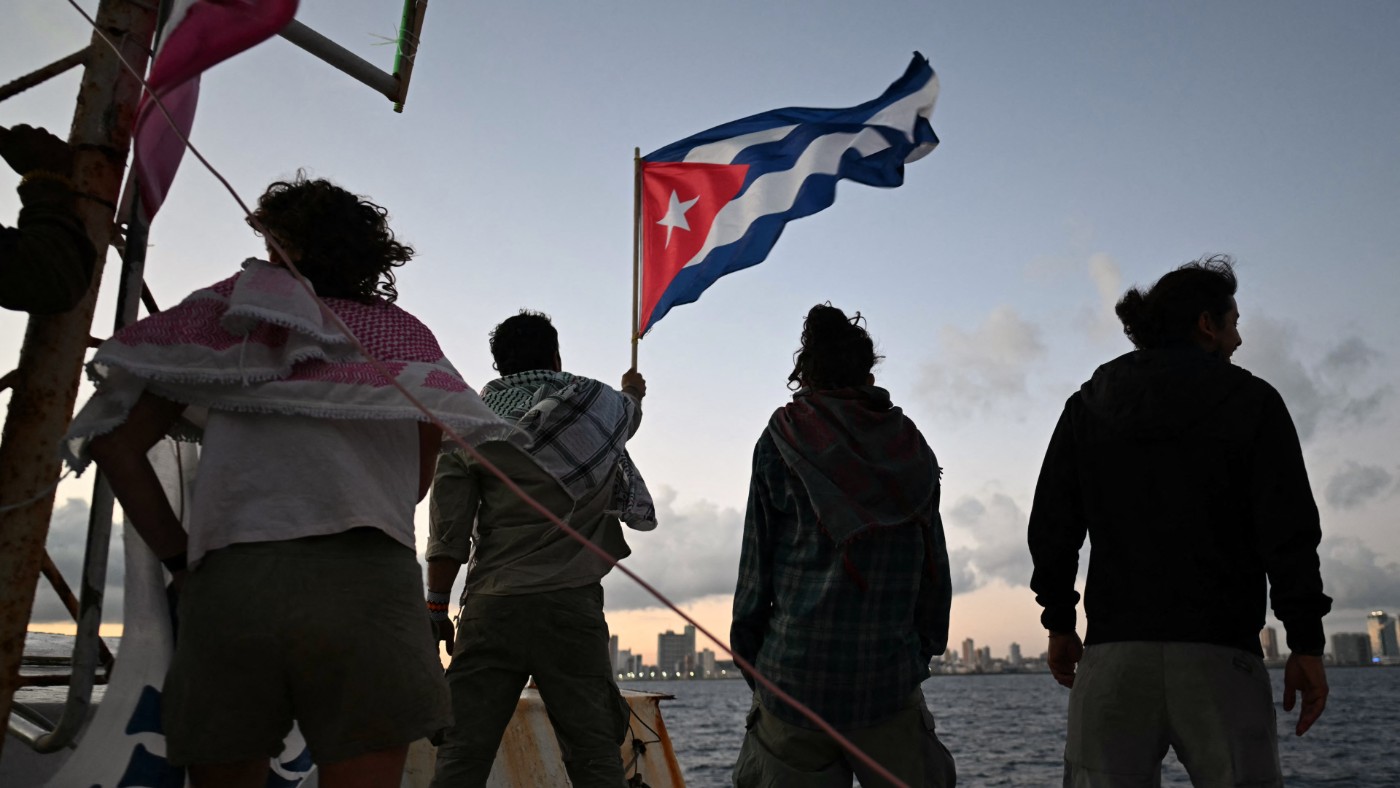
There are moments in international affairs when the language of geopolitics becomes so sanitised, so wrapped in strategic jargon and diplomatic euphemism, that it obscures the simple reality of human suffering. Cuba today represents one such moment. For much of the past five years, the island has endured a convergence of pressures that would challenge even the most prosperous and institutionally resilient societies: the lingering economic aftershocks of the pandemic, declining foreign exchange earnings, inflation, accelerating emigration, chronic shortages of medicine and food, and the continuing weight of one of the longest sanctions regimes in modern history. Yet despite mounting evidence of social distress, much of the international conversation remains curiously detached from the lived consequences of these conditions.
The question is no longer whether the United States embargo imposes a profound economic burden on Cuba. That debate was settled long ago. The more pressing question is whether the deliberate tightening of economic pressure upon a country already experiencing severe hardship can still be defended as a legitimate policy instrument when its effects increasingly resemble collective punishment. Recent accounts from observers returning from Cuba describe prolonged electricity outages, paralysed transport systems, mounting difficulties in the distribution of food and medicine, and growing public anxiety about the future. Whatever one’s view of the Cuban government, there is an uncomfortable moral reality here: when economic coercion reaches the point where ordinary citizens bear the overwhelming burden of political disputes, the distinction between pressure and suffering becomes increasingly difficult to sustain.
Recent assessments by Professor Bert Hoffmann of the German Institute for Global and Area Studies, following visits to Cuba earlier this year, have drawn renewed attention to the severity of the country’s energy crisis. According to Hoffmann, dwindling fuel supplies have become the critical pressure point in a broader strategy of economic isolation. The consequences are not merely economic. Energy is the bloodstream of modern society. Without reliable fuel supplies, public transport slows to a crawl, food distribution networks begin to fracture, water systems become unreliable and hospitals struggle to maintain essential services. Whether one agrees with Hoffmann’s interpretation of United States policy or not, his warning is difficult to dismiss: prolonged disruptions to fuel imports risk transforming economic hardship into a full scale humanitarian emergency.



What makes this situation particularly striking is that it unfolds at a time when the international order claims to be guided by humanitarian principles. Governments routinely invoke the language of human rights, civilian protection and international responsibility. Yet Cuba appears to occupy a curious exception. The island has become trapped within a narrative in which hardship is viewed not as a humanitarian concern but as a mechanism of political leverage. This logic is hardly new. For decades, advocates of sanctions have argued that economic deprivation can generate sufficient public dissatisfaction to force political change. What has changed is the severity of Cuba’s vulnerability. The cumulative effect of sanctions, financial restrictions and barriers to international commerce has created a level of fragility that raises profound ethical questions about the proportionality of the policies being pursued.
For Africa, and Southern Africa in particular, this should not be a distant concern. Cuba is not simply another country experiencing economic distress. Its relationship with Africa is woven into the history of the continent’s liberation struggles. Long before many contemporary powers discovered the language of partnership with Africa, Cuba committed soldiers, doctors, teachers and technical specialists to causes that shaped the destiny of Southern Africa. The role of Cuban forces in Angola, and the wider significance of the Battle of Cuito Cuanavale, remain embedded in the historical memory of the region. Nelson Mandela’s tributes to Cuba were not exercises in sentimentality. They were acknowledgements of a political and military solidarity that carried real costs and helped alter the course of history.
Beyond the battlefields, Cuba invested heavily in education, healthcare and technical cooperation across the continent. Thousands of African students studied in Cuban institutions. Cuban doctors served in communities often neglected by wealthier nations. Whatever one thinks of Havana’s political system, the historical record is clear: Cuba’s engagement with Africa was substantial, sustained and consequential. It is therefore difficult to ignore the contrast between that legacy and the relative silence now emanating from many African capitals.
That silence deserves scrutiny. Africa has rightly become more assertive in defending principles of sovereignty, non intervention and multipolarity in global affairs. African leaders regularly call for a more equitable international order and a greater voice for the Global South. Yet those principles are tested not when they are convenient but when they carry political cost. If African governments are willing to speak forcefully about crises elsewhere, why has there been so little collective engagement with Cuba’s deteriorating humanitarian situation? Why has the African Union not emerged as a more prominent voice in discussions surrounding sanctions and their humanitarian consequences? Why has a continent that often invokes the language of solidarity remained so cautious when one of its oldest international partners faces profound hardship?
The answer may lie in the realities of contemporary diplomacy. Many African governments seek productive relations with Washington and are understandably reluctant to become entangled in disputes that do not directly affect their immediate interests. Yet foreign policy cannot be reduced entirely to calculations of expediency. Nations are also judged by the consistency of the values they claim to uphold. If sovereignty is a principle, it must be defended consistently. If humanitarian concerns matter, they cannot be selectively applied. If solidarity remains a virtue, it cannot be reserved solely for causes that carry no diplomatic risk.
Africa’s responsibility is not to defend Havana uncritically, nor to resurrect the ideological divisions of the Cold War. Rather, it is to articulate a principled position rooted in international law, humanitarian concern and historical memory. The African Union and regional organisations such as SADC should advocate for the protection of humanitarian supply chains, support independent assessments of the humanitarian consequences of sanctions and explore practical avenues for cooperation in healthcare, education, biotechnology and food security. More fundamentally, they should challenge the growing normalisation of economic coercion as a substitute for diplomacy.

Ultimately, the issue extends far beyond Cuba. It concerns the kind of international order that developing nations wish to inhabit. An order in which powerful states can impose severe economic hardship on weaker nations with minimal scrutiny is unlikely to serve Africa’s long term interests. Cuba’s present ordeal therefore poses an uncomfortable question to the continent, not because the answer is obvious, but because it forces a reckoning with our own principles.
As Cuba endures one of the most severe crises in its modern history, Africa’s silence is becoming a story in its own right.