Sunday, June 21, 2026
  • Login
The Southern African Times
  • Home
  • Southern Africa
  • Business
    • African Start ups
    • African Continental Free Trade Area
  • Technology
    • Lifestyle
      • Health
      • Culture
      • Food and Drink
      • Entertainment
  • Opinion
  • Sports
  • SAT Jobs
    • Events
  • About Us
    • Advertise with Us
    • Contact Us
No Result
View All Result
  • Home
  • Southern Africa
  • Business
    • African Start ups
    • African Continental Free Trade Area
  • Technology
    • Lifestyle
      • Health
      • Culture
      • Food and Drink
      • Entertainment
  • Opinion
  • Sports
  • SAT Jobs
    • Events
  • About Us
    • Advertise with Us
    • Contact Us
No Result
View All Result
The Southern African Times
No Result
View All Result
Home Opinion

The use and abuse of inflation history

by SAT Reporter
December 19, 2022
in Opinion
0
The use and abuse of inflation history

George Santayana famously observed that, “Those who cannot remember the past are condemned to repeat it.” But allow me to offer a corollary: Those who misremember the past may be led into error by misreading history.

Case in point: Many observers of the U.S. Federal Reserve’s current policy predicament – which is similar to the predicament facing other central banks around the world – have drawn parallels to the problems that Chair Paul Volcker and the Fed faced in the early 1980s. The implication (if you buy the parallel) is that bringing inflation to heel will require much higher interest rates, a lot of pain, and probably a deep recession.

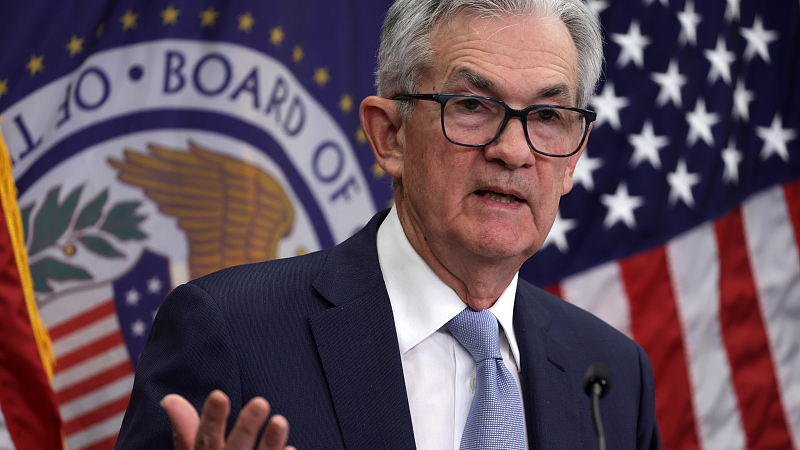
To be sure, parallels do exist. U.S. inflation over the last 18 months or so has been the highest since the Volcker era. The public has been greatly distressed by rising prices, as it was back then, making inflation the number one economic problem. And, as in the 1970s and early 1980s, the economy has been buffeted by a series of adverse supply shocks to food and energy prices. But comparing current Fed Chair Jerome Powell’s task to Volcker’s reveals that the differences are greater than the similarities – and all of them make Powell’s job relatively easier.


ADVERTISEMENT

Let’s start with an obvious but much-ignored fact. Today’s inflation problem in the U.S. is relatively recent, dating only from the spring of 2021. In February 2021, the 12-month CPI inflation rate was still a mere 1.7 percent, but by that May it had reached 5 percent. In contrast, when Volcker took the reins at the Fed in August 1979, the U.S. had already experienced nearly 15 years of high inflation. As he settled into his new office, the headline inflation rate was a stunning 11.8 percent, having been above 5 percent since April 1973 and over 8 percent since September 1978. High inflation had become deeply ingrained in Americans’ business plans and popular psychology. Surveys showed that people expected 8-10 percent inflation to persist for years.

That brings us to the second big difference. Inflation expectations today are remarkably well contained. In fact, they are nearly consistent with the Fed’s 2 percent inflation target for the Personal Consumption Expenditures Price Index (PCE). Of course, expected inflation is higher than 2 percent in the near term, because people can see that inflation is running higher right now. But over a five- or ten-year horizon, the numbers cluster in the 2-3 percent range.

A person shops at a supermarket in New York City, U.S., December 14, 2022. /CFP

This matters a lot, because inflation expectations tend to become embedded in wage settlements, interest rates, and household and business plans. Once they rise to high levels, as they had for Volcker in 1979, it can be hard to bring them down. At least for now, Powell doesn’t face that problem.

Third, consider the different macroeconomic conditions under which Powell and Volcker embarked on their disinflation campaigns. In August 1979, at the start of Volcker’s tenure, the U.S. unemployment rate was 6 percent. That wasn’t so bad, perhaps; but by May 1980, after the short but sharp recession of 1980, it was up to 7.5 percent.

The Fed under Powell came late to the fight against inflation, for which it has been justifiably criticized. But when it finally started raising interest rates, in March 2022, the unemployment rate was at a historic low of 3.6 percent, and recent rates of payroll job creation were above 500,000 per month. To put that last number in perspective, the number of new jobs needed to hold the unemployment rate steady is probably around 75,000-100,000 per month. That means the U.S. had a tight and booming labor market in March 2022 – and still does.

It also means that tightening monetary policy today can drive monthly job creation rates all the way down to the 0-100,000 range, and the unemployment rate up to 4.5 percent or so, without causing terrible hardship. If the Fed can achieve that outcome (which will, admittedly, require both skill and luck), observers will declare that Powell and his colleagues have achieved an economic soft landing. Volcker was afforded no such luxury.

Finally, we must mention the most glaring difference of all. The Volcker disinflation effort chopped nine or ten points off the peak CPI inflation rate (depending on whether you measure it by core or headline inflation), whereas Powell’s Fed is focused on core PCE inflation, which peaked at 5.4 percent last February-March. Today’s Fed wants to drive that number down to 2 percent – a drop of “only” 3.4 percentage points. That’s no trivial task, but it’s a much lighter lift than the Volcker Fed had. Furthermore, today’s Fed is already getting some help from the supply side, as disruptions to supply chains ease.

For all these and other reasons, Volcker and his colleagues never gave a moment’s thought to engineering a soft landing. It simply was not in the realm of the possible. Powell and his colleagues are dreaming about a soft landing every night.


Alan S. Blinder, Professor of Economics and Public Affairs at Princeton University, is a former vice chairman of the U.S. Federal Reserve Board (1994-96).This commentary is drawn from the author’s new book, A Monetary and Fiscal History of the United States, 1961-2021 (Princeton University Press, 2022). The article reflects the author’s opinions and not necessarily those of The Southern African Times. 

Previous Post

Zimbabwe starts cloud seeding to augment rainfall

Next Post

Why Zambia’s president is adored abroad but a disappointment at home

SAT Reporter

Related Posts

Southern African Times Announces Brendan Amadi as Recipient of the 2026 Editorial Recognition of the Year Award
The Editorial Board

Southern African Times Announces Brendan Amadi as Recipient of the 2026 Editorial Recognition of the Year Award

by The Editorial Board
June 19, 2026
LONG READ | No Longer the World’s Dustbin: China’s Waste Ban and Africa’s Circular Economy Moment
Opinion

LONG READ | No Longer the World’s Dustbin: China’s Waste Ban and Africa’s Circular Economy Moment

by Times Reporter
June 12, 2026
OPINION | The Investors Southern Africa Refuses to See
Opinion

OPINION | The Investors Southern Africa Refuses to See

by Times Reporter
June 14, 2026
Faith, Miracles and the Crisis of Religious Authenticity
Opinion

Faith, Miracles and the Crisis of Religious Authenticity

by Brendan Amadi
June 10, 2026
How DRC President Leveraged Geopolitics to Secure Political Survival
Opinion

How DRC President Leveraged Geopolitics to Secure Political Survival

by Dr. Alex Ntung
June 9, 2026
Next Post
Why Zambia’s president is adored abroad but a disappointment at home

Why Zambia’s president is adored abroad but a disappointment at home

Browse by Category

  • Africa AI
  • African Continental Free Trade Area
  • African Debt
  • African Start ups
  • Agriculture
  • AI Africa
  • Algeria
  • All News
  • Analysis
  • Angola
  • Arts / Culture
  • Asia
  • BOTSWANA
  • Botswana
  • BREAKING NEWS
  • BRICS
  • Burkina Faso
  • Burundi
  • Business
  • Business
  • Business Wire
  • Cameroon
  • Central Africa
  • Chad
  • China
  • Climate Change
  • Climate Changev
  • Community
  • Congo Republic
  • Conservation
  • Côte d’Ivoire
  • COVID 19
  • CRYPTOCURRENCY
  • Culture
  • Democratic Republic of Congo
  • Diplomacy
  • Eastern Africa
  • Economic Development
  • Economy
  • Education
  • Egypt
  • Elections 2024
  • Energy
  • Entertainment
  • Environment
  • Eritrea
  • Ethiopia
  • Europe
  • Fashion
  • Feature
  • Finance
  • Financial Inclusion
  • Food
  • Food and Drink
  • Foods
  • GABON
  • Ghana
  • Global
  • Global Africa
  • Guinea
  • Health
  • Humanitarian Aid
  • Immigration
  • in Southern Africa
  • International news
  • International Relations
  • Investment
  • Ivory Coast
  • Just In
  • Kenya
  • Lesotho
  • Libya
  • Life Style
  • Lifestyle
  • Literature
  • Malawi
  • Malawi
  • Mali
  • Markets
  • Mauritius
  • Middle East
  • Mining in Africa
  • Morocco
  • Mozambique
  • Namibia
  • Niger
  • niger
  • Nigeria
  • North Africa
  • North-Eastern Africa
  • Obituaries
  • Obituary
  • Opinion
  • PARTNER CONTENT
  • Politics
  • Property
  • Racism
  • Rwanda
  • Rwanda
  • SADC
  • SAT Interviews
  • SAT Investigation
  • SAT Jobs
  • Saudi Arabia
  • Senegal
  • Seychelles
  • Somaliland
  • South Africa
  • South Sudan
  • Sports
  • Startup Africa
  • STOCK EXCHANGE
  • Sudan
  • Sustainability
  • Sustainablity
  • Tanzania
  • Technology
  • Telecommunications
  • The Editorial Board
  • The Power Of She
  • Togo
  • Trade
  • Travel
  • Travel
  • Tunisia
  • Uganda
  • Uncategorized
  • Wealth
  • West Africa
  • World
  • World
  • Zambia
  • ZAMBIA
  • ZIMBABWE
  • Zimbabwe

Browse by Tags

#NewsUpdate #SouthAfrica #SouthernAfricanTimes #TheSouthernAfricanTimes AfCFTA africa African Continental Free Trade Area African development African Development Bank African economies African economy African Union Agriculture Angola Botswana China Climate change Cyril Ramaphosa Economic Development economic growth energy transition Ghana governance industrialisation Inflation Infrastructure Infrastructure Development International relations Investment Kenya Mozambique Namibia news Nigeria Regional Integration renewable energy Rwanda SADC South Africa Southern Africa sustainable development Tanzania United States Zambia Zimbabwe
ADVERTISEMENT

WHO WE ARE

The Southern African Times is a regional bloc digital newspaper that covers Southern African and world news. The paper also gives a nuanced analysis on news and covers a wide range of reporting which include sports, entertainment, foreign affairs, arts and culture.

Welcome Back!

Login to your account below

Forgotten Password?

Retrieve your password

Please enter your username or email address to reset your password.

Log In
  • Home
  • Southern Africa
  • Business
    • African Start ups
    • African Continental Free Trade Area
  • Technology
    • Lifestyle
      • Health
      • Culture
      • Food and Drink
      • Entertainment
  • Opinion
  • Sports
  • SAT Jobs
    • Events
  • About Us
    • Advertise with Us
    • Contact Us
Not enough quota to unlock this post
Unlock left : 0
Are you sure want to cancel subscription?