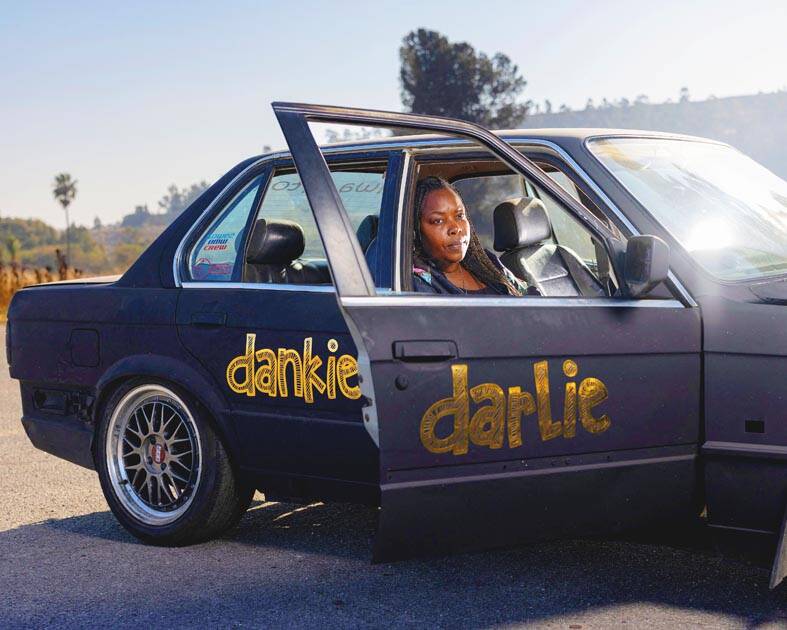
Clad in a tank top, with her braided hair whipping around, Jivhuho’s tattooed left arm controls the car with the precision of a seasoned professional. She forces the vehicle into high-speed spins and stunts, executing the notoriously challenging doughnut manoeuvre with effortless grace. For Jivhuho, a mother to an admiring teenage son, spinning is more than just a sport; it is a visceral expression of identity. “If you are able to make a tyre pop, then you are pretty special,” she remarks with pride. “When you hear that pop, you’ll hear the crowd erupt.”
This exhilarating sport, often perceived as a perilous dance between man, machine, and asphalt, was born in the gritty streets of Soweto during the 1980s, a period when South Africa was still shackled by the iniquities of apartheid. Originally, spinning was an underground phenomenon, its participants viewed as renegades who would pilfer cars from the affluent suburbs to perform daring stunts back in the township. “It used to be seen as a gangster sport,” Jivhuho acknowledges, “associated with people going into the white areas to steal these shaped cars, come to Soweto, and spin them.”
However, the narrative around spinning has evolved dramatically. Ten years ago, it was officially recognised as a legitimate sport, shedding its outlaw image and gaining widespread popularity across southern Africa. Today, it attracts not only throngs of fans but also major brand sponsors, eager to capitalise on the sport’s growing appeal. At the sport’s most audacious levels, the spectacle is heightened as drivers and passengers precariously climb out of their spinning cars, dangling from windows or roofs, much to the delight of the roaring crowds.
A few hours before a spinning session, Jivhuho’s four prized cars undergo meticulous checks at her home, overseen by a dedicated team of male mechanics. “She can kill you for these cars,” quips Nqobile Tshabalala, one of her mechanics. Jivhuho, however, is quick to credit her success to the support she receives from her family and team. “Maintaining these spin cars is no small feat, but I have a great support system,” she says. “Without them, ‘Dankie Darlie’ would not exist.”
Jivhuho is resolute in distancing herself from the notion of being “one of the boys.” For her, spinning is a deeply personal form of self-expression, a celebration of her femininity in a male-dominated arena. “I inspire other females, and that’s significant because there aren’t many women in the spinning industry in South Africa,” she asserts.
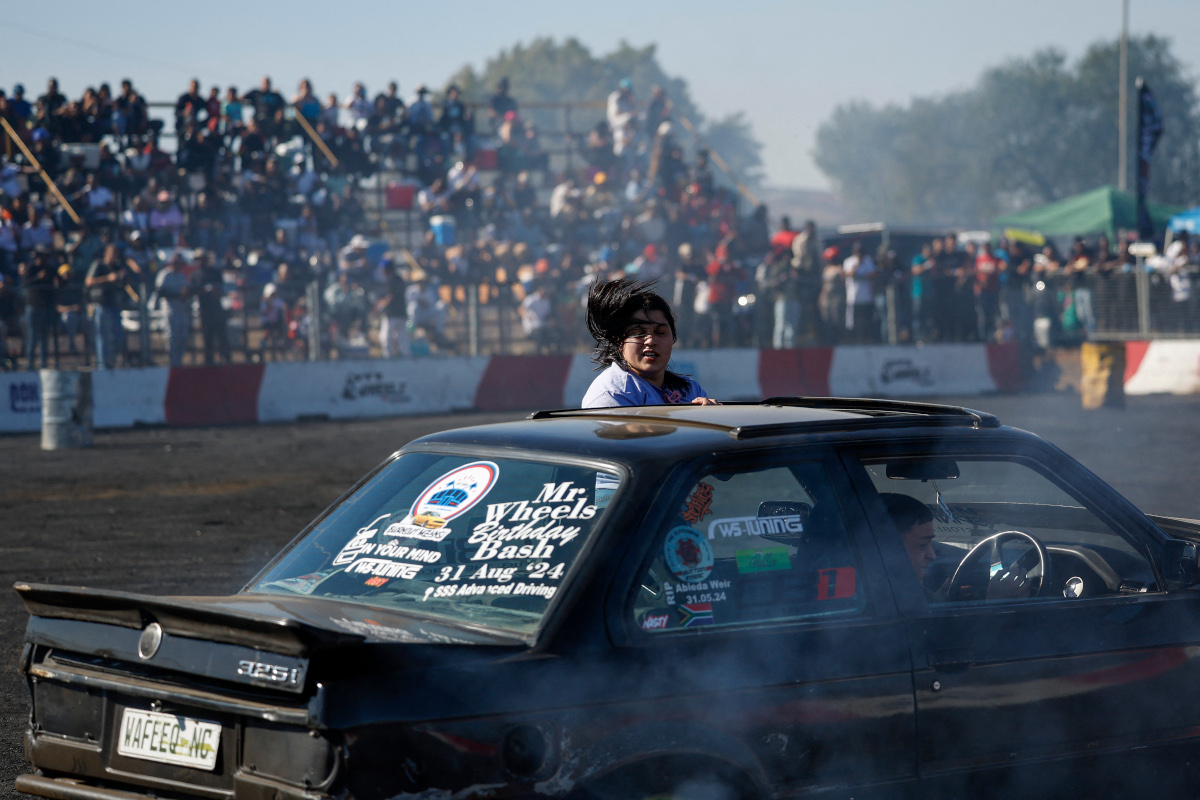
The inclusion of women in spinning is evident at weekend events such as those held at the Wheelz N Smoke arena, located southeast of Johannesburg. Here, the atmosphere is nothing short of electrifying. Hundreds of spectators, some armed with coolers and shisha pipes, gather to witness spinning crews from across the country demonstrate their prowess. The air is thick with the intoxicating smell of burning rubber and exhaust fumes. Among the more than two dozen cars participating, some are stripped down to bare essentials, while others are decked out with personalised touches, including one vehicle conspicuously modified to resemble a New York taxi.
In some performances, passengers lean dangerously out of windows to hype the crowd, while the driver skilfully navigates the car through a series of daring stunts. Among the sea of drivers are several women, confidently holding their own, including a mother and father duo with their two children in the back seat. Meanwhile, off the track, men hurriedly carry away the remains of shredded tyres.
“Man, I’m a petrol head, so anything that makes noise and a lot of smoke gets me going!” enthuses Chahid, a burger stand vendor, as he watches the action unfold. He praises the arena for its secure environment, where families can safely enjoy the spectacle. “It’s secured, the kids are safe, families can come, it becomes a family affair,” he adds.
The arena’s owner, Monde Hashe, notes the importance of moving the sport from the streets into a controlled environment. “It is more of a danger to them if a car happens to lose control,” he explains. Professional spinner Iksaan “Iki” Khan reflects on the sport’s transformation. “I started spinning when it was illegal,” he recalls. “When this place opened, we had more opportunities and more playtime.”
As spinning continues to evolve, it is clear that the sport is not just a pastime for thrill-seekers but a cultural phenomenon that embodies the resilience, creativity, and spirit of those who engage in it. And for Jivhuho, spinning remains a powerful medium through which she asserts her individuality, inspiring a new generation of women to take the wheel and make their mark in this dynamic world.