After years of turbulence marked by corruption scandals, fiscal mismanagement and operational decline, South Africa’s state-owned enterprises appear to be entering a period of cautious recovery. For more than a decade, entities such as Eskom, Transnet, Denel, the Passenger Rail Agency of South Africa, South African Airways and the South African National Roads Agency were emblematic of inefficiency and public mistrust. Yet recent indicators suggest a measured turnaround is under way, fuelled by governance reforms, stronger oversight and pragmatic partnerships between the state and the private sector.
The prolonged period of dysfunction, often described as the “state capture” era, left deep scars on the South African economy. Evidence presented before the Zondo Commission of Inquiry in 2022 detailed extensive political interference and the misappropriation of public funds. By 2023, load shedding had reached unprecedented levels, shaving points off gross domestic product growth, while inefficiencies at ports and railways hindered exports. Eskom’s debt exceeded R400 billion, Transnet faced infrastructure decay, Denel teetered on insolvency, and South African Airways entered business rescue. Public frustration was compounded by a sense of fatigue and resignation that state institutions had become irreversibly broken.
However, from 2024 onwards, the trajectory began to shift. The establishment of the Presidential State-Owned Enterprises Council in 2020 laid the groundwork for new standards of accountability and merit-based leadership. The principle of “no bailout without conditions” introduced a critical layer of fiscal discipline, tying state support to measurable performance targets. The government’s Medium-Term Development Plan 2024–2029 further reinforced this by aligning the operations of SOEs with broader developmental goals.



Eskom’s improvement has been particularly notable. By late 2025, the country had experienced more than 200 consecutive days without load shedding. The utility’s energy availability factor rose from 54.6 per cent in 2024 to 60.6 per cent in 2025, while operational efficiency gains and a 14 per cent reduction in fuel costs helped produce a pre-tax profit of R23.9 billion, the first in eight years. These gains have been attributed to disciplined maintenance, improved supply chain management and collaboration with private engineering partners. Under the leadership of Dan Marokane, Eskom’s management is targeting a 70 per cent energy availability factor by the end of 2026.
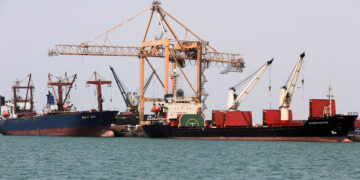
Transnet has also shown steady improvement. The freight logistics group reduced its losses to R1.9 billion in 2025 from R7.3 billion the previous year, supported by a R51 billion government guarantee programme focused on critical infrastructure upgrades. Freight volumes grew to 160 million tonnes in 2025, with projections of 180 million tonnes by 2026. Private participation at the Durban and Cape Town ports has helped reduce vessel backlogs and improved turnaround times. The government’s intention to expand this model underscores an important philosophical shift: that public value can be preserved while drawing on private expertise.
Denel’s story illustrates the impact of internal reform. Once facing collapse, the defence manufacturer posted an operating profit of R390 million in 2023, its first in seven years. A near-total reduction in irregular expenditure and a strengthened governance framework have restored investor confidence. Denel’s executives have set a revenue target of R3 billion by 2028, with a focus on regaining international contracts and stabilising production lines.
South African Airways, relaunched in 2021, has similarly begun to rebuild. Its fleet grew from 18 aircraft to 21 in 2025, with an expansion plan that includes new African routes such as Lagos. The airline’s five-year turnaround plan seeks to raise R2.25 billion through strategic partnerships and commercial collaborations, signalling a shift away from the isolationist approach that once characterised its management.
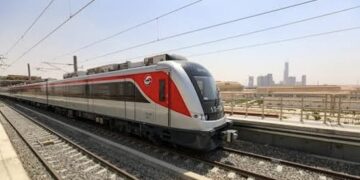
The Passenger Rail Agency of South Africa has reopened 35 of its 40 commuter corridors, with passenger numbers doubling to 77 million in the 2024/25 financial year. This was made possible through R21.1 billion in investment for rolling stock and station rehabilitation. In parallel, the South African National Roads Agency has advanced several infrastructure projects financed by a R7 billion loan from the New Development Bank, part of a $21.85 billion regional transport enhancement programme that aims to improve safety and trade connectivity across Southern Africa.
This emerging stability is reinforced by institutional accountability. Board appointments are increasingly merit-based and subject to parliamentary scrutiny. The State-Owned Enterprises Council now publishes quarterly performance metrics, while external auditors and independent monitors ensure greater transparency. Civil society and business associations have welcomed these measures as essential to restoring credibility and attracting long-term investment.
For ordinary citizens, the implications of these changes are tangible. Consistent power supply has enabled manufacturing plants to operate at fuller capacity, preserving employment in energy-intensive industries. Efficient port operations support exporters and help stabilise commodity prices. Improved passenger rail services enhance urban mobility and access to jobs, while better-maintained roads reduce transport costs and accidents. Economists estimate that these combined efficiencies could contribute up to two percentage points to annual GDP growth and create thousands of new jobs.
Nonetheless, the recovery remains fragile. Eskom’s municipal debt reached R94.6 billion in 2025, posing a fiscal risk if not contained. Corruption and theft continue to plague logistics networks, while global economic uncertainty may constrain investment flows. Political interference, though diminished, has not disappeared entirely. The durability of current reforms will depend on sustained oversight, fiscal prudence and continued collaboration between the state and private sector.

Yet what distinguishes this moment from past reform efforts is the alignment of interests across multiple sectors of society. Business leaders, labour unions and civic organisations share an understanding that the collapse of SOEs would undermine the broader national project. The participation of private actors in essential operations has also made a return to insularity far less likely. The combination of transparency, shared accountability and necessity may finally provide the foundation for a sustainable renewal.

In a continent-wide context, South Africa’s gradual turnaround reflects a broader rethinking of state enterprise governance across Africa, from Kenya’s energy reforms to Nigeria’s port concessions. The approach favours pragmatic hybrid models that combine public ownership with professional management and market discipline. Rather than adopting Western templates, these efforts are shaped by distinctly African imperatives: inclusive growth, developmental sovereignty and resilience in the face of external shocks.
The story of South Africa’s SOEs, therefore, is not simply one of numbers and policies. It represents a deeper struggle to reimagine state capability in a post-capture era, to reconcile public trust with economic realism and to humanise governance by placing citizens, not bureaucracies, at the centre of the narrative.