South Africa has secured its largest volume of investment commitments to date, yet official figures indicate that the conversion of pledges into realised economic activity remains uneven.
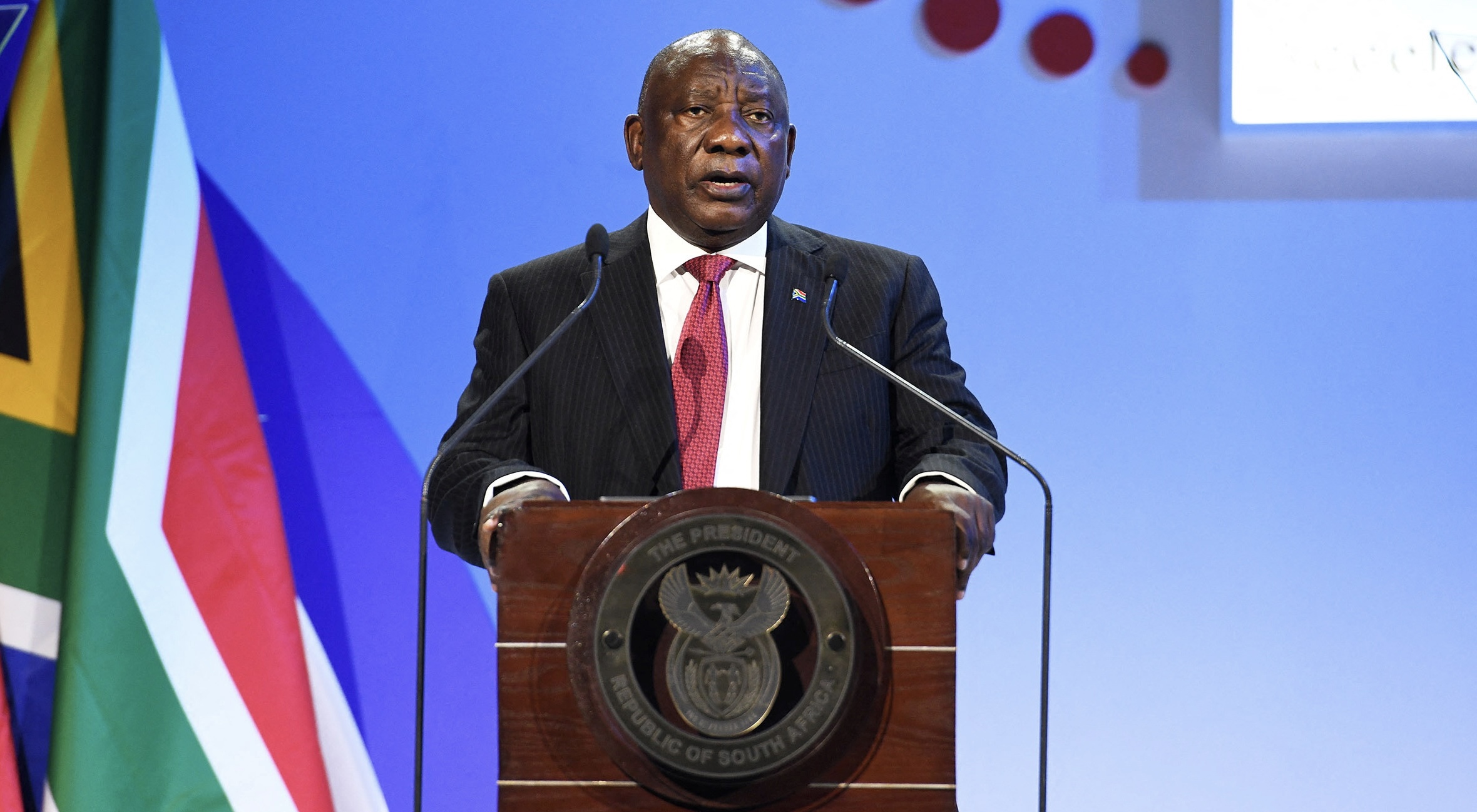
At the sixth South Africa Investment Conference, held on 31 March 2026 at the Sandton Convention Centre in Johannesburg, 81 projects were announced with a combined value of approximately 889.8 billion rand, equivalent to about 54 billion United States dollars. The conference forms part of a broader national strategy to mobilise 3 trillion rand in investment by 2030, a target framed within efforts to support inclusive growth and structural transformation.
Government data from the Presidency and the Department of Trade, Industry and Competition indicate that since the initiative began in 2018, around 1.5 trillion rand has been pledged. Of this amount, approximately 634 billion rand had been realised by March 2026, representing just under 42 per cent of commitments.



This level of conversion is below widely cited global benchmarks, where a larger share of announced foreign direct investment tends to materialise over time under stable economic conditions. Analysts often point to implementation rates ranging between 60 and 80 per cent in comparable contexts, although outcomes vary depending on sectoral composition and macroeconomic stability.
Despite these constraints, new investments continue to emerge. Vivo Energy, a subsidiary of Vitol, has committed about 130 million dollars to expand fuel storage capacity in Durban, a move expected to enhance supply resilience in the context of evolving global energy markets.
A notable feature of the current investment cycle is the prominence of domestic capital. Of the 415 billion rand in company led commitments, roughly two thirds originate from South African firms. Major contributors include Sasol, MTN Group and the V and A Waterfront development company. This pattern reflects the role of local enterprises in sustaining investment momentum even amid broader uncertainty.
Structural challenges remain a central factor shaping investment outcomes. Economic growth has remained modest, generally within a range of one to two per cent annually, while unemployment continues to exceed 30 per cent. Longstanding concerns relating to policy clarity, infrastructure constraints and governance have also influenced investor sentiment.

Capital formation indicators further illustrate these dynamics. Gross fixed capital formation has remained at approximately 15 per cent of gross domestic product, below the 20 to 25 per cent range commonly associated with sustained expansion in emerging economies, according to benchmarks referenced by institutions such as the World Bank and the International Monetary Fund.
The latest wave of commitments spans a range of sectors including tourism, real estate, green energy, chemicals and digital infrastructure. Investment in information and communication technology and the broader digital economy has attracted the largest share, reflecting both domestic demand and the continent’s ongoing digital transition.
From a broader African perspective, South Africa’s experience illustrates a wider pattern in which strong investment interest coexists with implementation challenges. Across the continent, governments and regional institutions continue to emphasise the importance of improving project execution, strengthening institutional capacity and deepening regional value chains under frameworks such as the African Continental Free Trade Area.
While the scale of pledged investment signals sustained confidence in South Africa’s economic potential, the central challenge remains the translation of commitments into tangible outcomes. The pace at which projects are implemented will shape their contribution to employment, infrastructure development and long term economic transformation, both within South Africa and in its wider regional context.