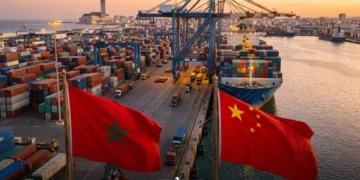
South Africa has expressed deep concern over the recent imposition of punitive tariffs by the United States, with the government describing the measures as a significant threat to bilateral trade and economic cooperation. Speaking at a joint press conference in Johannesburg, the Minister of International Relations and Cooperation, Ronald Lamola, criticised the decision and revealed a national strategy aimed at diversifying export destinations to safeguard the country’s economic interests.
The tariffs, announced by U.S. President Donald Trump on Wednesday, include a sweeping 31 percent levy on South African imports, set to take effect on 9 April 2025. This abrupt shift in trade policy has sent ripples through key sectors of the South African economy, including automotive manufacturing, agriculture, processed foods, chemicals, and metals. Minister Lamola referred to the tariffs as “a barrier to trade and shared prosperity,” highlighting their potential to stifle job creation and hinder growth across multiple industries.
In what appears to be a broader strategic pivot, South Africa’s government is now focusing on structural trade adjustments to reduce its reliance on any single export market. Lamola stated that the government will be accelerating its efforts to engage with alternative markets across Africa, Asia, Europe, the Middle East, and the Americas. The initiative seeks not only to diversify markets but to build a more resilient and inclusive economic architecture rooted in global collaboration.




One of the central components of the proposed strategy is a renewed focus on the African Continental Free Trade Area (AfCFTA), which South Africa aims to leverage to enhance intra-African trade. By strengthening regional trade integration, the government intends to open up new channels for industrial output and boost the competitiveness of local producers within the continent. This approach is also aligned with broader continental objectives of economic transformation and self-reliance.
Further elements of the strategy include the pursuit of revised trade agreements with the United States that could potentially replace or amend existing frameworks like the African Growth and Opportunity Act (AGOA). The AGOA has historically provided Sub-Saharan African countries with preferential access to the U.S. market, but the new tariffs threaten to undermine its effectiveness. Lamola suggested that unless the tariff decisions are reviewed or explained transparently, they may “effectively nullify” the benefits of AGOA for South Africa.
The Minister of Trade, Industry and Competition, Parks Tau, who joined Lamola at the press event, reiterated the government’s long-standing commitment to export diversification. He noted that the transition away from an overreliance on a single economic partner is not a reactionary measure, but rather the continuation of a strategic process already underway. According to Tau, this effort reflects the broader commitment to transforming the economy in a way that is inclusive, dynamic, and internationally competitive.
Tau also addressed concerns about the methodology used by the U.S. in calculating the new tariffs. He called for greater transparency, citing international norms such as the World Trade Organization (WTO) standards and the Most-Favoured-Nation principle. “We are advocating for a reform of the WTO to ensure it adapts to the contemporary economic context, while reinforcing the integrity of a multilateral system of trade,” he asserted.
Both ministers stressed the importance of dialogue with the U.S. administration to gain clarity on the economic rationale underpinning the tariff adjustments. They highlighted the need for mutual respect in trade relations and the value of adhering to international agreements that have long governed the global trade ecosystem.

While the full economic implications of the tariffs remain to be seen, South Africa’s proactive response signals a clear intention to maintain strategic autonomy in its trade policy. The government’s commitment to fostering new trade partnerships, investing in high-value manufacturing, and securing more equitable terms of international engagement reflects a broader ambition to enhance the country’s role in the global economy.
As the geopolitical and economic landscape continues to shift, South Africa appears poised to recalibrate its external engagements in a manner that prioritises long-term sustainability over short-term gain. The current developments underscore the importance of adaptive policy responses in an era of increasing protectionism and economic uncertainty. Whether these strategic shifts will yield the desired results will depend on execution, international cooperation, and the evolving global trade environment.