

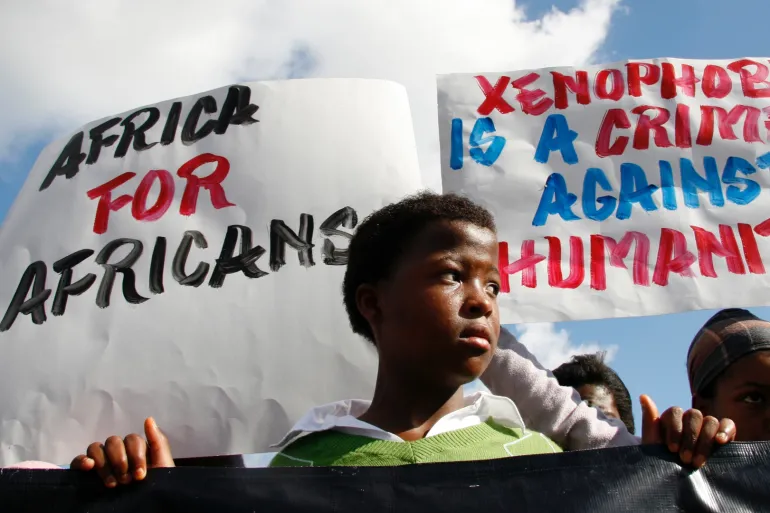
There is a particular irony in a nation confronting, with suspicion and hostility, those whose countries once sheltered its freedom. In the closing days of April 2026, videos circulating between roughly 22 and 24 April revealed groups of self-appointed vigilantes in parts of Durban and Cape Town stopping African migrants in the street, demanding documentation, disputing its authenticity, and, in some instances, issuing threats. In one widely shared clip, a Ghanaian national, later confirmed to be lawfully resident, was publicly humiliated and told to “fix your country.” Within days, the footage had travelled across the continent, prompting diplomatic protests and exposing, with uncomfortable clarity, a deepening fracture between South Africa and the region that once sustained it.
South Africa’s liberation was neither inevitable nor solitary. It was underwritten by a dense network of regional solidarity that imposed real and measurable costs on neighbouring states. Zambia and Tanzania hosted tens of thousands of exiles, providing not only refuge but the institutional infrastructure of resistance, from schools to training camps. Mozambique and Angola endured repeated cross-border incursions by the apartheid regime, attacks that devastated both civilian life and economic systems. Zimbabwe, emerging from its own liberation in 1980, assumed a critical role in sustaining regional logistics, facilitating alternative trade and supply routes at a time when direct dependence on South African ports was politically untenable. The redirection of trade corridors through Mozambican routes such as Beira was not merely symbolic but economically essential. Across the region, economies were recalibrated to weaken apartheid South Africa, often at considerable cost. The cumulative burden ran into hundreds of millions of dollars in lost output, alongside displacement and instability borne by societies that chose solidarity over expediency.
That history is not incidental to the present moment; it is central to it. Contemporary migration into South Africa reflects long-standing regional patterns of mobility rather than an exceptional surge. Current estimates place the number of international migrants in South Africa between 2.4 and 2.9 million, approximately 4 to 5 per cent of the population, according to Statistics South Africa’s migration profile. This is neither anomalous nor excessive in comparative terms. Countries such as Uganda host well over 1.5 million refugees alone, while Ethiopia and Kenya each accommodate populations approaching or exceeding one million refugees and asylum seekers, according to datasets derived from UNHCR and widely analysed in comparative migration studies. In proportional terms, several of these economies, with far fewer resources, carry a significantly heavier responsibility than South Africa. The notion that South Africa is uniquely overwhelmed is therefore not borne out by evidence.



What distinguishes the South African case is not scale, but interpretation. Migration has increasingly been framed as a primary driver of domestic economic distress, despite a substantial body of evidence indicating otherwise. Migrants are disproportionately active in entrepreneurial sectors, particularly in informal and small-scale enterprise. Studies of immigrant business formation in South Africa demonstrate that migrant-owned enterprises frequently generate employment, often hiring South Africans and sustaining commercial activity in areas underserved by formal capital. In urban economies, refugee-led business networks underpin supply chains that extend beyond their immediate communities, enhancing access to goods while lowering costs.
The fiscal dimension reinforces this picture. Migrants face structural barriers to accessing public welfare, particularly social grants, and thus contribute disproportionately through consumption, taxation and labour participation. Analyses of migration and economic development consistently show neutral or positive effects on growth and employment. The claim that migrants systematically displace local labour or burden the state is not supported by empirical evidence. It is, rather, a perception that has gained traction in the absence of sustained engagement with data.
This disjunction between perception and reality has profound consequences. South Africa’s economic challenges are structural, rooted in high unemployment, deep inequality and uneven service delivery. Yet in moments of social strain, these complexities are often reduced to more immediate and visible explanations. The figure of the migrant becomes a convenient proxy for deeper systemic failures. The emergence of vigilante enforcement, as seen in April, reflects the logical end point of this misdirection. When private actors assume the authority to determine legality in public spaces, the state’s monopoly on law is eroded, and with it the stability upon which both social cohesion and economic confidence depend.
The international implications are increasingly difficult to ignore. South Africa’s global standing has long rested on its transition from apartheid to constitutional democracy, a narrative that has attracted both moral authority and material investment. That standing is now under pressure. External misinformation, including the recurrent claim by Donald Trump of a so-called “white genocide,” has distorted perceptions of the country’s internal dynamics despite lacking any credible evidentiary basis. At the same time, images of xenophobic violence reinforce broader narratives of instability, regardless of context. In an era where perception travels faster than verification, such images carry disproportionate weight.
This matters because South Africa is actively positioning itself as a destination for large-scale investment. Recent commitments exceeding 50 billion US dollars, particularly within frameworks such as the Just Energy Transition Partnership, reflect confidence in the country’s long-term potential. Yet investment is predicated on predictability. Persistent unrest, coupled with the appearance of diminished state authority, introduces uncertainty that can recalibrate investor risk assessments. Capital does not merely seek opportunity; it seeks assurance.
It would be reductive to suggest that migration presents no challenges. Administrative inefficiencies, border management constraints and pressures on urban infrastructure are real and require coherent policy responses. Yet to attribute these challenges to migrants themselves is to misdiagnose the problem. The more fundamental issue lies in the absence of a credible, efficiently managed migration framework capable of aligning economic demand with regulatory oversight.

What remains striking, however, is how this inward turn sits uneasily alongside South Africa’s own continental ambitions. The African Continental Free Trade Area rests on a simple but transformative premise: that the free movement of goods, services and people will unlock the continent’s economic potential. South Africa stands to benefit disproportionately from this framework. As one of the continent’s most industrialised economies, it is uniquely positioned to expand exports, deepen regional value chains and leverage infrastructure development across borders. The movement of people is not incidental to this vision; it is integral to it. Labour mobility facilitates skills transfer, supports cross-border enterprise and underpins the very logistics networks that make trade possible.
To resist migration while endorsing continental integration is therefore a contradiction in terms. The infrastructure investments required to realise the promise of the free trade area, from transport corridors to energy systems, will themselves generate employment opportunities that transcend national boundaries. A more integrated regional economy would not diminish South Africa’s prospects; it would expand them, creating jobs through increased trade, industrial cooperation and service sector growth. Migration, in this context, is not a threat to economic development but one of its enabling conditions.
There remains, finally, a question that is less technical than it is moral. South Africa’s democratic identity is inseparable from the solidarity it once received. To turn against those who stood within that history is not simply an act of forgetfulness; it is a departure from the very principles that underwrote its transformation. The events of April 2026 will recede from immediate attention, but the choice they present will endure. A country that once depended on the openness of others must now decide whether it will align itself with a future defined by continental integration and shared prosperity, or retreat into a narrower vision that neither history nor economics can sustain.
Farai Ian Muvuti, CEO of The Southern African Times and Founder of Sankofa Capital. He champions African trade, investment, and digital innovation, linking businesses with global partners.


