Sunday, June 21, 2026
  • Login
The Southern African Times
  • Home
  • Southern Africa
  • Business
    • African Start ups
    • African Continental Free Trade Area
  • Technology
    • Lifestyle
      • Health
      • Culture
      • Food and Drink
      • Entertainment
  • Opinion
  • Sports
  • SAT Jobs
    • Events
  • About Us
    • Advertise with Us
    • Contact Us
No Result
View All Result
  • Home
  • Southern Africa
  • Business
    • African Start ups
    • African Continental Free Trade Area
  • Technology
    • Lifestyle
      • Health
      • Culture
      • Food and Drink
      • Entertainment
  • Opinion
  • Sports
  • SAT Jobs
    • Events
  • About Us
    • Advertise with Us
    • Contact Us
No Result
View All Result
The Southern African Times
No Result
View All Result
Home Analysis

SDRs should be used by governments, not central banks

by SAT Reporter
September 13, 2021
in Analysis, Opinion
0
SDRs should be used by governments, not central banks

At the very beginning of the spread of the COVID-19 pandemic, it became clear that its impact on the world’s affairs would be unprecedented. Among the first to realize the scale of the impending danger of pandemics were international financial institutions.

The World Bank (WB) and the International Monetary Fund (IMF) urged G20 countries to establish the specially designed Debt Service Suspension Initiative (DSSI) to help nations safeguard the lives and livelihoods of poor people. Since it took effect on May 1, 2020, the initiative has delivered over $5 billion in relief to more than 40 eligible countries.

A new chapter in the fight with current economic and social challenges began on August 23, when the IMF governors  approved a massive $650 billion allocation of Special Drawing Rights (SDRs) to boost global liquidity.


ADVERTISEMENT

Because of the pandemic, most countries were forced to increase their public debt. In middle-income countries in 2020, it increased by an average of 12 percentage points to 65 percent of their GDP and increased by 17 percentage points to 120 percent of the GDP in developed countries.

Record issuance and distribution of SDRs is the right and timely move. If the risk of debt volatility continued to rise, then monetary stimulus would decline. And if interest rates rise, so will the cost of servicing debt, which would become a massive problem for the stability of the global economy. This step will reduce the risks of fiscal imbalances in the countries’ fiscal and debt policies.

SDRs are not traditional money or a means of payment. Technically, these are potential claims of the holder of SDRs for the freely convertible currencies of other IMF members. The SDR exchange rate is determined daily based on exchange rates for a basket of currencies: the U.S. dollar, euro, yen, British pound, and Chinese yuan.

SDRs can be used in different ways, but traditionally they are stored in reserves, providing a higher level of hard currency and positively affecting the stability of national economies.

The last time the IMF issued SDRs was in 2009 to support the economy after the global financial crisis. Until August 23, SDR 204 billion was in circulation. Since August 23, SDR volumes have grown to 660 billion or $935 billion, which is an unprecedented volume comparable to the IMF’s share capital.
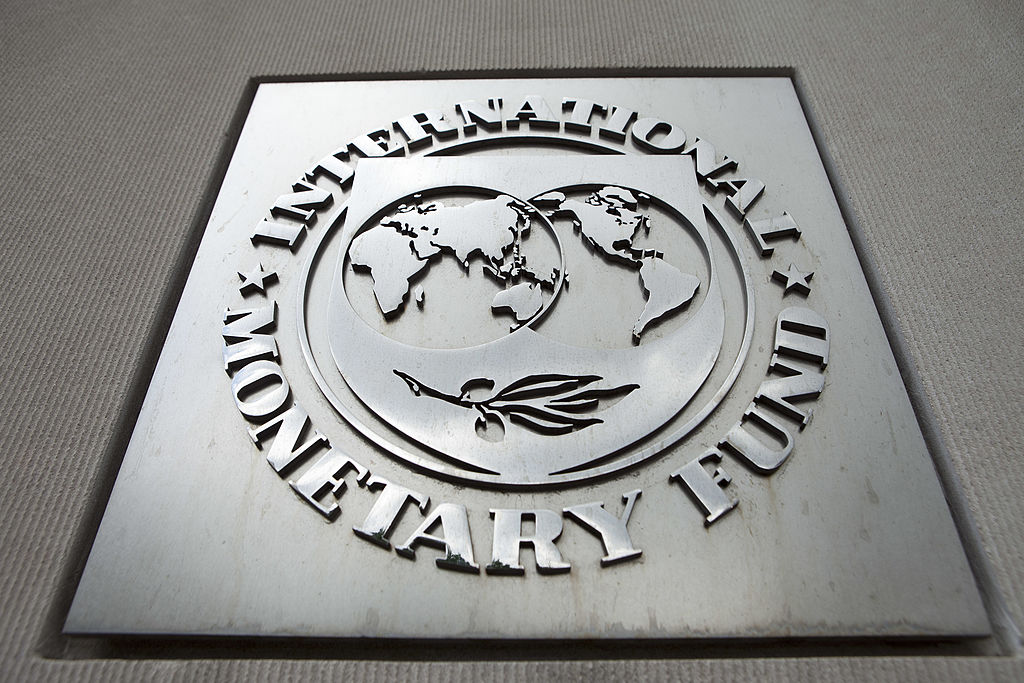
The logo of the International Monetary Fund at its headquarters in Washington, D.C., U.S., May 16, 2011. /Getty

The critical question now is how to best use the SDRs received by countries? Surprisingly, it is almost a priori assumed that SDRs should go to the accounts of central banks to replenish the foreign exchange reserves of states.

In this piece, I would like to explain why these funds now need to be explicitly directed to national governments, not central banks.

First, there are all the necessary legal grounds for this. Under Articles XV and XVII of the IMF’s Articles of Agreement, SDRs must be owned by “members.” And the members are the governments and not central banks.

A recent IMF manual explicitly states, “Member countries can use their newly allocated SDRs unconditionally … Members enjoy a large degree of freedom in how to manage the SDRs allocated to them, including to what extent central banks are involved in their management and whether the budget can directly use them for budget support.”

And footnote 13 says, “In some countries, authorities record the SDRs in the government balance sheet, and their domestic legislation specifies that a government agency is the ultimate owner of SDRs.”

Besides, the IMF’s recent guidance says, “The Articles of Agreement do not prescribe a specific accounting treatment for SDR allocations. Accordingly, members are not obliged under the Articles to follow a specific accounting framework or methodology in respect of their allocations.”

Even if the central banks have achieved such domestic legislation that promotes the placement of SDRs in the foreign exchange reserves of countries, then the IMF’s Articles of Agreement represent an international agreement that takes precedence over domestic legislation.

One of the direct proponents of a similar position is Kristalina Georgieva, the IMF Managing Director, who notes that the distribution of the 2009 SDR was and often primitively used to increase foreign exchange reserves. This time, Georgieva hopes things will be different.

In some cases, the new SDR issue also provides opportunities to lower the debts. Experts estimate that, on average, the resources provided would cover about 10 percent of the debt service of middle-income countries in the next five years and 20 percent of the debt service of low-income countries.

However, the most effective use of SDRs should be restoring the economies, improving infrastructure, or providing loans to businesses in fragile countries. The direct beneficiaries of the new liquidity must be people, but not the central bankers, who want to sterilize and hide those funds in their vaults.

It would be regrettable if, after all the international community’s efforts invested in the unprecedented distribution of SDRs, the governments could not use these funds in helping people in need due to artificial bureaucratic obstacles.

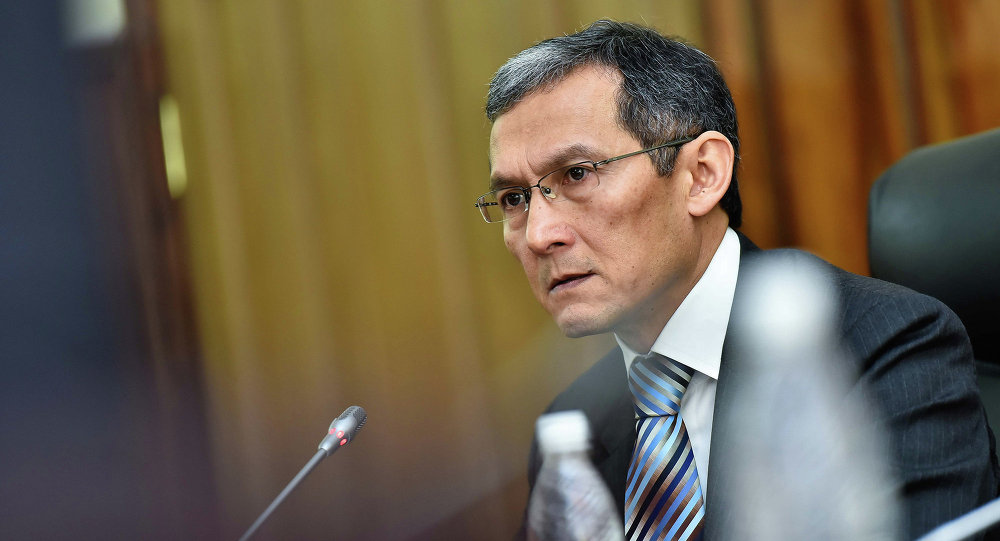
Djoomart Otorbaev is the former prime minister of the Kyrgyz Republic, a non-resident senior fellow of Chongyang Institute for Financial Studies at Renmin University of China and a member of the Nizami Ganjavi International Center. 

Previous Post

Britain no longer in top 10 for trade with Germany as Brexit bites

Next Post

Banks expect London to remain a top financial centre, says survey

SAT Reporter

Related Posts

Southern African Times Announces Brendan Amadi as Recipient of the 2026 Editorial Recognition of the Year Award
The Editorial Board

Southern African Times Announces Brendan Amadi as Recipient of the 2026 Editorial Recognition of the Year Award

by The Editorial Board
June 19, 2026
LONG READ | No Longer the World’s Dustbin: China’s Waste Ban and Africa’s Circular Economy Moment
Opinion

LONG READ | No Longer the World’s Dustbin: China’s Waste Ban and Africa’s Circular Economy Moment

by Times Reporter
June 12, 2026
OPINION | The Investors Southern Africa Refuses to See
Opinion

OPINION | The Investors Southern Africa Refuses to See

by Times Reporter
June 14, 2026
Faith, Miracles and the Crisis of Religious Authenticity
Opinion

Faith, Miracles and the Crisis of Religious Authenticity

by Brendan Amadi
June 10, 2026
How DRC President Leveraged Geopolitics to Secure Political Survival
Opinion

How DRC President Leveraged Geopolitics to Secure Political Survival

by Dr. Alex Ntung
June 9, 2026
Next Post
Banks expect London to remain a top financial centre, says survey

Banks expect London to remain a top financial centre, says survey

Browse by Category

  • Africa AI
  • African Continental Free Trade Area
  • African Debt
  • African Start ups
  • Agriculture
  • AI Africa
  • Algeria
  • All News
  • Analysis
  • Angola
  • Arts / Culture
  • Asia
  • Botswana
  • BOTSWANA
  • BREAKING NEWS
  • BRICS
  • Burkina Faso
  • Burundi
  • Business
  • Business
  • Business Wire
  • Cameroon
  • Central Africa
  • Chad
  • China
  • Climate Change
  • Climate Changev
  • Community
  • Congo Republic
  • Conservation
  • Côte d’Ivoire
  • COVID 19
  • CRYPTOCURRENCY
  • Culture
  • Democratic Republic of Congo
  • Diplomacy
  • Eastern Africa
  • Economic Development
  • Economy
  • Education
  • Egypt
  • Elections 2024
  • Energy
  • Entertainment
  • Environment
  • Eritrea
  • Ethiopia
  • Europe
  • Fashion
  • Feature
  • Finance
  • Financial Inclusion
  • Food
  • Food and Drink
  • Foods
  • GABON
  • Ghana
  • Global
  • Global Africa
  • Guinea
  • Health
  • Humanitarian Aid
  • Immigration
  • in Southern Africa
  • International news
  • International Relations
  • Investment
  • Ivory Coast
  • Just In
  • Kenya
  • Lesotho
  • Libya
  • Life Style
  • Lifestyle
  • Literature
  • Malawi
  • Malawi
  • Mali
  • Markets
  • Mauritius
  • Middle East
  • Mining in Africa
  • Morocco
  • Mozambique
  • Namibia
  • Niger
  • niger
  • Nigeria
  • North Africa
  • North-Eastern Africa
  • Obituaries
  • Obituary
  • Opinion
  • PARTNER CONTENT
  • Politics
  • Property
  • Racism
  • Rwanda
  • Rwanda
  • SADC
  • SAT Interviews
  • SAT Investigation
  • SAT Jobs
  • Saudi Arabia
  • Senegal
  • Seychelles
  • Somaliland
  • South Africa
  • South Sudan
  • Sports
  • Startup Africa
  • STOCK EXCHANGE
  • Sudan
  • Sustainability
  • Sustainablity
  • Tanzania
  • Technology
  • Telecommunications
  • The Editorial Board
  • The Power Of She
  • Togo
  • Trade
  • Travel
  • Travel
  • Tunisia
  • Uganda
  • Uncategorized
  • Wealth
  • West Africa
  • World
  • World
  • ZAMBIA
  • Zambia
  • ZIMBABWE
  • Zimbabwe

Browse by Tags

#NewsUpdate #SouthAfrica #SouthernAfricanTimes #TheSouthernAfricanTimes AfCFTA africa African Continental Free Trade Area African development African Development Bank African economies African economy African Union Agriculture Angola Botswana China Climate change Cyril Ramaphosa Economic Development economic growth energy transition Ghana governance industrialisation Inflation Infrastructure Infrastructure Development International relations Investment Kenya Mozambique Namibia news Nigeria Regional Integration renewable energy Rwanda SADC South Africa Southern Africa sustainable development Tanzania United States Zambia Zimbabwe
ADVERTISEMENT

WHO WE ARE

The Southern African Times is a regional bloc digital newspaper that covers Southern African and world news. The paper also gives a nuanced analysis on news and covers a wide range of reporting which include sports, entertainment, foreign affairs, arts and culture.

Welcome Back!

Login to your account below

Forgotten Password?

Retrieve your password

Please enter your username or email address to reset your password.

Log In
  • Home
  • Southern Africa
  • Business
    • African Start ups
    • African Continental Free Trade Area
  • Technology
    • Lifestyle
      • Health
      • Culture
      • Food and Drink
      • Entertainment
  • Opinion
  • Sports
  • SAT Jobs
    • Events
  • About Us
    • Advertise with Us
    • Contact Us
Not enough quota to unlock this post
Unlock left : 0
Are you sure want to cancel subscription?