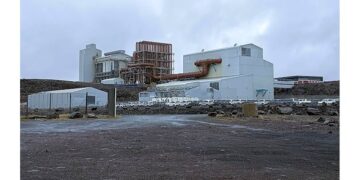
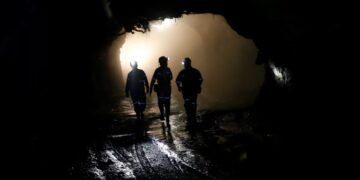
Beneath the green hills of Nyakabingo in central Rwanda, miners descend daily into tunnels to extract tungsten, a metal vital to both global defence and technology industries. Once entangled with the complex legacy of so-called conflict minerals, Rwanda is now attempting to reshape its identity in the mining sector, positioning itself as a model of responsible extraction and transparent mineral governance.
At the centre of this transformation stands the Nyakabingo mine, now the largest producer of tungsten in Africa. The site is operated by Trinity Metals Group, a company that acquired the mine in 2022. Backed by TechMet, an Irish investment firm supported by the United States International Development Finance Corporation, Trinity has tripled production within three years. It now yields over 1,200 tonnes of high-grade concentrate annually, positioning Rwanda among the world’s leading producers of tungsten.
Shane Ryan, Trinity’s chief operating officer and a veteran Australian miner, described the mine as “a relatively important piece of mining on a global scale.” His assessment reflects Rwanda’s growing prominence in the global minerals economy, where the pursuit of secure and ethically sourced materials has become a strategic imperative.



This expansion forms part of Rwanda’s broader national vision to strengthen domestic production of what are known as the “3T” minerals: tin, tungsten and tantalum. These metals are essential to electronics manufacturing, renewable technologies and defence applications. For Kigali, the goal is not only to increase output but to dispel persistent narratives portraying the country as a conduit for minerals illicitly sourced from neighbouring Democratic Republic of Congo (DRC).
Rwanda’s ambitions coincide with significant shifts in global supply chains. China currently controls more than eighty per cent of the world’s tungsten market and has tightened export restrictions, creating urgency among Western governments seeking alternative sources. Rwanda’s growing production has therefore drawn international attention. In late 2025, Trinity Metals shipped its first consignment of tungsten directly to Global Tungsten and Powders in Pennsylvania, the leading processor in the United States. This transaction, though modest in volume, marked Rwanda’s formal entry into the American defence supply chain.

For the Rwandan government, the partnership underscores a crucial point: that African nations can participate in global value chains not merely as suppliers of raw materials but as credible industrial actors. Yet the challenges of ensuring mineral traceability remain considerable. Companies such as Trinity have introduced rigorous monitoring systems that track every bag of ore from pit to export, seeking to comply with international due diligence requirements designed to eliminate conflict minerals from supply chains.
Despite these reforms, concerns persist over the continued smuggling of minerals from eastern Congo, where armed groups still control or tax production. Reports from United Nations experts in 2025 suggested that the M23 armed movement, which maintains control of parts of North Kivu, continues to exploit mines and profit from mineral trade. These findings have reignited debates about the scale of Congolese ore entering Rwandan exports through informal networks.
The International Tin Supply Chain Initiative (ITSCI), which oversees mineral traceability across the region, reported a two-hundred-and-thirteen per cent increase in recorded Rwandan tantalum exports in the same period that M23 extended its territorial control. The correlation prompted questions about the authenticity of some Rwandan exports. However, the Rwanda Mines, Petroleum and Gas Board (RMB), led by Alice Uwase, maintains that the government is making steady progress in modernising the sector and improving transparency. Uwase has acknowledged that allegations around smuggling have “undermined our efforts as a government” but insists that Rwanda’s long-term strategy is focused on sustainable, industrial-scale mining that benefits local communities.
Rwanda’s efforts also form part of a larger continental trend towards value addition and mineral beneficiation, central to Africa’s pursuit of economic sovereignty. Across the region, governments are encouraging local processing to retain greater value from natural resources. Rwanda now hosts one of only two tin smelters in the Great Lakes region, operated by the Polish company Luna, and Africa’s only tantalum refinery, managed by Power Resources International, a United Kingdom-run firm. Trinity Metals has also announced plans to raise 60 million US dollars to establish a domestic tungsten processing facility, a move that could further integrate Rwanda into global high-tech manufacturing networks.
Analysts argue that regional cooperation between Rwanda and the DRC could offer a pathway towards formalising cross-border mineral trade, ensuring that both nations benefit economically from shared geology rather than competing through informal or illicit routes. Such cooperation is being encouraged through diplomatic efforts backed by the United States, which views economic integration as key to lasting stability in the Great Lakes region.

Despite the obstacles, Rwanda’s mining sector is being reshaped by a pragmatic ambition to move beyond dependency and redefine its place in the global economy. This approach reflects a distinctly African perspective that sees industrialisation not as an imported ideal but as a necessary stage in reclaiming control over the continent’s natural wealth.
As Alice Uwase remarked, “We want to upgrade our game.” Her statement encapsulates a broader Pan-African aspiration for self-determination in resource governance. Rwanda’s evolving mining landscape demonstrates that the continent’s mineral wealth, long a source of external competition and internal tension, can also serve as a foundation for shared prosperity and industrial transformation.
In the quiet tunnels of Nyakabingo, where miners chip away at veins of tungsten deep within the earth, a different story of African mining is unfolding. It is a story of accountability, modernisation and resilience, offering a vision of how Africa’s resource economies can move from the margins of global narratives to the centre of their own.