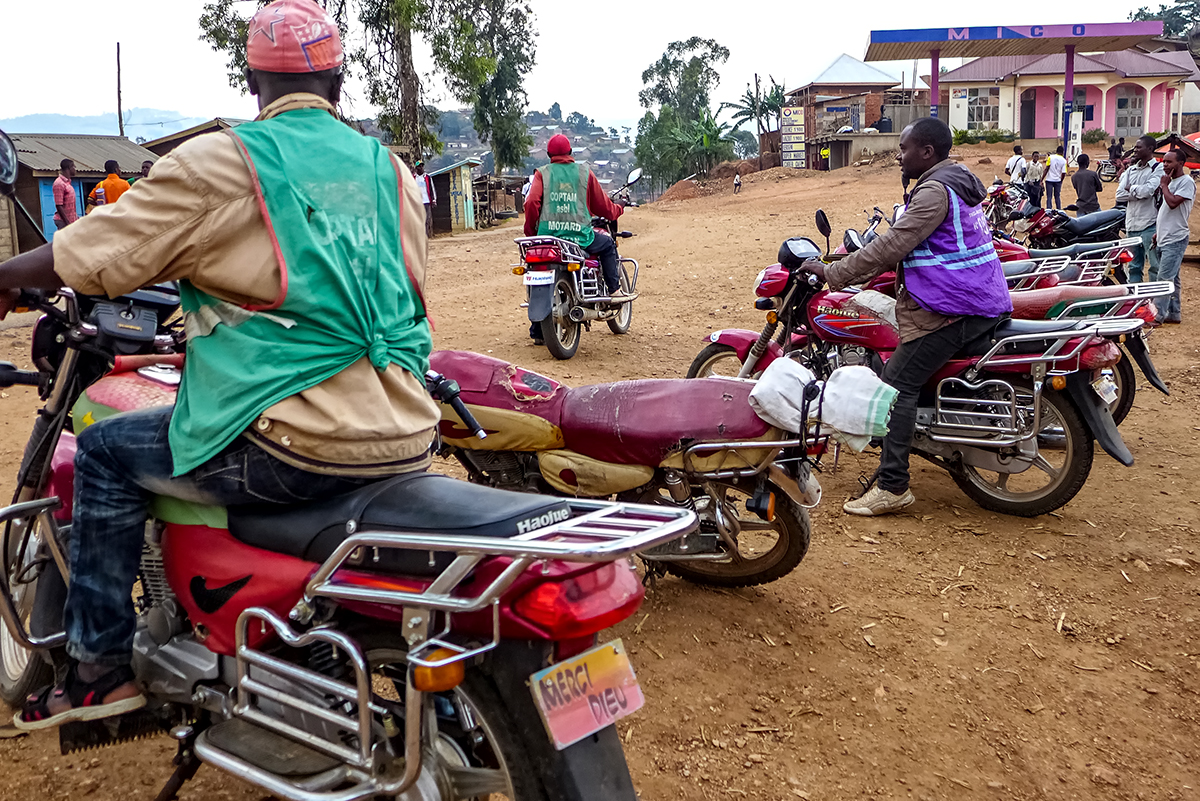
In recent years, motorbikes have surged in popularity as a primary means of transportation in Zambia, particularly in the country’s rural areas. Their rise reflects a practical solution to significant logistical challenges and economic constraints faced by these communities.
One of the primary reasons for the increasing adoption of motorcycles in rural Zambia is their ability to navigate terrains where traditional roads are either inaccessible or non-existent. This flexibility allows motorcycles to transport people and goods to areas that would otherwise remain isolated.
Affordability is another crucial factor driving this trend. Compared to conventional motor vehicles, motorcycles are considerably more cost-effective to purchase and maintain. This financial accessibility makes them an attractive option for residents of villages and small towns who might not have the means to invest in a car or light truck.



“I bought my motorcycle for 20,000 Zambian kwacha (about 776 U.S. dollars). One needs not less than 65,000 kwacha to buy a good small second-hand car,” said Peter Ngulube, 45, from Chongwe District.
Ngulube further explained that motorcycles not only offer affordability but also the advantage of reaching remote areas where conventional vehicles may falter. “This makes them an essential mode of transportation for a farmer like me who needs to access remote markets or transport goods across challenging terrain,” he added.
The impact of motorcycles in rural communities is profound. For many residents, motorcycles have become an integral part of daily life, facilitating access to essential services. Beatrice Mwango, 38, a homemaker from Kafue District, testified to the importance of having access to a motorcycle.
“Before my family bought a motorcycle, it was a challenge to access health services, especially during the rainy season when the roads became impassable. For my household, that challenge has been overcome,” said Mwango.

Similarly, Dalitso Tembo, 29, who uses his motorcycle as a taxi in Chibombo District, revealed that his vehicle has provided him with a stable source of income. He charges half the price of an ordinary taxi, which has attracted more customers than his peers using small cars as taxis. “Business is good. I am in the process of buying another motorcycle that will also be used as a taxi. I plan to have at least five motorcycles in the next two years and provide employment to young people,” said the enthusiastic youth.
The rise of motorcycles as the preferred mode of transportation among rural Zambians underscores a practical need for affordable, versatile, and accessible transportation. As these vehicles continue to play a critical role in connecting remote communities and promoting economic opportunities, their importance is set to grow even further.