Education is meant to be the clearest expression of a nation’s priorities. In Nigeria, it has instead become one of its loudest contradictions. We speak endlessly about youth as the future, yet we continue to underfund, neglect, and undermine the very system meant to prepare that future.
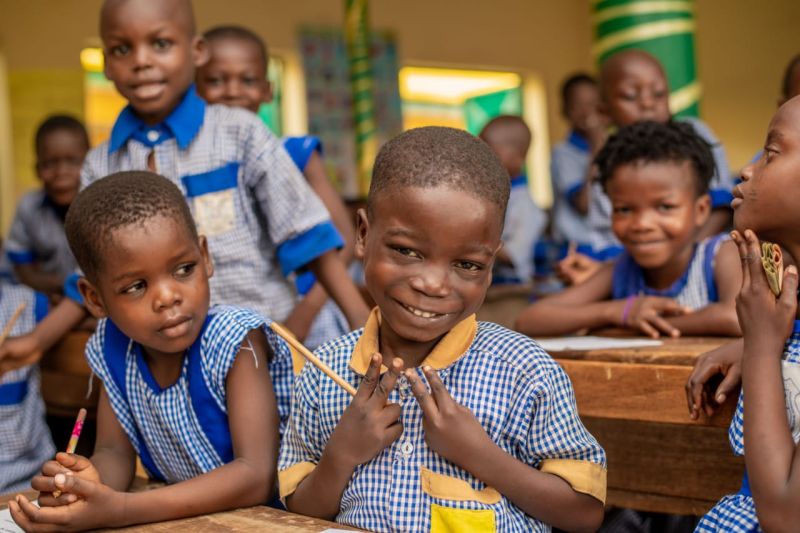
Across the country, schools struggle with collapsing infrastructure, overcrowded classrooms, and a shortage of basic teaching tools. Many students pass through years of formal schooling without ever touching a functional laboratory, computer, or library. Teachers work under demoralising conditions, often unpaid for months, expected to perform miracles without support. In too many cases, learning takes place in environments that are unsafe, polluted, or simply unfit for human development.
These material failures are compounded by moral decay within the system itself. Examination malpractice, cultism, hooliganism, and corruption have become disturbingly normalised. When young people observe dishonesty rewarded and integrity punished, education loses its ethical authority. It becomes transactional rather than transformative.



This is not a new crisis. At the return of civilian rule in the early 2000s, many Nigerians hoped the decay inherited from military governments would finally be addressed. Universities had been starved of funding for decades, partly because they were spaces of critique and resistance. Civilian leadership was meant to mark a turning point. Instead, the old habits persisted. Salaries remain irregular. Strikes remain routine. Morale remains low. What exists today is not a functioning democracy in education, but a fragile arrangement where survival often replaces scholarship.
The consequences are stark. Nigeria continues to record one of the highest numbers of school dropouts globally. Science education, which should be central to national competitiveness, is particularly weakened by outdated teaching methods and disengaging curricula. Young people are not being prepared for innovation or problem solving, but for rote repetition that leaves them ill equipped for modern economic realities.
Yet the failure of the system should not obscure the potential of those trapped within it. Nigerian youth remain resilient, imaginative, and deeply idealistic. They continue to organise, create, and challenge power despite limited opportunities. The tragedy is that a stage of life meant for investment and growth has instead become a period of frustration and disillusionment, worsened by mass unemployment and shrinking social mobility.
In this climate, education cannot be discussed without confronting the broader question of peace and social cohesion. Rising insecurity has forced many Nigerians to abandon livelihoods and live under constant threat. Education that ignores peace, tolerance, and civic responsibility risks producing graduates who are technically trained but socially unanchored.
Peace education offers a necessary corrective. It centres values such as empathy, justice, dialogue, and coexistence. It recognises society as interconnected rather than divided along rigid ethnic or religious lines. In Nigeria’s context, it is not an abstract ideal but a practical necessity. Young people must be equipped to question violence, resist manipulation, and imagine collective futures beyond fear.
Digital media presents an opportunity to advance this work, but only if educators are trained and supported to use it responsibly. Information alone does not build peace. It must be paired with critical thinking, ethical reflection, and inclusive narratives that reflect Nigeria’s diversity.
Any serious reform effort must begin with funding. Education cannot survive on rhetoric. Government commitment must be matched by responsible private investment, community involvement, and a renewed understanding of education as a public good rather than a privilege. Access and affordability are not optional. They are foundational.
Nigeria must also move beyond narrow models of learning that prioritise certificates over competence. Technical education, innovation centres, and research institutions require sustained investment if the country is to reduce dependence on imported technologies. Supporting local invention and adaptation is not only an economic strategy but a statement of national confidence.

Moral renewal is equally urgent. Integrity, discipline, and service must be restored as core educational values, not treated as extracurricular ideals. This work begins at home and in schools, but it must be reinforced by leadership that models accountability. Young people should not be reduced to tools of political mobilisation. They are capable of organising themselves, including forming movements that demand transparency and reform.
The challenge of violent extremism in parts of Nigeria further exposes the cost of educational neglect. Where inequality, exclusion, and poverty intersect with weak schooling, young people become vulnerable to radical ideologies. Education systems that ignore cultural diversity, silence minority voices, or avoid difficult historical truths risk deepening these fractures rather than healing them.
Preventive education must therefore address material inequality, recognise plural identities, include marginalised voices, and engage honestly with past and present injustices. Education that fails to offer pathways to dignity and employment will always struggle to compete with narratives that promise belonging through violence.
Ultimately, the state of education in Nigeria is not just a policy issue. It is a measure of national health. Societies that abandon their youth undermine their own stability. Young Nigerians deserve classrooms that stimulate thought, teachers who are respected, and systems that reward effort rather than connections.
The responsibility does not rest with leaders alone. Young people themselves must cultivate discipline, perseverance, and a refusal to accept mediocrity as destiny. Transformation is demanding. It requires patience, courage, and sustained commitment. But without it, the promise of Nigeria’s youth will remain trapped in classrooms that no longer teach and systems that no longer care.
Brendan Amadi is a Nigerian‑born scholar, writer, and public intellectual based in the United Kingdom, whose work traverses the intersecting fields of politics, religion, philosophy, history, and African identity.