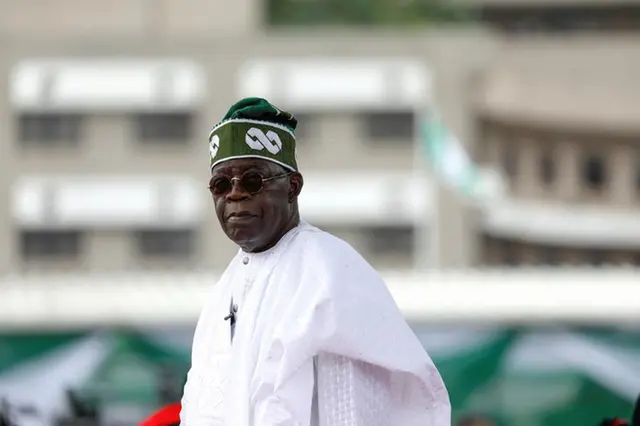
Nigerian President Bola Tinubu is poised to embark on a pivotal visit to China next week, where he is expected to hold high-level discussions with President Xi Jinping. The visit, timed to coincide with the China-Africa Cooperation Summit, underscores Nigeria’s strategic intent to deepen its economic and technological ties with the Asian powerhouse.
The summit, which convenes a spectrum of African leaders, will serve as the backdrop for the bilateral dialogue between the two heads of state. A Nigerian government spokesperson, Ajuri Ngelale, has indicated that the talks will extend beyond mere economic cooperation, touching on areas of mutual interest that encompass national, regional, and international security concerns.
This visit comes at a critical juncture for Nigeria, Africa’s largest economy, as President Tinubu seeks to galvanise foreign investment to address a range of pressing economic challenges. These include a stubbornly high inflation rate, chronic foreign exchange shortages, and systemic issues such as crude oil theft, which have hampered the country’s economic growth.
Central to President Tinubu’s agenda in China will be site visits to two of the nation’s industrial giants: Huawei Technologies and the China Rail and Construction Corporation. The latter is particularly significant, given Nigeria’s ambition to complete a high-speed rail line linking the southwestern city of Ibadan to the capital, Abuja. This project is emblematic of the broader infrastructural development that Tinubu envisions for Nigeria, leveraging Chinese expertise and investment.
In addition to these site visits, the Nigerian President is scheduled to engage with ten chief executives from major Chinese conglomerates. These discussions will traverse critical sectors including information and communications technology, oil and gas, aluminium production, seaport and harbour construction, financial services, and satellite technology development. The meetings aim to attract investment and technological transfer to Nigeria, further integrating the country into the global economic framework.
China’s focus on Africa as a key partner in its flagship economic cooperation programme is well-established. Nigeria, with its substantial market size and strategic regional influence, stands as a cornerstone of this Sino-African partnership. For President Tinubu, this visit represents an opportunity not only to strengthen bilateral relations but also to position Nigeria as a linchpin in the broader China-Africa alliance.
As Nigeria navigates its complex economic landscape, the outcomes of this high-profile visit could prove instrumental in shaping the country’s trajectory in the coming years. The strategic partnerships forged in Beijing are expected to yield dividends that resonate across multiple sectors, potentially revitalising Nigeria’s economic fortunes.