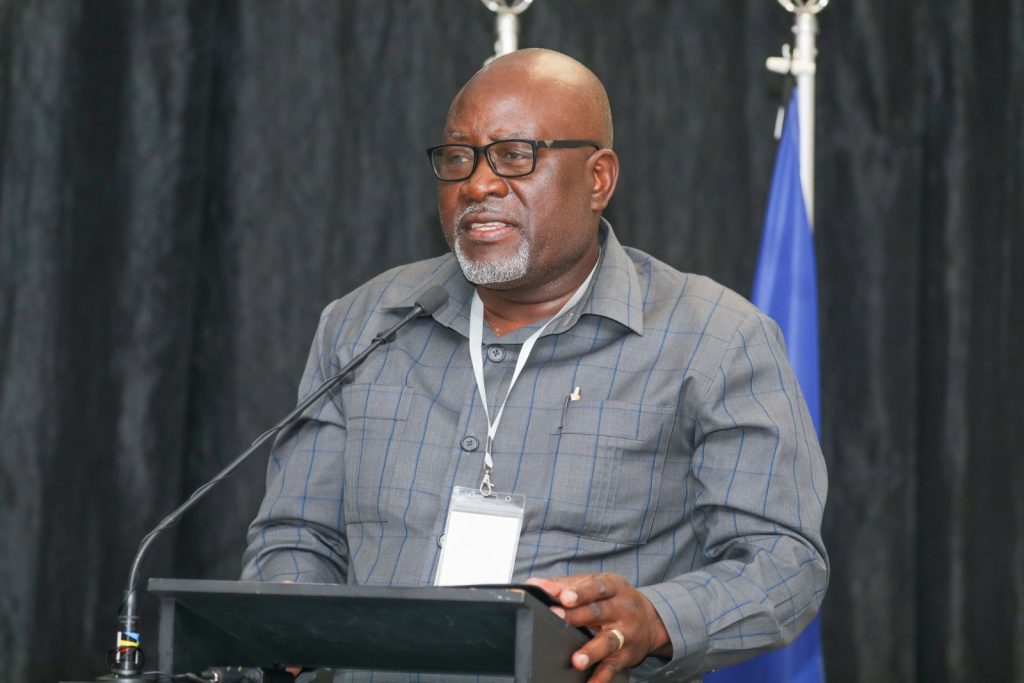
Namibia has formally launched its National Energy Compact, signalling its official participation in Mission 300, a continental initiative led by the World Bank Group, the African Development Bank, and other development partners. The initiative seeks to extend electricity access to 300 million people across sub-Saharan Africa by 2030, addressing one of the most persistent challenges to regional economic growth and social inclusion.
The launch ceremony, held in Windhoek and officiated by the Minister of Industries, Mines and Energy, Modestus Amutse, marks a pivotal step in Namibia’s efforts to reduce its dependency on imported electricity. Currently, the country produces roughly 40 percent of its power needs, importing the remaining 60 percent primarily from neighbouring states such as South Africa and Zambia, according to the Namibia Power Corporation (NamPower).
Amutse emphasised the link between energy security and national stability, stating that Namibia’s reliance on imports limits its capacity to drive industrialisation and equitable development. “Energy security is economic security, and we must change this trajectory. This means investing in generation while also addressing transmission bottlenecks,” he said during the launch.



The National Energy Compact is an outcome of extensive consultations that began at the Africa Energy Summit in Tanzania earlier this year. It aligns with Namibia’s Sixth National Development Plan (NDP6), which aims to connect 200,000 additional households to the electricity grid within the planning period. The compact is designed to coordinate efforts across government, industry, and regional partners to strengthen both access and infrastructure.

Namibia’s National Integrated Resource Plan (NIRP) lays out ambitious targets for the coming decade, including achieving 80 percent self-sufficiency in electricity generation and 70 percent renewable energy penetration in its energy mix. These goals build on the country’s substantial solar and wind potential, positioning Namibia as a future hub for clean energy in the region.
However, in a forward-looking statement, Amutse noted that the long-term strategy could also encompass nuclear energy. Namibia possesses some of the world’s richest uranium deposits, notably within the Erongo region, and the government has indicated interest in exploring how nuclear power could contribute to energy diversification and decarbonisation. “If we are serious about long-term decarbonisation, affordability, and reliability, nuclear energy must be part of the conversation,” Amutse stated.
Analysts note that Namibia’s approach reflects a broader African trend towards energy sovereignty — a concept gaining momentum as countries seek to balance sustainability with industrial expansion. Initiatives like Mission 300 are seen as critical to enabling this transformation, particularly in countries where energy poverty remains a structural barrier to human development.
Namibia’s participation also underscores the regional nature of Africa’s energy future, one that demands collaboration rather than competition. The compact’s focus on inclusivity, renewable innovation, and diversified generation reflects a shift away from externally driven models toward African-led strategies that prioritise self-determination, resilience, and equitable growth.
With abundant solar radiation, strong wind corridors along the coast, and vast mineral resources, Namibia stands at the intersection of opportunity and necessity. As the country integrates its national efforts into continental frameworks such as Mission 300, it contributes not only to its own stability but also to Africa’s shared vision of sustainable energy independence.