Preliminary results released by Uganda’s Electoral Commission indicate that incumbent President Yoweri Museveni holds a significant early lead following Thursday’s general election. With votes tallied from 45 percent of polling stations, the Commission reports Museveni has secured 76.25 percent of the vote, while his closest challenger, National Unity Platform (NUP) leader Robert Kyagulanyi, known widely as Bobi Wine, stands at 19.85 percent.
These provisional figures, though incomplete, have drawn attention both domestically and internationally, given the high-stakes nature of the election and Uganda’s historical political trajectory. President Museveni, in power since 1986, is seeking to extend his tenure beyond four decades, having presided over a period marked by both developmental initiatives and critiques over democratic backsliding.
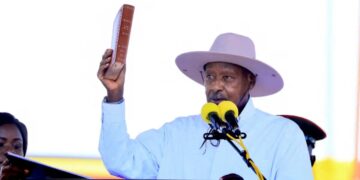
Speaking after casting his vote, Museveni expressed confidence in the outcome, stating that he expected to receive around 80 percent of the total vote in a process he described as fair and reflective of popular will. This marks a notable increase from his official 59 percent in the 2021 general election.



The opposition, however, has raised concerns regarding the transparency and fairness of the electoral process. Bobi Wine, a former musician who has become a leading political figure among Uganda’s younger demographic, alleged electoral irregularities including ballot stuffing, obstruction of opposition agents, and intimidation by security forces. These claims were made public via social media, despite an internet shutdown enforced nationwide on election day.
The National Unity Platform has further alleged that Wine was placed under de facto house arrest shortly after polls closed. Party officials reported that security forces surrounded his residence and entered his compound, allegedly establishing a presence within the premises. These reports have not been independently verified. When questioned, police spokesperson Kituuma Rusoke stated he had no knowledge of such a restriction.
The election process has been observed by more than 1,600 international and regional monitors, including delegations from the African Union, the East African Community, the European Union, the United States, the United Kingdom and China. Learn more about AU observer missions. While formal observer reports are yet to be released, some civil society organisations have raised preliminary concerns about the political climate leading up to the vote, citing the closure of civic space and limitations on freedom of assembly.

The Ugandan government has defended its management of the election, noting the logistical complexity of nationwide voting and the need for heightened security. Officials have insisted that the process adheres to constitutional and legal frameworks.
For many Ugandans, this election is not solely about choosing between individuals but about deeper questions regarding governance models, generational leadership, and the pathways toward political inclusion. Museveni remains a dominant figure in the post-liberation generation of African leadership, while Wine’s candidacy has come to symbolise youth-led demands for reform and political renewal.
Within this dynamic, Uganda reflects broader continental currents where aspirations for political accountability are increasingly expressed through electoral participation. However, entrenched power structures, security apparatuses, and contested legal frameworks often influence outcomes. Rather than framing such contests in terms of binary success or failure, they are perhaps better understood as evolving processes within complex democratic landscapes.
As vote counting continues, the Electoral Commission has urged calm, underscoring that only official results will determine the outcome. Observers and citizens alike await the full tabulation with cautious interest, as Uganda once again stands at a pivotal moment in its political journey.