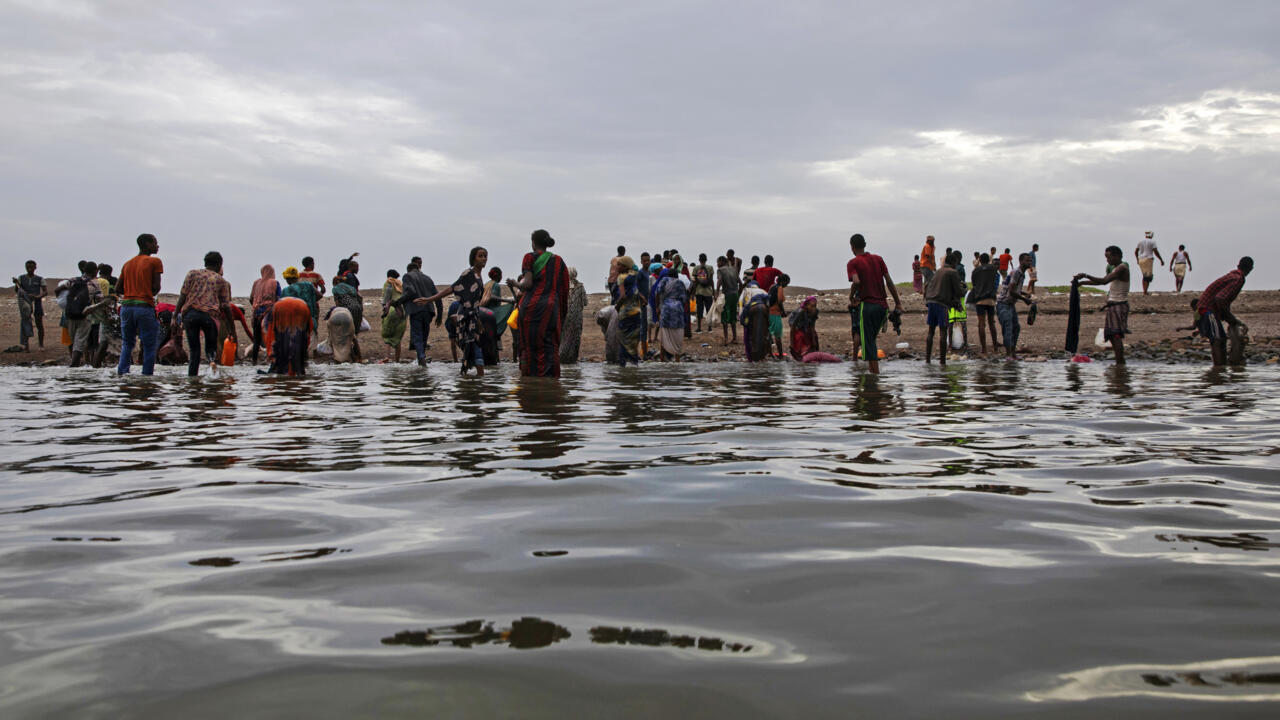
The Eastern Migration Route, stretching from the Horn of Africa across the Red Sea or Gulf of Aden to Yemen and onwards to Gulf states, remains one of the busiest and deadliest migration corridors in the world. According to the International Organization for Migration, more than 60,000 people made the crossing in 2024, the vast majority from Ethiopia, despite conflict, insecurity, and the ever-present risk of death. Over the past decade, at least 3,400 people have died attempting this journey, with 2024 alone recording 558 deaths, 462 of which were the result of shipwrecks.
The crossing itself is perilous. Migrants often board overcrowded, unseaworthy boats operated by smuggling networks that exploit their desperation. Those departing from Djibouti face a 30km passage across the Bab el-Mandeb Strait, a narrow but treacherous waterway where sudden storms, engine failures, and intentional capsizing have become routine hazards (Chiré & Pinauldt, 2024).
The motivations for this dangerous movement are deeply rooted in structural inequalities. Ethiopia, the largest source country, remains mired in instability despite the official end of the Tigray War in 2022. Ethnic tensions, political repression, and climate-induced food insecurity have compounded economic hardship. For many, migration represents not just an economic choice, but a survival strategy (Kefale & Gebresenbet, 2021).



The destination for most is Saudi Arabia or other Gulf states, where work as domestic staff, construction workers, or low-paid labourers offers a potential—if precarious—lifeline. Yet the Gulf labour system has long been criticised for exploitative practices under the “kafala” sponsorship regime, which binds workers to their employers and restricts mobility. Research has documented widespread abuse, including wage theft, passport confiscation, and physical and sexual violence (De Regt, 2010).
Reaching Yemen does not mark the end of the ordeal. The country’s civil war, ongoing since 2014, has created conditions of extreme insecurity. Migrants face kidnapping, forced labour, and sexual exploitation by armed groups and criminal gangs. Women and girls, in particular, endure targeted gender-based violence both en route and upon arrival (Jureidini, 2010).
The danger is compounded by geopolitics. In April 2024, U.S. airstrikes targeting Houthi forces struck a migrant detention facility in Sanaa, killing at least 68 migrants, most from the Horn of Africa, and injuring dozens more (UN News). In addition, Human Rights Watch reported that between March 2022 and June 2023, Saudi border guards killed hundreds of Ethiopian migrants attempting to cross from Yemen, firing indiscriminately at unarmed groups (HRW, 2023).
The invisibility of this migration route in Western discourse is striking. As migration anthropologist Marina de Regt has observed, South–South migration—where people move between developing regions—rarely draws the same political or media attention as South–North flows to Europe or North America. Policy interest in Europe and the United States, she notes, is largely limited to ensuring such migrants do not reach their shores. This lack of global scrutiny perpetuates the cycle of neglect and underfunding for humanitarian assistance along the Eastern Route (Mengiste, 2023).
Yet the story is not solely one of victimhood. Migrants along this corridor often demonstrate remarkable resilience, resourcefulness, and agency. Many who are deported back to Ethiopia after arrest in Saudi Arabia attempt the journey again, driven by the same factors that pushed them to leave in the first place. As Kefale & Mohammed (2016) note, migration decisions are frequently collective, shaped by family expectations, remittance potential, and deeply embedded social norms that valorise working abroad.
The persistence of the Eastern Route also reflects broader patterns in global labour migration. According to Ratha & Shaw (2007), South–South migration now constitutes nearly half of all international migration flows, with significant remittance streams flowing between developing countries. This makes the Horn–Yemen–Gulf corridor both an economic lifeline and a humanitarian crisis zone.

The humanitarian response is under strain. IOM, UNHCR, and the Yemeni Red Crescent provide life-saving assistance at migrant response points, but needs far outstrip available resources. Food insecurity, lack of shelter, and absence of medical care are acute. Assistance is further hindered by conflict-related access restrictions and the criminalisation of migration in transit and destination countries (Corbet & Záhořík, 2022).
Calls for a holistic policy response have grown louder. Analysts argue that tackling the drivers of migration—political instability, lack of livelihoods, and climate shocks—requires coordinated investment in development across the Horn of Africa, combined with negotiated agreements for safe and legal migration channels to Gulf states (Mabon & Mason, 2022). Without such measures, irregular flows will persist, leaving migrants at the mercy of smugglers, militias, and indifferent governments.

For now, the route remains both a testament to human endurance and a symbol of systemic failure. Each vessel that departs Djibouti’s shores carries stories of hope, desperation, and calculated risk—stories that too often end in tragedy, far from the gaze of the world’s media. Until the structural inequalities binding the Horn of Africa to the Gulf labour market are addressed, the Eastern Migration Route will remain a pathway where dreams and danger travel together.