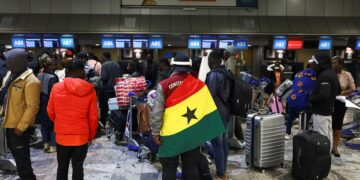
The International Organization for Migration has launched a 91 million US dollar funding appeal to assist approximately 1.2 million migrants and host communities across the Greater Horn of Africa and Southern Africa. Announced in Nairobi under the Regional Migrant Response Plan for the Horn of Africa to Yemen and Southern Africa, the appeal reflects sustained mobility pressures shaped by climate variability, economic precarity, demographic change, and episodic conflict across interconnected African corridors.
According to the International Organization for Migration, migration within and from the Horn of Africa remains predominantly intra African, with movements extending southwards towards countries including Kenya, Tanzania, Malawi, Zambia, Zimbabwe and South Africa, as well as northwards and across the Red Sea towards Yemen and the Gulf. The organisation’s regional updates, available through its Regional Office for East and Horn of Africa, identify these routes as among the most complex and high risk globally, involving mixed flows of labour migrants, asylum seekers, refugees, and unaccompanied minors.
In a recorded message accompanying the launch, IOM Director General Amy Pope stated that sustainable financing is essential to safeguard the rights, dignity and livelihoods of migrants and receiving communities. She observed that humanitarian assistance must be linked to longer term resilience and inclusive growth. Mohammed Abdiker, IOM Chief of Staff, noted that both the Greater Horn and Southern Africa have become significant centres of irregular migration, where migrants face documented risks including trafficking, forced labour, abduction, dehydration and gender based violence.



The Regional Migrant Response Plan outlines interventions spanning humanitarian assistance, protection services, voluntary return and reintegration support, livelihood programming, and community stabilisation initiatives. IOM operational information indicates that the plan also prioritises cross border coordination, data collection through the Displacement Tracking Matrix, and collaboration with national authorities and regional institutions.
The appeal aligns with continental and global policy frameworks, including the African Union Migration Policy Framework for Africa and the Global Compact for Safe, Orderly and Regular Migration. These frameworks emphasise shared responsibility, protection of migrants’ rights, and the developmental dimensions of mobility.
Research institutions across the continent have consistently highlighted the multidimensional drivers of movement. The Mixed Migration Centre reports that migrants departing from Ethiopia, Somalia, Eritrea and South Sudan often move along established corridors shaped by labour demand, social networks and environmental stress. The World Bank has projected that climate change may intensify internal and cross border mobility in Sub Saharan Africa if adaptive investments are insufficient.

At the same time, African scholarship urges that migration should not be framed exclusively through crisis narratives. The African Centre for Migration and Society documents the social and economic contributions of migrants within African urban centres, emphasising the importance of inclusive governance. Remittance flows tracked by the World Bank Migration and Development programme remain a significant source of household income across several countries in the Horn and Southern Africa.
From a pan African perspective, contemporary mobility reflects longstanding patterns of circulation embedded in trade, pastoralism, education and family ties. Present day movements unfold within a global system, yet are rooted in distinctly African socio economic realities. The 91 million US dollar appeal seeks to address protection gaps and humanitarian needs while strengthening resilience and opportunity across origin, transit and destination contexts.
IOM has indicated that the appeal aims to reach approximately 1.2 million people through coordinated regional programming during 2026. The extent and sustainability of the response will depend on donor contributions and collaboration among African states, regional bodies and international partners.