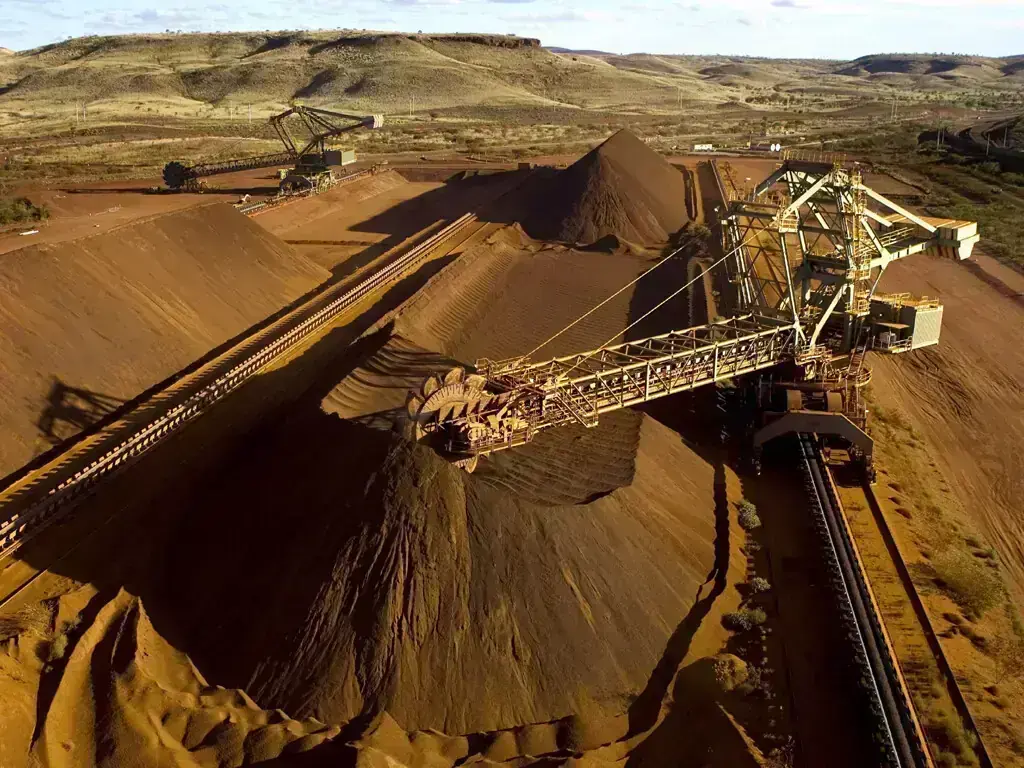
Liberia’s mining sector is poised for a significant expansion in 2026, with iron ore output projected to rise to approximately 30 million metric tons, according to public statements attributed to Mines and Energy Minister Matenokay Tingban and reported by Reuters. The anticipated increase follows a substantial scaling up of operations by ArcelorMittal Liberia, a subsidiary of the Luxembourg headquartered steel and mining group ArcelorMittal, alongside renewed activity by other concession holders.
Official projections indicate that national production, which stood at roughly 10 million metric tons in 2025, could triple within a year if expansion timelines proceed as planned. Central to this outlook is ArcelorMittal’s investment in a new concentrator plant, as well as upgrades to rail infrastructure and port facilities connecting the Yekepa mining corridor to the Buchanan port. Company disclosures confirm that the rail system is being modernised to accommodate up to 30 million tons per annum. Under the terms of its mineral development agreement, the government is expected to receive approximately 200 million United States dollars in associated fees linked to infrastructure use and expansion.
ArcelorMittal has publicly stated its intention to ship around 20 million tons of iron ore in 2026, compared with historical annual shipments that averaged closer to 5 million tons following the post war resumption of operations. The current phase of expansion forms part of a multi year capital programme aimed at improving ore quality through beneficiation and strengthening Liberia’s position within global steel supply chains.




Additional output is anticipated from other operators including Cavalla Resources, Westcrest Mining, Zodiac Exploration and Bao Chico Resources, several of which are reviving previously stalled projects. Although production schedules remain subject to financing, logistics and regulatory approvals, the Ministry of Mines and Energy has indicated that aggregate volumes from these entrants could materially supplement national totals. Gold production is also projected to increase, notably through the Dugbe project operated by Mansa Resources, reflecting a broader diversification within the extractive sector.
Policy reform is unfolding in parallel with operational growth. The government is reviewing its mining legislation with the stated objective of attracting investment while enhancing national participation. Proposed amendments include the introduction of a free carried state equity stake of between 10 percent and 15 percent in new projects, with a longer term aspiration of reaching 25 percent participation. Current royalty rates are reported to remain at 4.5 percent for iron ore, 3 percent for gold and 8 percent for heavy mineral sands. The Ministry of Justice is expected to clarify how revised equity provisions might apply to existing agreements.
Liberia’s approach reflects wider continental debates on resource governance and value retention. Across Africa, policymakers have increasingly examined models that combine royalties with equity participation as a means of strengthening fiscal resilience and expanding domestic development financing. Institutions such as the World Bank have previously noted the importance of balancing investor certainty with public revenue optimisation in post conflict and frontier mining economies.
In addition to iron ore and gold, the ministry has signalled interest in cataloguing critical minerals including lithium, drawing on earlier geochemical surveys undertaken with international partners. Such efforts align with growing global demand for battery minerals and raise questions about how African producers can secure greater beneficiation and technological transfer within emerging energy transition supply chains.
While official estimates suggest that total mineral output could rise by between 25 percent and 30 percent in 2026, final figures will depend on the pace of commissioning, global commodity prices and logistical performance. Iron ore markets remain sensitive to fluctuations in Chinese steel demand and broader macroeconomic conditions. Nevertheless, the scale of planned expansion marks one of the most significant shifts in Liberia’s extractive landscape since large scale mining resumed after the civil conflict.
For Liberia, the projected increase is not solely a question of tonnage. It intersects with national aspirations for infrastructure development, employment generation and long term structural transformation. How effectively expanded production translates into inclusive growth will depend on regulatory clarity, institutional capacity and sustained engagement between state authorities, companies and affected communities.