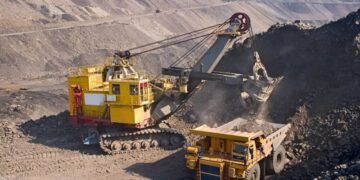
Zimbabwe focused gold producer Caledonia Mining Corporation Plc reported an 18.3 percent increase in revenue for the first quarter of 2026, supported primarily by stronger international bullion prices, even as production at its flagship Blanket Mine declined due to operational challenges linked to ore access.
According to the company’s quarterly financial results released on 11 May, revenue rose to US$66.43 million from US$56.16 million recorded during the corresponding period in 2025. Gross profit increased by 19.2 percent to US$32 million, while net profit rose to US$18.91 million, compared with US$11.16 million during the same quarter last year.
Caledonia stated that gold production at Blanket Mine, located in southern Zimbabwe, reached 14,767 ounces during the quarter. The company sold 13,372 ounces from Blanket and ended the quarter with 3,656 ounces of gold bullion in inventory. Consolidated sales, which include output from the Bilboes oxide operation in north western Zimbabwe, totalled 13,784 ounces compared with 19,388 ounces during the first quarter of 2025.



The company attributed the lower production primarily to constrained access to higher grade ore zones underground. While the volume of ore milled marginally increased, the average ore grade declined from 3.1 grammes per tonne to 2.5 grammes per tonne, contributing to lower recovery rates and increased production costs per ounce.
Chief Executive Officer Mark Learmonth said the company has introduced measures intended to improve access to higher grade areas and stabilise production performance over the remainder of the year.
Learmonth noted that ore grades improved progressively during the quarter and that this trend continued into April. He also pointed to ongoing deep level drilling at Blanket Mine, which he said continued to indicate geological continuity and the long term viability of the ore bodies at depth.

Caledonia maintained its full year production guidance for Blanket Mine at between 72,000 and 76,500 ounces.
The performance comes at a time when several African gold producers are navigating a complex operating environment shaped by fluctuating commodity prices, rising input costs, energy supply concerns and evolving regulatory frameworks. Zimbabwe remains one of the continent’s most historically significant gold producers, with mining continuing to play an important role in export earnings, employment and regional economic activity.
Across southern Africa, governments and mining companies continue to face growing expectations around value addition, local beneficiation and community participation in extractive industries. Analysts have observed that while elevated gold prices have improved earnings across the sector, long term sustainability will depend on investment in infrastructure, geological development, environmental stewardship and equitable economic participation.
Caledonia’s continued investment in underground exploration at Blanket reflects a broader trend among African mining operators seeking to extend mine life and strengthen domestic production capacity in an increasingly competitive global minerals market.

The company trades on the NYSE American, the London AIM market and the Victoria Falls Stock Exchange.