

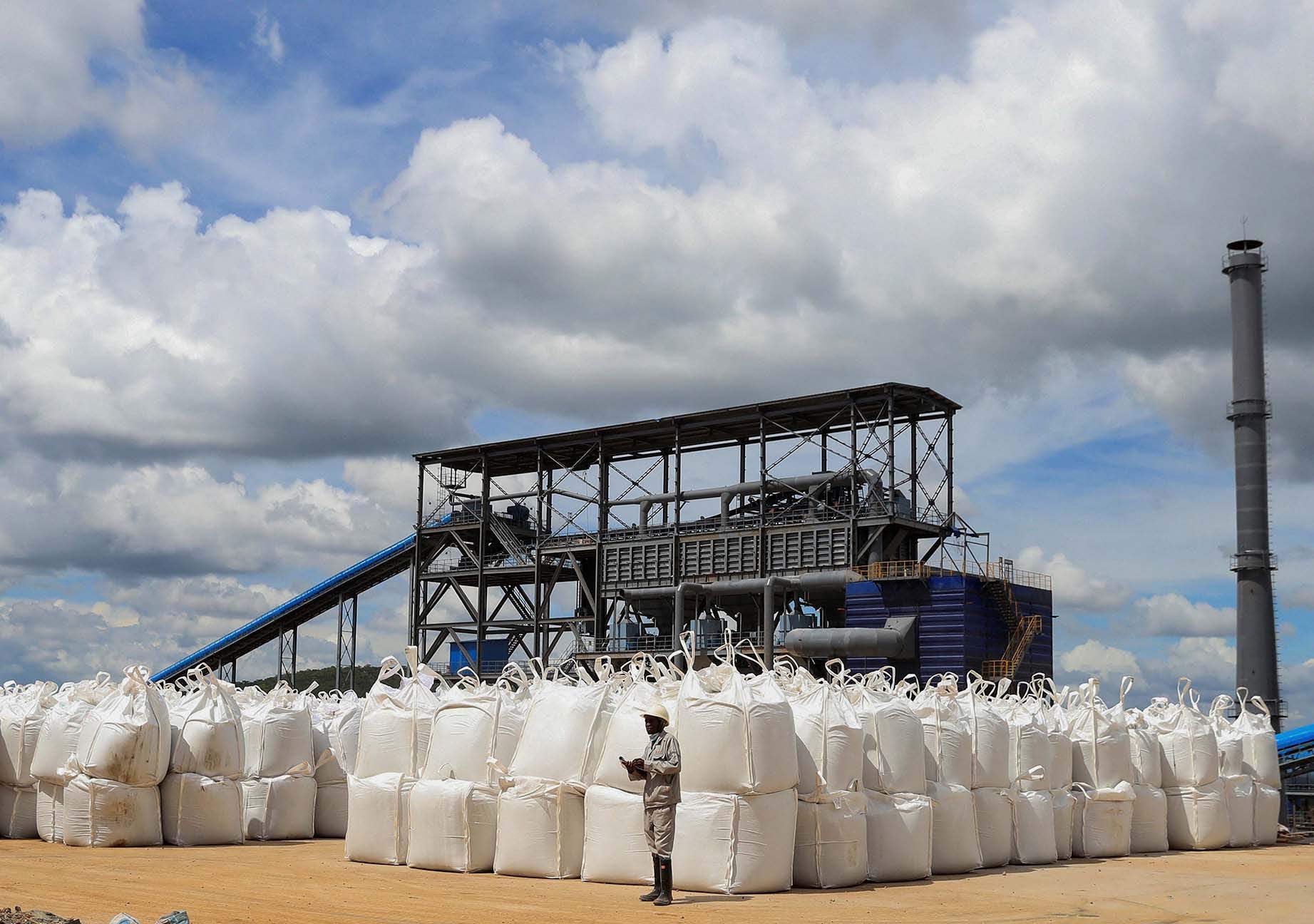
Zimbabwe is expected to review lithium export quotas in 2027 as major producers move towards establishing domestic processing facilities, according to Mines and Mining Development Minister Polite Kambamura.
Speaking during a media briefing in Harare on Tuesday, Kambamura said the current export arrangements were tied to commitments made by six large scale lithium producers to construct lithium sulphate plants by January 2027. The policy forms part of Zimbabwe’s broader effort to deepen mineral beneficiation and increase local participation in the battery minerals value chain.
Zimbabwe has emerged as Africa’s leading lithium producer in recent years, supported by rising global demand for minerals used in electric vehicle batteries and renewable energy storage systems. According to the government, the export quotas currently in place apply only to approved producers operating lithium concentrate facilities established between 2020 and 2025.



Kambamura stated that the quotas were not intended for the export of raw minerals. Instead, they were introduced as a regulatory mechanism to align export volumes with installed processing capacity and to monitor compliance with government conditions linked to beneficiation.
The minister said authorities would consider expanding export quotas next year if producers demonstrate sufficient progress in developing value added lithium salts such as lithium carbonate. He added that the quota framework was also intended to prevent excess consignments from entering informal trading channels or being transferred to unlicensed intermediaries.
Zimbabwe suspended exports of raw lithium and lithium concentrates earlier this year as part of its industrialisation strategy aimed at retaining greater value from the country’s mineral resources. The policy reflects a wider continental conversation around resource governance, beneficiation and economic sovereignty in Africa’s extractive industries.
Across the continent, several African governments are increasingly seeking to move beyond extractive economic models centred on raw commodity exports. Policymakers argue that domestic processing and manufacturing capacity could create broader economic benefits through employment, infrastructure development and technology transfer. However, industry analysts have also noted that beneficiation policies require substantial investment in energy infrastructure, transport networks, technical expertise and financing to achieve long term sustainability.
Zimbabwe’s lithium sector has attracted significant foreign investment over the past five years, particularly from Chinese mining companies involved in battery supply chains. Major projects such as the Arcadia Lithium Mine and Bikita Minerals have positioned the country as an increasingly important supplier within the global energy transition economy.

Government officials have maintained that the country’s mineral policies are designed to balance investor participation with national development priorities. Kambamura said the quota system would continue to serve as a monitoring instrument to assess whether companies are fulfilling commitments that include the establishment of separating facilities for additional economically viable minerals contained within lithium concentrates.
Industry observers note that the success of Zimbabwe’s beneficiation agenda may influence wider policy approaches across Southern Africa, where governments are examining how strategic minerals can contribute more directly to regional industrial development rather than primarily serving external markets.


