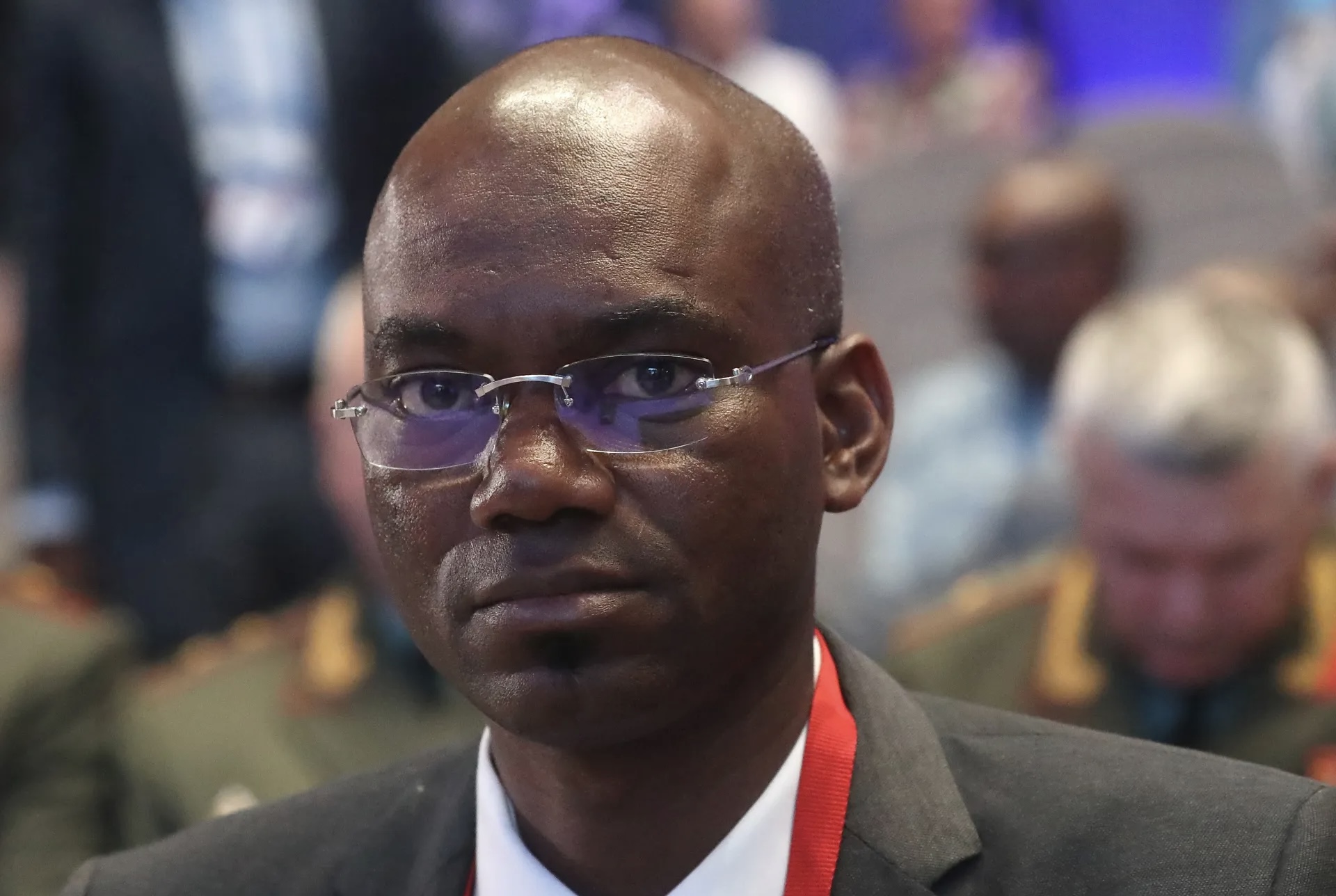
Mali’s political and security landscape has been further destabilised following the reported killing of Defence Minister Sadio Camara in an attributed to insurgent actors, according to state media and government officials. Reporting from multiple verified outlets, including Reuters, indicates that Camara died after assailants targeted his residence on Saturday. The Malian government, through spokesperson Issa Ousmane Coulibaly, confirmed the incident on national television, lending official weight to earlier accounts from local media and familial sources.
The circumstances surrounding the attack remain under investigation, though initial reports suggest coordination consistent with insurgent tactics that have characterised insecurity across Mali and the wider Sahel region. While no group has formally claimed responsibility at the time of writing, the pattern of violence aligns with activity historically linked to armed groups operating in central and southern Mali. These groups have increasingly extended their reach beyond rural strongholds, raising concerns about the evolving geography of insecurity in the country.
Camara, a central figure in Mali’s transitional administration, held significant influence within both military and political spheres. His tenure as defence minister coincided with a period marked by shifting alliances and a reconfiguration of security partnerships, including deepening engagement with non Western actors. His recent diplomatic engagements, including interactions with Russian officials, were indicative of Bamako’s efforts to recalibrate its strategic posture amid ongoing conflict and international scrutiny.



The reported assassination underscores the fragility of state authority in contexts where governance, security, and community resilience intersect under strain. Across the Sahel, regional bodies such as the Economic Community of West African States have repeatedly highlighted the need for coordinated responses that centre local realities while addressing transnational threats. Mali’s situation reflects broader continental challenges in navigating sovereignty, external partnerships, and internal cohesion.
Reactions from across Africa have begun to emerge, with officials expressing concern over the implications for stability in Mali and neighbouring states. The African Union, which has consistently advocated for African led solutions to African challenges, is expected to deliberate further on the matter, particularly in relation to security sector governance and the protection of public officials in volatile environments.

This development also raises questions about the protection of civilian and political spaces in conflict affected regions. Analysts note that the targeting of high ranking officials signals both a tactical escalation and a symbolic challenge to state structures. At the same time, community centred perspectives emphasise the human cost of prolonged instability, highlighting the experiences of ordinary Malians whose lives continue to be shaped by cycles of violence and uncertainty.
As investigations continue, the focus remains on establishing accountability while preventing further escalation. Mali’s trajectory will likely depend on its ability to balance immediate security imperatives with longer term efforts to rebuild trust between institutions and the communities they serve. In this regard, regional solidarity and locally grounded approaches may prove critical in shaping outcomes that prioritise both stability and dignity.