Australia’s Sovereign Metals Limited has entered into a landmark partnership with the International Finance Corporation (IFC), the private sector arm of the World Bank Group, to advance the development of the Kasiya Rutile-Graphite Project in Malawi. The agreement marks a significant step towards strengthening sustainable mineral development in Africa and underscores Malawi’s emerging role in the global supply chain for critical minerals.
The IFC’s involvement is expected to provide both financial and advisory support to Sovereign Metals should the company seek funds for the construction phase of the project. According to data from the London Stock Exchange Group (LSEG), Rio Tinto Plc holds an 18.45 percent stake in Sovereign Metals, positioning the Anglo-Australian mining giant as a key partner in the project’s long-term vision.
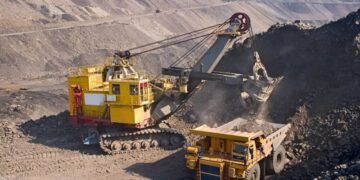
The Kasiya Project has been described by Sovereign as the world’s largest natural rutile deposit and the second largest graphite deposit, a distinction that elevates Malawi’s profile within the global minerals market. Rutile, a titanium dioxide mineral, is widely used in industrial and technological applications, while graphite is an essential component in the production of lithium-ion batteries used in electric vehicles and renewable energy storage systems.




The collaboration arrives at a time when Western economies are seeking to diversify sources of critical minerals to reduce dependency on established suppliers such as China. However, analysts and regional observers note that the true significance of this development lies not merely in geopolitical competition but in the potential for Africa to assert greater agency in shaping the global minerals economy on its own terms.
The involvement of the IFC represents a potential model for how international financial institutions can engage in resource projects that align with both global sustainability objectives and local development needs. Malawi, which has historically been dependent on agricultural exports, may stand to gain from the diversification of its economy through the responsible development of its mineral sector.
Dr. Linda Phiri, an economic development specialist based in Lilongwe, noted that “the partnership demonstrates a shift in how African nations are beginning to assert their place in the global supply chain for energy transition minerals. It is not simply about extraction but about ensuring that value addition, employment creation, and environmental stewardship remain central to the process.”
The Kasiya project, located in central Malawi, has been under exploration and development for several years. Sovereign Metals has emphasised its commitment to environmental and social governance (ESG) standards, stating that the project’s design prioritises community engagement and minimal ecological impact.
This partnership between Sovereign Metals, Rio Tinto, and the World Bank’s IFC may set a precedent for how resource partnerships can evolve in Africa — with a renewed emphasis on equitable development, local participation, and long-term sustainability. While the agreement has drawn attention from global investors, many within the region view it as a step towards redefining Africa’s role from a supplier of raw materials to a stakeholder in the global green transition.