Ghana and the United Kingdom have formally signed a bilateral debt restructuring agreement valued at 256 million US dollars, marking a significant step in Accra’s ongoing efforts to stabilise its public finances and consolidate economic recovery. The deal extends the maturity profile of Ghana’s obligations to the UK by fifteen years, offering the West African nation additional fiscal space to pursue growth-oriented policies.
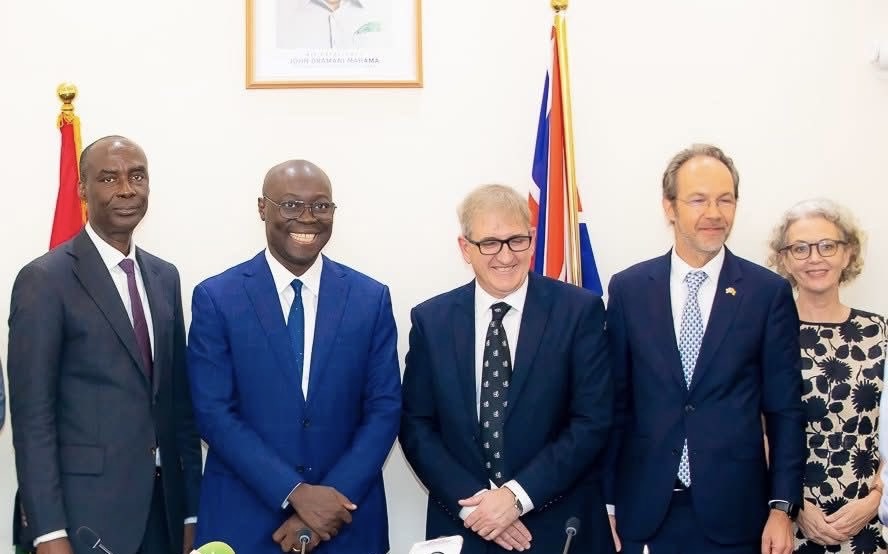
The agreement was signed on Wednesday by John Humphrey, the UK Trade Commissioner for Africa and Cassiel Ato Forson, Ghana’s Minister of Finance, in alignment with the multilateral framework established under the Paris Club and G20 Common Framework for Debt Treatments.
Speaking at the signing, Humphrey emphasised that the restructuring was not simply a bilateral arrangement but part of a broader international consensus aimed at enabling Ghana to maintain debt sustainability while advancing its development agenda. “By restructuring this debt in partnership with the Paris Club and G20, we are creating the fiscal space Ghana needs to deliver on its bold vision for the future,” he noted.




Forson outlined the Ghanaian government’s intention to channel British concessional support into critical infrastructure projects, particularly roads. According to him, these investments are intended to improve connectivity, create employment opportunities, and stimulate economic activities in both urban and rural areas. “The government of Ghana will take steps to ensure that we do what we have to do from our side, so that together we can begin the disbursement of these facilities so these projects can begin in earnest,” he said.
The agreement comes as Ghana emerges from a period of economic turbulence that compelled the country to seek an Extended Credit Facility with the International Monetary Fund (IMF). Since then, macroeconomic stabilisation measures, combined with international debt relief negotiations, have begun to restore investor confidence and provide a platform for recovery. Forson added that the bilateral arrangement with the UK is expected to send a positive signal to Ghana’s other creditors, with negotiations continuing under the Common Framework with several bilateral partners.
Observers note that while the restructuring provides breathing room, the challenge of reducing Ghana’s long-term debt burden remains significant. Analysts point out that Ghana’s public debt-to-GDP ratio, which exceeded 70 per cent at the peak of its fiscal stress, underscores the importance of sustained fiscal discipline and structural reforms to prevent future vulnerabilities.
The agreement also reflects a broader continental dynamic. Several African states, including Zambia and Ethiopia, have engaged the G20 Common Framework process to address mounting debt pressures exacerbated by the global pandemic, external shocks, and tightening financial conditions. Ghana’s deal with the UK therefore represents not only a bilateral milestone but also a test case for how African economies can leverage multilateral partnerships while retaining agency in shaping their developmental priorities.