Fortuna Metals Limited (ASX: FUN) has identified promising titanium-bearing mineralisation across its Mkanda and Kampini projects in southern Malawi, signalling growing interest in the region’s critical mineral potential.
The company’s findings are based on a comprehensive review of historical drilling and exploration data previously compiled by Sovereign Metals Limited (ASX: SVM), the developer of the nearby Kasiya deposit, a globally recognised rutile and graphite resource valued at approximately US$450 million.
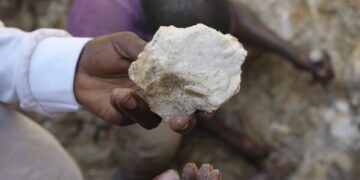
According to Fortuna Metals, 19 historical drill holes from legacy datasets indicate elevated concentrations of titanium dioxide (TiO₂), particularly associated with rutile, a naturally occurring titanium mineral used in aerospace materials, pigments, and advanced manufacturing. The company currently controls around 70 kilometres of the same geological corridor that hosts the Kasiya deposit — positioning its licences within a mineral belt of continental significance.



Chief Executive Tom Langley described the initial findings as “a significant step toward confirming a new titanium province in southern Malawi.” The company recently completed its first-phase exploration, including 63 auger drill holes covering 581 metres and 232 soil samples. Laboratory analysis of the samples is being conducted by ALS Laboratories in Perth, with results expected in November 2025.
Fortuna Metals noted that further geological analysis will assess titanium grades in heavy mineral concentrates to better understand the economic potential of the resource. The company plans to expand its exploration activities once assay results confirm mineralisation continuity and scale. It also intends to establish a low-cost analytical laboratory in Malawi, aimed at enhancing local capacity for mineral testing and reducing reliance on foreign laboratories.

Market data indicate that natural rutile prices currently range between US$1,100 and US$1,700 per tonne, supported by demand from industrial and clean-technology sectors. Titanium feedstocks, such as rutile, are increasingly recognised as strategic minerals, underpinning aerospace, renewable energy, and advanced manufacturing supply chains.
Fortuna’s initiatives unfold against a broader African reawakening in critical minerals exploration, with countries such as Malawi, Mozambique, and Tanzania emerging as key players in titanium, graphite, and rare earths development. The discoveries point not only to the geological wealth of southern Africa but also to the continent’s growing role in shaping the future of low-carbon industrialisation through responsible resource development.
While Sovereign Metals continues to advance the Kasiya deposit—one of the world’s largest known rutile resources—Fortuna’s efforts suggest that the southern extension of the geological trend may host further deposits of comparable significance. The company plans to commence a second-phase drilling programme in 2026, contingent on the confirmation of mineralisation continuity and grade.
As exploration progresses, industry observers emphasise the importance of ensuring that local communities benefit equitably from resource development, with policies prioritising environmental stewardship, skills transfer, and in-country beneficiation. Malawi’s Ministry of Mining has highlighted its commitment to promoting a transparent and sustainable extractive industry, aligning with regional aspirations for inclusive mineral-led growth across the Southern African Development Community (SADC).
Fortuna Metals’ discoveries add further momentum to Malawi’s growing recognition as an emerging hub for titanium and graphite resources, reinforcing Africa’s agency in defining the narrative around its mineral future — one that is grounded in sovereignty, sustainability, and shared prosperity.