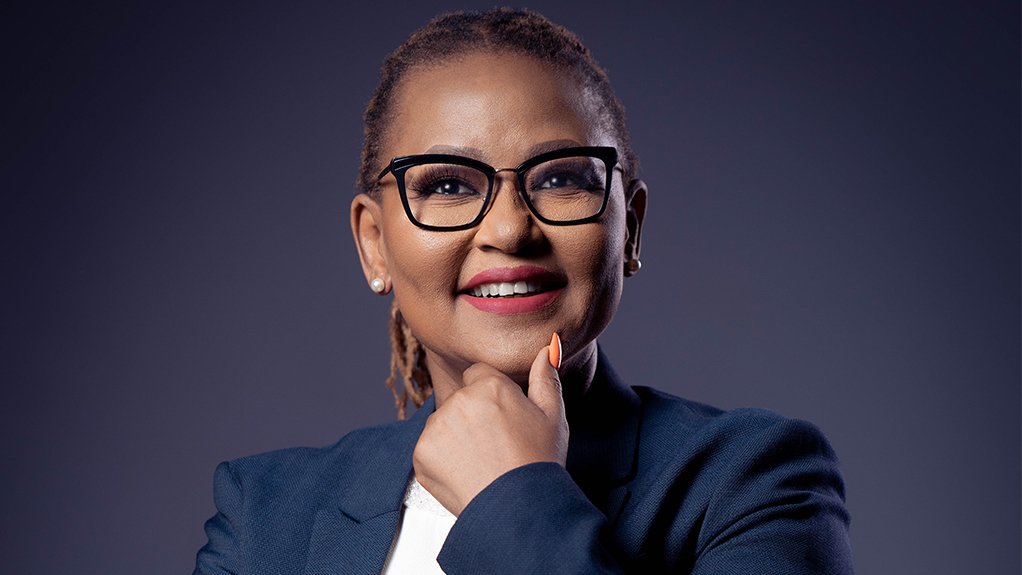
Nombasa Tsengwa, the former Chief Executive Officer of Exxaro Resources, has spoken publicly for the first time since her resignation earlier this year. While her departure was surrounded by controversy, she has stressed that her two-decade career at the company was both professionally rewarding and personally transformative, and that she remains proud of her contributions to the organisation’s growth.
Exxaro Resources is one of South Africa’s largest diversified mining companies, with operations spanning coal, iron ore, mineral sands, and renewable energy. It emerged in 2006 from the unbundling of Kumba Resources, a move that reflected a broader restructuring in South Africa’s mining sector to streamline operations and attract investment. Headquartered in Pretoria, Exxaro has positioned itself as a key supplier of high-quality coal to domestic power utility Eskom, as well as to international markets. In recent years, the company has also invested heavily in renewable energy projects in alignment with South Africa’s energy transition goals.
Tsengwa joined Kumba Resources in 2003 as Head of Safety, Health and Environment, bringing expertise in environmental management and occupational safety. She played a central role in implementing systems that met both national regulations and international best practice standards. Following the corporate restructuring that created Exxaro, she advanced steadily through the company’s leadership ranks, holding senior positions in sustainability, operations, and executive management.



Her appointment as CEO in 2023 was the result of a carefully structured succession process, something she has cited as one of the company’s enduring organisational strengths. “I was able to take up the role with a full understanding of its demands, thanks to years of preparation and the company’s deliberate leadership development strategy,” she remarked in her recent interview.
Tsengwa’s tenure, although brief, was marked by her advocacy for sustainable mining, her commitment to employee development, and her efforts to diversify the company’s revenue streams beyond fossil fuels. She has consistently framed mining not merely as an extractive industry but as a platform for socio-economic development, especially in South Africa, where the sector remains a critical driver of employment and infrastructure investment.

However, her leadership came to an abrupt halt in December of the previous year, when she was suspended amid an investigation into alleged workplace misconduct and governance breaches. One of the key accusations was a potential conflict of interest linked to her late partner’s company, which was alleged to have benefitted from commercial dealings with Exxaro through payments and purchases. Tsengwa has firmly rejected these claims, maintaining that she acted in the best interests of the organisation at all times and did not prioritise personal interests.
In an attempt to overturn her suspension, she initiated legal proceedings, but the court ruled against her. Shortly thereafter, she resigned in February. In her resignation letter, she expressed disappointment with the way the investigation had been conducted, characterising it as “biased and predetermined.”
Despite the manner of her departure, Tsengwa has continued to speak positively about Exxaro’s prospects, expressing confidence that the company’s new leadership will sustain and expand its achievements. “I am watching from afar, confident that the good work will continue,” she said.
Exxaro has since appointed Ben Magara, the former Chief Executive of platinum producer Lonmin, as its new CEO. Magara brings extensive leadership experience in the mining sector, having guided Lonmin through a period of operational and financial challenges prior to its eventual acquisition by Sibanye-Stillwater. His appointment signals both continuity and change, as Exxaro navigates the dual pressures of meeting global energy demands and aligning with sustainability imperatives.
For readers outside South Africa, Tsengwa’s story also reflects the broader dynamics of the country’s mining industry, which has long been a cornerstone of the national economy. The sector contributes significantly to GDP, exports, and employment, but is increasingly shaped by global market shifts, decarbonisation policies, and investor scrutiny over environmental, social, and governance (ESG) performance. As one of the largest black-empowered mining companies in South Africa, Exxaro occupies a distinctive position in advancing transformation in an industry historically marked by inequality.
Tsengwa’s departure therefore comes at a sensitive juncture, both for the company and for the sector at large. Leadership transitions in mining carry strategic implications, influencing investor sentiment, workforce stability, and the capacity to adapt to technological and environmental challenges. With Magara at the helm, Exxaro is expected to continue expanding its renewable energy footprint while maintaining its role as a major coal supplier during South Africa’s gradual energy transition.
Reflecting on her career, Tsengwa has said she is grateful for the opportunities afforded to her, highlighting that she was able to make a meaningful impact on both the company and the broader economy. Her tenure, though ended prematurely, underscores the complexities of corporate leadership in a sector where operational, regulatory, and political pressures are constant.