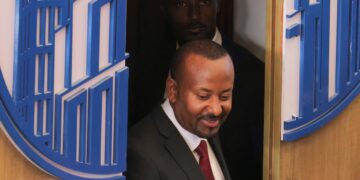
Ethiopia’s economy is projected to expand by 9 percent in the 2025/2026 fiscal year, reflecting sustained structural reforms and renewed efforts to strengthen macroeconomic stability, according to President Taye Atske Selassie. The announcement, delivered during a joint session of the House of Peoples’ Representatives and the House of Federation in Addis Ababa on Monday, underscores the country’s ambition to consolidate its recent gains and build a more self-reliant and diversified economy.
Ethiopia recorded an 8.8 percent growth rate in the previous fiscal year, signalling a notable recovery across key sectors including agriculture, manufacturing, and services. President Atske Selassie stated that the government intends to sustain this momentum by implementing policies aimed at stabilising inflation, enhancing productivity, and expanding investment in infrastructure.
The president highlighted several strategic initiatives expected to play a central role in the coming year, most notably the launch of a large-scale fertilizer production plant, designed to revolutionise agricultural practices and drive food self-sufficiency. Agriculture continues to be the backbone of Ethiopia’s economy, employing more than two-thirds of the population. The planned investment in domestic fertilizer production marks a significant step toward reducing import dependence and improving yields.



In the 2024/2025 fiscal year, Ethiopia generated a record 8.3 billion US dollars in export earnings, reflecting strong performance in agricultural commodities, manufacturing exports, and services such as air transport. The government aims to diversify its economic base, encouraging investment in emerging sectors such as agro-processing, renewable energy, and digital innovation to enhance export competitiveness and value addition.
Tourism has been identified as another critical growth driver. The government’s plans include expanding tourist destinations, improving air transport infrastructure, and investing in cultural and natural heritage preservation. This approach aligns with the African Union’s Agenda 2063 aspirations to build inclusive and sustainable tourism across the continent, leveraging Africa’s heritage and biodiversity for shared prosperity.
Ethiopia’s ongoing infrastructure development programme will remain a central pillar of its growth agenda. Investments are being directed towards irrigation, water management, energy generation, and transport connectivity, including road, rail, and logistics expansion. These efforts are intended to enhance domestic integration and regional trade connectivity, particularly within the framework of the African Continental Free Trade Area (AfCFTA), which Ethiopia ratified in 2020.

While Ethiopia’s growth projections remain robust, the president acknowledged the challenges of ensuring equitable development amid fiscal pressures, climate variability, and global economic uncertainties. Observers note that maintaining macroeconomic stability and expanding opportunities for small and medium enterprises will be critical to sustaining the country’s long-term progress.

Ethiopia’s developmental approach continues to reflect a broader Pan-African commitment to self-determination, resilience, and structural transformation. As the Horn of Africa’s second-most populous nation, its experience highlights the complexities and possibilities of African-led growth strategies grounded in national context rather than external prescriptions.