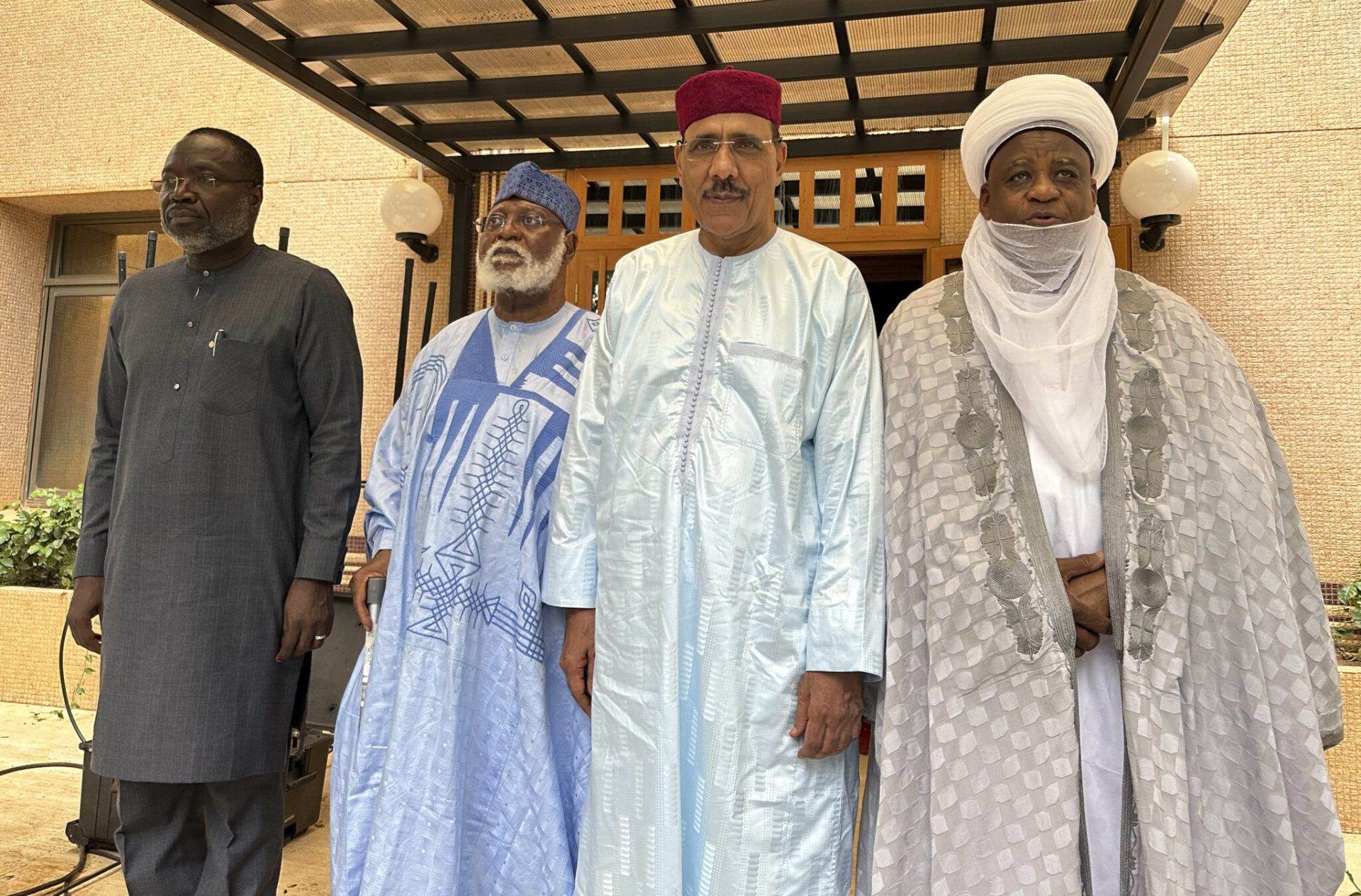
Ahigh-level delegation from the Economic Community of West African States (ECOWAS) engaged in a series of crucial talks over the weekend with key figures at the heart of Niger’s political upheaval. The delegation met with the junta leader, General Abdourahamane Tchiani, and the recently ousted President Mohamed Bazoum, in a concerted effort to navigate the complex political landscape of the West African nation.
The ECOWAS special envoys, representing the collective weight of West African leaders, arrived in Niamey to continue diplomatic discussions aimed at resolving the ongoing crisis. These discussions come on the heels of a failed attempt earlier in August, when a delegation from ECOWAS, the African Union, and the United Nations was unable to gain entry into Niamey for talks with the military junta.
In a social media announcement on Saturday evening, Abdulaziz Abdulaziz, a media aide to the Nigerian president, confirmed that the ECOWAS delegation had successfully met with General Tchiani and President Bazoum. The discussions are seen as an attempt to find common ground and a peaceful solution amidst the political instability that has gripped the country.




The current crisis was ignited by a military coup, prompting ECOWAS to respond resolutely. On August 10, the organization announced the activation of its standby force, signaling its commitment to restoring constitutional order in Niger. The activation of the standby force underlines ECOWAS’ unwavering dedication to achieving a peaceful resolution to the political turmoil, despite the challenges presented by the coup.
As the diplomatic efforts unfold, ECOWAS’ determination to engage in meaningful dialogue becomes even more pronounced. The delegation’s visit to Niger is seen as a crucial step toward fostering an environment conducive to compromise and understanding. Though details of the discussions have not been fully disclosed, it is evident that regional leaders are intent on charting a path towards stability and democracy.
The political impasse in Niger not only affects the nation but also raises concerns on a regional level. The ECOWAS, in collaboration with the African Union and the United Nations, aims to demonstrate the efficacy of diplomatic solutions in preserving democracy and constitutional governance within West Africa.
The outcome of these talks remains uncertain, but the diplomatic dialogue signals a willingness on all sides to engage in constructive conversations. As West African leaders continue to navigate this delicate situation, the hope for a peaceful resolution remains steadfast.
The engagement of the ECOWAS delegation with both General Tchiani and President Bazoum marks a significant development in the ongoing Niger political crisis. The world watches closely as the diplomatic efforts unfold, emphasizing the regional commitment to restoring stability and constitutional order through peaceful means.