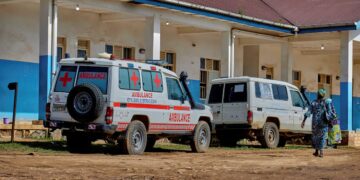
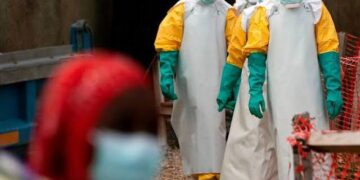
The Ebola outbreak in Kasai Province of the Democratic Republic of the Congo (DRC) is showing early signs of decline, according to the World Health Organization (WHO) Regional Office for Africa. However, significant challenges in funding and logistics continue to hinder a sustained response.
Patrick Abok, Acting Regional Emergency Director at WHO Africa, stated during a virtual briefing that nearly 30 days into the intervention, the number of new cases has begun to decrease, describing it as “a strong indication that our interventions have begun to take hold.”
As of 1 October 2025, health authorities reported 64 confirmed cases, including 42 fatalities, while 12 patients have recovered and been discharged. The Congolese government declared the outbreak on 4 September, marking the country’s sixteenth Ebola outbreak since the virus was first identified in 1976.



Vaccination efforts have reached more than 8,000 frontline health workers, case contacts, and contacts of contacts. A new campaign seeks to deliver 18,000 vaccine doses across 19 localities in Bulape, aiming to strengthen protection for at-risk populations and contain transmission. WHO officials have stressed that while data from the past three weeks suggest a downward trend, it remains critical to maintain and scale up control measures.
Mory Keita, Ebola Incident Manager at WHO, emphasised that this outbreak has been characterised by strong community engagement. Unlike in previous instances, resistance from local populations has not been observed. “Village chiefs themselves are requesting vaccinations, which accelerates our interventions,” he noted.
Despite these advances, financial resources remain inadequate. Only 21 percent of the 20 million US dollars required for the immediate response has been secured. In addition, the WHO and its partners are appealing for a further 66 million US dollars to reinforce preparedness in neighbouring states.

The DRC previously declared the end of an Ebola outbreak in September 2022, following a confirmed case in North Kivu Province. Ebola virus disease, first recognised in the DRC in 1976, is a highly infectious haemorrhagic fever. Symptoms range from fever, vomiting, diarrhoea, and generalised pain to internal and external bleeding, with case fatality rates historically varying between 25 and 90 percent, according to the World Health Organization.
The response in Kasai demonstrates how local leadership and regional coordination can influence the trajectory of public health emergencies. While international support remains indispensable, the ongoing outbreak highlights the importance of African-led responses, community mobilisation, and resilience in managing health crises that transcend national borders.