

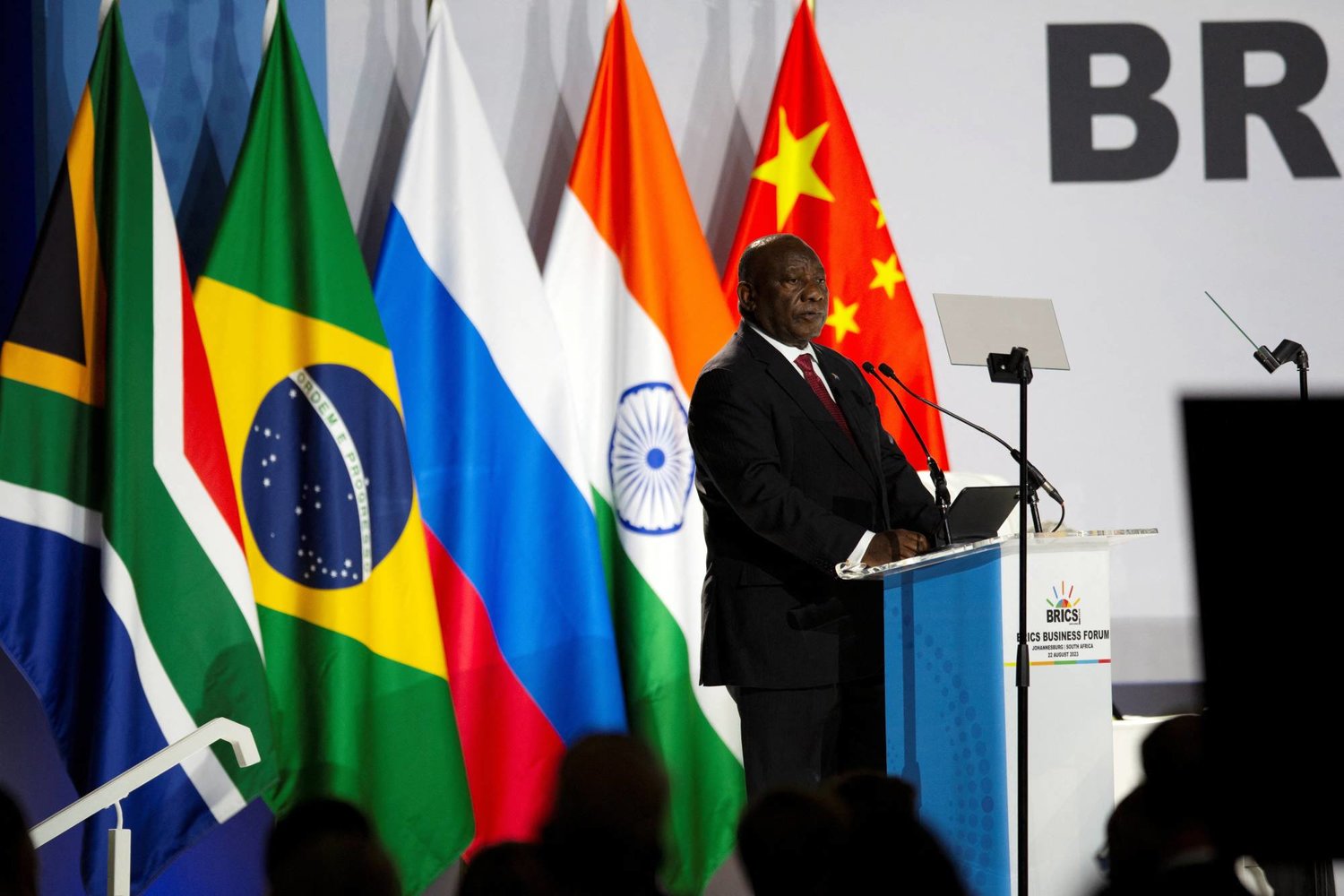
South African state utility Eskom has joined forces with Chinese power companies to enhance its sustainability initiatives. During a signing ceremony held on the sidelines of the BRICS summit in Johannesburg, South Africa’s Electricity Minister, Kgosientsho Ramokgopa, announced the groundbreaking partnership.
With the world’s increasing focus on combating climate change, Eskom’s collaboration with Chinese power firms marks a progressive step towards reducing emissions from coal-fired power plants. Minister Ramokgopa emphasized that these Chinese companies have generously offered to share their advanced technology to aid Eskom’s efforts in curbing carbon emissions. This technological exchange holds immense promise for improving the environmental footprint of South Africa’s energy production, aligning with global environmental goals.
Notably, the Chinese firms’ commitment goes beyond emissions reduction. In a bid to bolster the reliability and efficiency of Eskom’s operations, the companies have also pledged support for upgrading the utility’s power transmission and distribution infrastructure. This move is expected to enhance the overall stability of the power supply and improve energy accessibility for communities across South Africa.




This collaboration comes as a boon for both nations involved. China, a global leader in renewable energy technology, can demonstrate its commitment to sustainability on the international stage through this partnership. Meanwhile, South Africa can harness Chinese expertise to address pressing energy challenges and modernize its power infrastructure.
The BRICS summit, a platform that brings together five major emerging economies — Brazil, Russia, India, China, and South Africa — serves as an ideal backdrop for such collaborative initiatives. The agreement underscores the importance of international cooperation in addressing complex energy and environmental issues.
As the world shifts towards cleaner energy alternatives, this collaboration between Eskom and Chinese power companies serves as a testament to the power of cross-border partnerships. It is a testament to the shared determination to foster greener, more sustainable energy solutions.


