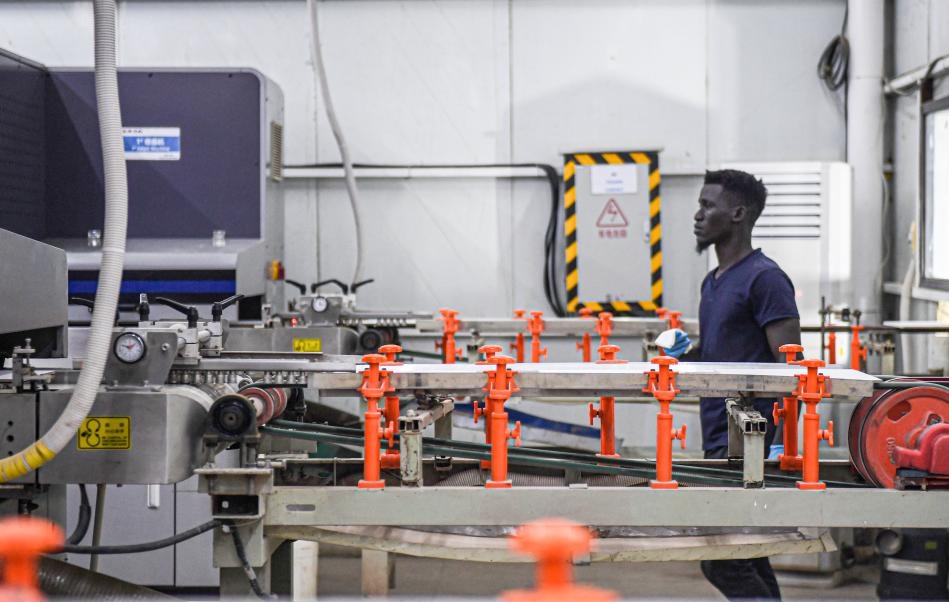
On a bright afternoon in Kajiado County, approximately 70 kilometres south of Nairobi, workers at KEDA (Kenya) Ceramics Company Limited are diligently packaging floor tiles into multicoloured cartons, ready for dispatch to customers.
Founded in 1992, the China-based KEDA Industrial Group, in collaboration with Guangzhou Sunda, established its Kenyan ceramics factory in 2016. Li Ruiqin, managing director of KEDA (Kenya) Ceramics, states that their investment in high-quality tile production has revitalised the local manufacturing sector, fostering economic growth and job creation.
“The establishment of our ceramic tile factory in rural Kenya has brought significant economic benefits,” said Li. “Local businesses, particularly in hospitality and transport, have flourished since our arrival.”



Adhering to local regulations, KEDA has also invested in community projects, including schools, roads, and water supply systems. The company operates two ceramic tile factories in Kajiado and Kisumu Counties and a sanitary ware factory, covering 300 acres (about 1.2 million square metres) in total. The tile factories have a combined daily production capacity of 110,000 square metres, while the sanitary ware factory produces 4,500 pieces daily.

Li revealed plans to expand further with three to five additional production lines and a solar-powered plant in Kajiado. “Our factories employ over 3,000 people, 95 percent of whom are Kenyan citizens,” he added. “Indirectly, we support the livelihoods of more than 50,000 individuals.”
KEDA also focuses on training and apprenticeships for local youth, with some sent to China for short courses. Richard Okello, a 35-year-old supervisor at the Kajiado factory, praised the skills transfer facilitated by Chinese technology. “This company has created numerous jobs and introduced advanced tile production techniques,” he said.

Kenyan President William Ruto has set an ambitious target to increase the manufacturing sector’s GDP contribution from 7 to 20 percent by 2030. The government’s affordable housing agenda aims to construct at least 200,000 units annually, with KEDA’s products playing a crucial role in this initiative.
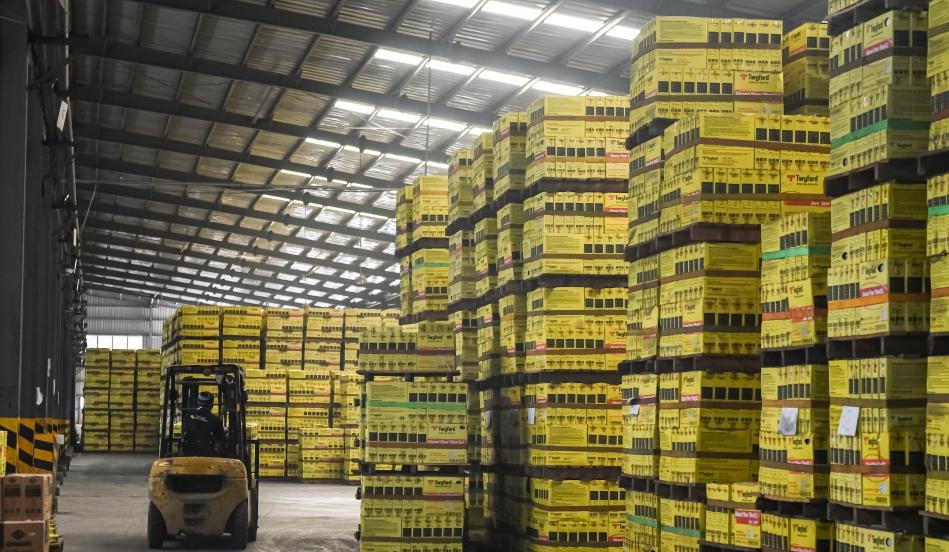
John Misiore, a 26-year-old sorter at KEDA, highlighted the impact of the company’s flagship products on industrialisation and modern housing construction. “Through skills and technology transfer, KEDA has invigorated Kenya’s industrial growth, creating jobs and promoting shared prosperity,” Misiore commented.
KEDA is committed to sustainability, employing best practices in waste reduction and recycling to support Kenya’s transition to a circular economy. The company’s efforts in ecological stewardship include recycling 400 cubic metres of water daily.
While KEDA’s presence has brought numerous benefits, it is important to maintain a balanced view. The full environmental and social impacts of such large-scale industrial operations warrant continuous monitoring to ensure the long-term well-being of local communities and ecosystems.