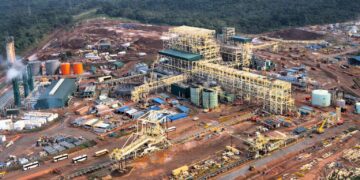
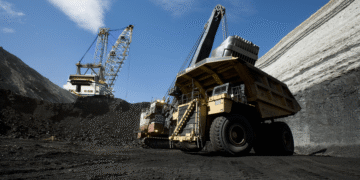
Caledonia Mining Corporation, listed on the London Stock Exchange, has announced plans to invest $132 million in 2026 as part of the initial phase of developing the Bilboes gold project in Zimbabwe. Once operational, the project is expected to become the country’s largest gold mine, marking a significant milestone in Zimbabwe’s mining sector and its broader ambition to increase mineral-led growth across the region.
The investment forms part of Caledonia’s broader $162.5 million capital expenditure programme for 2026, pending board approval and contingent on the availability of financing. The company, which currently operates the Blanket Mine near Gwanda, producing approximately 80,000 ounces of gold annually, has projected that Bilboes will require total development capital of around $584 million.
According to the company’s latest production update, construction at Bilboes is anticipated to commence this year, with first production expected in late 2028. Once fully operational, the mine is projected to produce approximately 200,000 ounces of gold per year for at least a decade.



Caledonia has indicated that it intends to finance the project through a combination of non-recourse senior debt, reinvestment from existing operations, and specialised financing mechanisms such as metal streaming agreements. Streaming, a model increasingly used in global mining finance, allows investors to provide upfront capital in exchange for future deliveries of mined metals.
The company’s expansion plans have gained renewed momentum following a decision by the Government of Zimbabwe in December 2025 to reverse proposals that would have doubled gold royalty rates and altered the tax treatment of capital expenditure. This policy adjustment has been viewed by industry analysts as a pragmatic step to maintain investor confidence in the country’s mining sector, which remains a critical pillar of Zimbabwe’s economic recovery strategy.
Caledonia’s announcement comes against the backdrop of record-breaking global gold prices, with spot prices reaching $4,639.48 per ounce earlier this week. The price surge has been driven by heightened geopolitical tensions in the Middle East, market concerns over the autonomy of the United States Federal Reserve, and moderating inflation trends that have reinforced expectations of interest rate cuts in major economies.

Zimbabwe’s gold sector, which contributes significantly to export earnings and employment, continues to attract both domestic and international investment. The Bilboes project, located north of Bulawayo, has long been recognised as one of the country’s most promising undeveloped gold deposits. Its development is expected to provide substantial economic benefits, including job creation, infrastructure development, and potential downstream linkages that could stimulate ancillary industries.
While Zimbabwe’s mining sector faces ongoing challenges such as power shortages and currency instability, the recent policy recalibrations and the resurgence of investor interest indicate cautious optimism. The Caledonia investment aligns with the broader continental narrative of African nations seeking to leverage their natural resources for sustainable industrial transformation rather than mere extractive dependency.
Analysts note that while Caledonia’s investment is commercially driven, it also highlights an evolving trend in the region’s mining landscape where African states and international investors are negotiating more balanced frameworks that prioritise mutual benefit, transparency, and long-term development outcomes.
The Bilboes project could thus emerge not only as a flagship operation for Caledonia but also as a case study in how African countries can recalibrate resource governance to enhance domestic economic participation while remaining attractive to global capital.