Wednesday, June 10, 2026
  • Login
The Southern African Times
  • Home
  • Southern Africa
  • Business
    • African Start ups
    • African Continental Free Trade Area
  • Technology
    • Lifestyle
      • Health
      • Culture
      • Food and Drink
      • Entertainment
  • Opinion
  • Sports
  • SAT Jobs
    • Events
  • About Us
    • Advertise with Us
    • Contact Us
No Result
View All Result
  • Home
  • Southern Africa
  • Business
    • African Start ups
    • African Continental Free Trade Area
  • Technology
    • Lifestyle
      • Health
      • Culture
      • Food and Drink
      • Entertainment
  • Opinion
  • Sports
  • SAT Jobs
    • Events
  • About Us
    • Advertise with Us
    • Contact Us
No Result
View All Result
The Southern African Times
No Result
View All Result
Home Opinion

Bridging Africa’s Health-Care Divide

by SAT Reporter
October 31, 2021
in Opinion
0
Bridging Africa’s Health-Care Divide

JOHANNESBURG/LONDON – For the past 30 years, everyone assumed that developed and developing economies were converging, with higher growth rates in Africa and elsewhere helping those countries to catch up. But African economies are now growing at only half the average global rate. Divergence is becoming the new order of the day. And with growing fiscal pressures, increasing debt, mounting inflation, rising interest rates, and supply-chain disruptions creating new barriers to growth, it is almost certain to get worse in 2022.

This outcome is not inevitable, but the only way to reverse it is to extend the benefits of vaccination and other medical protections from the Global North to the Global South. As we write, only 8.5% of African adults have received one dose of COVID-19 vaccine. Of the 6.9 billion doses that had been administered globally by mid-October 2021, only 176 million (just 2.5%) were in Africa. Under 1% of the population in a dozen African countries has been vaccinated, and the rate for the continent as a whole is just 5%, compared to 62% in high-income countries.

Worse, the Access to COVID-19 Tools Accelerator (ACT-A) projects that there will be 200 million more COVID-19 cases in the coming year, three-quarters of which will be in low- and middle-income countries. Without vaccination, these infections could cause another five million deaths in the next year (exceeding the 4.9 million recorded deaths from the virus so far). Africa could become the pandemic’s long-term epicenter.

ADVERTISEMENT

At their summit in June, G7 leaders committed to vaccinate the entire world by the end of 2022, promising Africa hundreds of millions of doses. But, because the event was run in the manner of a charity fundraiser (with each country simply offering to donate what it could), no operational plan or timetable was established.

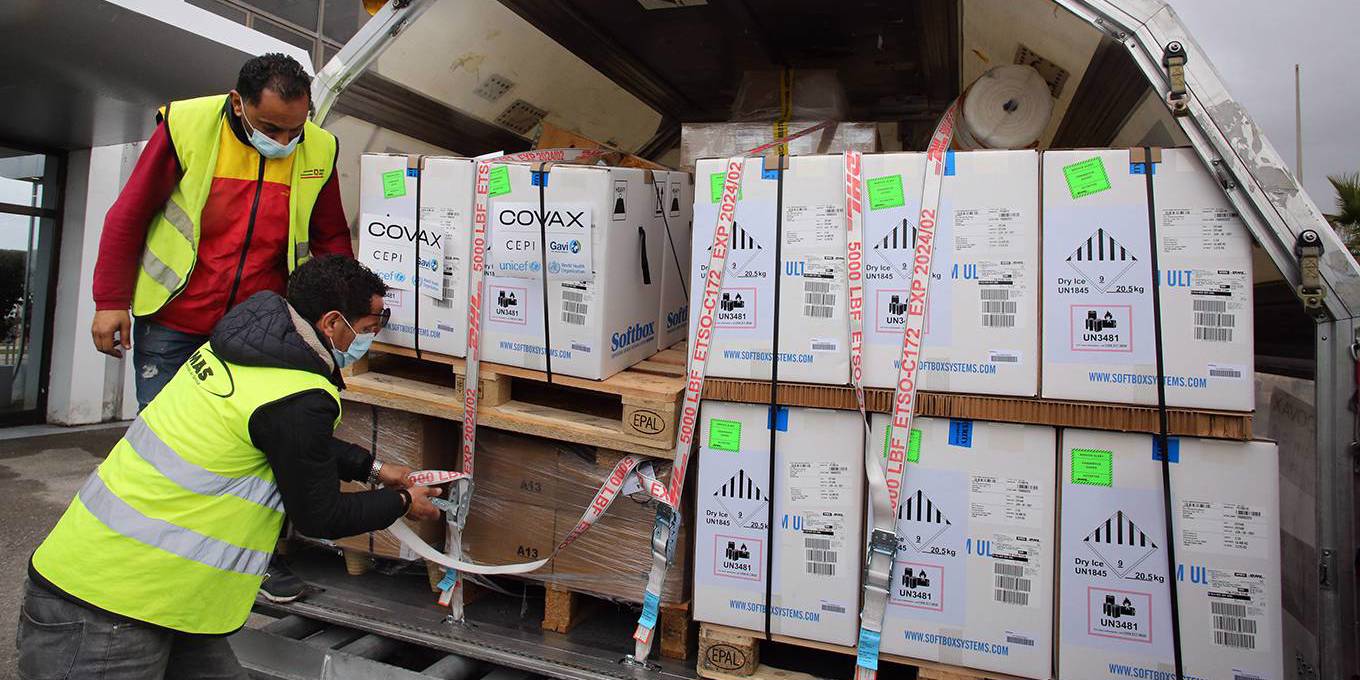
As a result, the COVID-19 Vaccine Global Access (COVAX) facility, the international bulk-purchasing agency that had initially hoped to allocate two billion vaccines by this December, was forced to cut its delivery projections to 1.4 billion. So far, it has only had enough supplies to release 406 million doses to 144 countries, with 326 million going to the 91 poorest countries. The world thus fell far short (by 200 million doses) of its goal to vaccinate at least 10% of the population in every country by the end of last month. In Africa, 39 of 54 countries missed the target.

More donations were announced at a vaccines summit hosted by US President Joe Biden in September, where some progress was made toward setting a new hard target: vaccinating 40% of adults in every country by the end of this year. But, again, there was no agreement on a timetable or delivery plan, and the richest countries’ donations have yet to match their pledges. As a result, COVAX needs 500 million more doses by this December – and five billion more next year to achieve the overall global target of 70% vaccination coverage.

Aware that these promises are not being met, African leaders have taken decisive action. The African Union has formed the African Vaccine Acquisition Trust (AVAT) to coordinate its vaccine-distribution effort, and with a deal to purchase 400 million single-shot vaccines from Johnson & Johnson, shipments have been underway since August (to be completed in September 2022). Moreover, a purchase agreement with Moderna this month should provide another 100 million doses, with 50 million arriving in three batches between December 2021 and February 2022.

Owing to its own efforts, Africa will be able to vaccinate up to 100 million people by the end of this year. It has secured enough future supply to vaccinate 35% of its population in 2022 – half the 70% target set by the World Health Organization. The problem it has yet to overcome lies with Western donors, whose unfulfilled promises have left a large shortfall.

No one now doubts that, in the long run, Africa will need to create its own manufacturing capacity, just as it is now creating its own medicines agency. When it does, it will need technology-transfer licensing agreements and patent waivers.

This is where the G20 comes in. While the International Monetary Fund, the World Bank, and the World Trade Organization are doing their best to coordinate vaccine efforts with the WHO and others, they do not control the flow of vaccines. The real power lies with the leaders of large, wealthy countries that have more vaccine doses than they need. It is they who could decide today to airlift millions of unused doses to where they are most needed, or to redirect their delivery contracts to COVAX.

There is a way forward. The four largest Western G20 members – the European Union, the United States, the United Kingdom, and Canada – currently have 240 million unused doses. They should agree to airlift these supplies, and they should ask other G20 members to join them in contributing unused doses and switching delivery contracts to COVAX.

Strive Masiyiwa is African Union Special Envoy on COVID-19 and Head of the African Vaccine Acquisition Task Team.

Gordon Brown, former prime minister and chancellor of the exchequer of the United Kingdom, is United Nations Special Envoy for Global Education and Chair of the International Commission on Financing Global Education Opportunity.

Previous Post

Developing Egypt’s maritime ports: Blue is the new green

Next Post

Kenya’s forex reserves shrink by Sh38.4bn (US$341m) in October

SAT Reporter

Related Posts

Faith, Miracles and the Crisis of Religious Authenticity
Opinion

Faith, Miracles and the Crisis of Religious Authenticity

by Brendan Amadi
June 10, 2026
How DRC President Leveraged Geopolitics to Secure Political Survival
Opinion

How DRC President Leveraged Geopolitics to Secure Political Survival

by Dr. Alex Ntung
June 9, 2026
Zimbabwe’s Child Online Safety Moment and Why It Matters Beyond 2030
Opinion

Zimbabwe’s Child Online Safety Moment and Why It Matters Beyond 2030

by Kundai Vambe
June 5, 2026
The Southern African Times Announces 2026 Editorial Recognition List (Shortlist Phase)
The Editorial Board

The Southern African Times Announces 2026 Editorial Recognition List (Shortlist Phase)

by The Editorial Board
June 2, 2026
Education and the Making of Responsible Citizens
Opinion

Education and the Making of Responsible Citizens

by Brendan Amadi
June 2, 2026
Next Post
Kenya’s forex reserves shrink by Sh38.4bn (US$341m) in October

Kenya's forex reserves shrink by Sh38.4bn (US$341m) in October

Browse by Category

  • Africa AI
  • African Continental Free Trade Area
  • African Debt
  • African Start ups
  • Agriculture
  • AI Africa
  • Algeria
  • All News
  • Analysis
  • Angola
  • Arts / Culture
  • Asia
  • Botswana
  • BOTSWANA
  • BREAKING NEWS
  • BRICS
  • Burkina Faso
  • Burundi
  • Business
  • Business
  • Business Wire
  • Cameroon
  • Central Africa
  • Chad
  • China
  • Climate Change
  • Climate Changev
  • Community
  • Congo Republic
  • Conservation
  • Côte d’Ivoire
  • COVID 19
  • CRYPTOCURRENCY
  • Culture
  • Democratic Republic of Congo
  • Diplomacy
  • Eastern Africa
  • Economic Development
  • Economy
  • Education
  • Egypt
  • Elections 2024
  • Energy
  • Entertainment
  • Environment
  • Eritrea
  • Ethiopia
  • Europe
  • Fashion
  • Feature
  • Finance
  • Financial Inclusion
  • Food
  • Food and Drink
  • Foods
  • GABON
  • Ghana
  • Global
  • Global Africa
  • Guinea
  • Health
  • Humanitarian Aid
  • Immigration
  • in Southern Africa
  • International news
  • International Relations
  • Investment
  • Ivory Coast
  • Just In
  • Kenya
  • Lesotho
  • Libya
  • Life Style
  • Lifestyle
  • Literature
  • Malawi
  • Malawi
  • Mali
  • Markets
  • Mauritius
  • Middle East
  • Mining in Africa
  • Morocco
  • Mozambique
  • Namibia
  • Niger
  • niger
  • Nigeria
  • North Africa
  • North-Eastern Africa
  • Obituaries
  • Obituary
  • Opinion
  • PARTNER CONTENT
  • Politics
  • Property
  • Racism
  • Rwanda
  • Rwanda
  • SADC
  • SAT Interviews
  • SAT Investigation
  • SAT Jobs
  • Saudi Arabia
  • Senegal
  • Seychelles
  • Somaliland
  • South Africa
  • South Sudan
  • Sports
  • Startup Africa
  • STOCK EXCHANGE
  • Sudan
  • Sustainability
  • Sustainablity
  • Tanzania
  • Technology
  • Telecommunications
  • The Editorial Board
  • The Power Of She
  • Togo
  • Trade
  • Travel
  • Travel
  • Tunisia
  • Uganda
  • Uncategorized
  • Wealth
  • West Africa
  • World
  • World
  • ZAMBIA
  • Zambia
  • Zimbabwe
  • ZIMBABWE

Browse by Tags

#NewsUpdate #SouthAfrica #SouthernAfricanTimes #TheSouthernAfricanTimes AfCFTA africa African Continental Free Trade Area African development African Development Bank African economies African economy African Union Agriculture Angola Botswana China Climate change Cyril Ramaphosa Economic Development economic growth energy transition governance IMF industrialisation Inflation Infrastructure Infrastructure Development International relations Investment Kenya Mozambique Namibia news Nigeria Regional Integration renewable energy Rwanda SADC South Africa Southern Africa sustainable development Tanzania United States Zambia Zimbabwe
ADVERTISEMENT

WHO WE ARE

The Southern African Times is a regional bloc digital newspaper that covers Southern African and world news. The paper also gives a nuanced analysis on news and covers a wide range of reporting which include sports, entertainment, foreign affairs, arts and culture.

Welcome Back!

Login to your account below

Forgotten Password?

Retrieve your password

Please enter your username or email address to reset your password.

Log In
  • Home
  • Southern Africa
  • Business
    • African Start ups
    • African Continental Free Trade Area
  • Technology
    • Lifestyle
      • Health
      • Culture
      • Food and Drink
      • Entertainment
  • Opinion
  • Sports
  • SAT Jobs
    • Events
  • About Us
    • Advertise with Us
    • Contact Us
Not enough quota to unlock this post
Unlock left : 0
Are you sure want to cancel subscription?