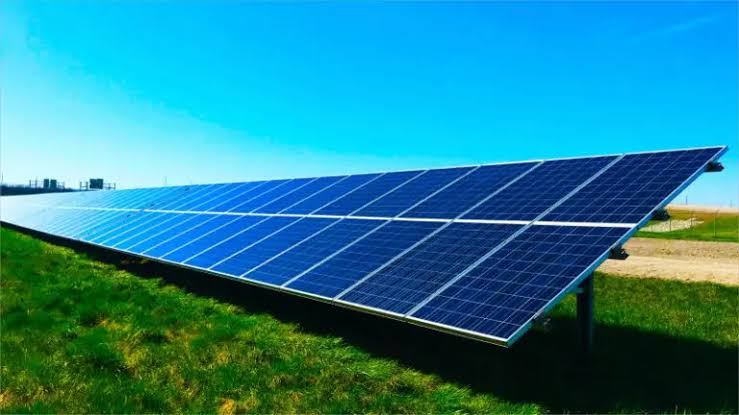
Botswana is poised to strengthen its role within Southern Africa’s evolving electricity market following the financial close of the US$100 million Tati Solar Project, a 100 megawatt solar photovoltaic facility that will supply power to the Southern African Power Pool (SAPP) once operational.
The project, located near Francistown in Botswana’s North East District, has entered the construction phase following the completion of financing arrangements led by Rand Merchant Bank. Commercial operations are targeted for 2027, according to project developers Etavi Renewables and its partners.
The development represents an important milestone in Botswana’s broader energy diversification strategy. For decades, the country’s electricity sector has been heavily dependent on coal generation and imported power. Increasingly, however, Botswana is seeking to leverage its abundant solar resources to support domestic energy security while participating more actively in regional electricity trade.



According to project information released by developers, the Tati Solar Project will generate electricity for sale into the Southern African Power Pool, a regional electricity market serving 12 countries and more than 360 million people and businesses across Southern Africa. The facility is expected to become one of Botswana’s largest solar photovoltaic installations and forms part of a wider pipeline of renewable energy investments emerging across the region.
The Southern African Power Pool, established in 1995, enables utilities and independent power producers to trade electricity across national borders. Its role has become increasingly significant as Southern African economies seek to address growing energy requirements associated with mining expansion, industrial development, digital infrastructure and efforts to expand electricity access.
Energy analysts note that regional demand dynamics are changing rapidly. While some countries possess surplus generation capacity during certain periods, others continue to experience substantial supply deficits. Enhanced cross border trading mechanisms are increasingly viewed as a practical means of improving energy security while reducing the need for every country to maintain costly reserve generation capacity.
Financial institutions appear to be responding to these market signals. Rand Merchant Bank indicated that the financing structure developed for Tati Solar was based on confidence in growing regional electricity demand and the expanding role of competitive power trading within the Southern African Power Pool.

The project’s developers estimate that the investment will exceed P1 billion and create hundreds of jobs during construction, with additional long term employment opportunities expected once operations commence. Located within a Special Economic Zone, the project is also anticipated to contribute to economic activity in Botswana’s North East region.
Botswana’s renewable energy ambitions extend beyond the Tati development. Recent announcements involving solar generation and energy storage projects across the country suggest an increasingly diversified energy landscape. These initiatives align with broader continental efforts to expand renewable electricity generation while improving resilience against climate related disruptions that have affected hydropower output in several African countries.
The regional context is equally important. Southern Africa continues to experience uneven electricity availability despite substantial energy resources. Countries including Zambia and the Democratic Republic of Congo are expected to require significant additional power supplies as critical minerals industries expand to support global demand for technologies linked to artificial intelligence, electric mobility and energy transition industries.
At the same time, South Africa is expected to bring substantial new generation capacity online over the coming decade, potentially increasing the volume of electricity available for regional trade. Industry participants argue that deeper integration between national electricity markets could improve price discovery, encourage investment and facilitate more efficient movement of power across borders.
For Botswana, the Tati Solar Project represents more than a renewable energy investment. It reflects an emerging vision of Southern Africa as an interconnected energy ecosystem in which countries can both consume and supply electricity according to comparative advantage. In a region where energy deficits continue to constrain economic growth, such projects may contribute not only to national development objectives but also to broader regional prosperity.
As construction progresses toward the targeted 2027 commissioning date, the success of Tati Solar will be closely watched by policymakers, investors and energy planners across Africa seeking practical models for expanding renewable generation while strengthening regional energy cooperation.