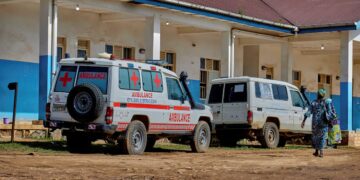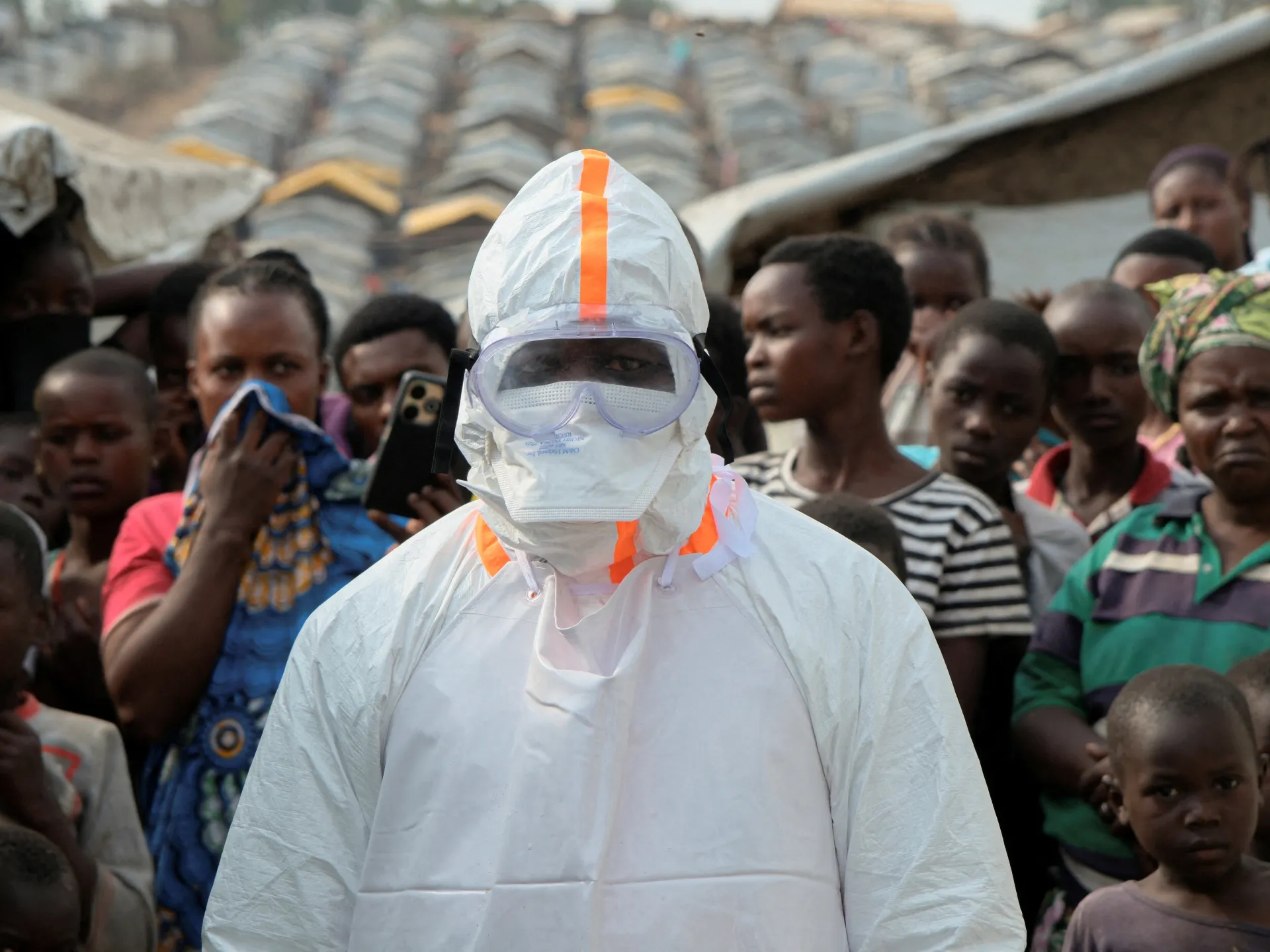
The Democratic Republic of the Congo has recorded its highest weekly increase in confirmed Ebola infections since the current outbreak began, according to the World Health Organization, underscoring the continuing public health challenges facing eastern parts of the country where insecurity and population mobility continue to complicate disease control efforts.
Speaking during an online media briefing on Friday, World Health Organization Regional Director for Africa Dr Mohamed Yakub Janabi said the outbreak has become the largest recorded outbreak of the Bundibugyo strain of the Ebola virus and continues to affect communities across the eastern provinces of Ituri and North Kivu.
Health officials say the epidemiological situation remains serious, with sustained transmission occurring despite ongoing surveillance, treatment and vaccination efforts led by Congolese health authorities in collaboration with regional and international partners.



According to the World Health Organization, the Democratic Republic of the Congo had reported 1,460 laboratory confirmed Ebola cases as of 1 July, including 432 deaths. The case fatality rate currently stands at approximately 31 per cent, with infections recorded across 36 health zones spanning three provinces.

Pierre Akilimali, a World Health Organization expert supporting the response in the Democratic Republic of the Congo, said the outbreak is unfolding in areas affected by insecurity and the presence of armed groups. These conditions continue to impede contact tracing, case investigation and the timely delivery of healthcare services.
He noted that several affected localities in Ituri Province are situated within active mining regions where the movement of workers and traders between communities has heightened the risk of further transmission. The mobility associated with mining activity presents additional operational challenges for disease surveillance teams seeking to identify and monitor potential contacts.
Health officials also expressed concern over the high proportion of deaths occurring outside healthcare facilities. Of the 432 reported fatalities, 321 occurred within communities rather than in treatment centres. Public health experts say this indicates that many infected individuals were either unable or unwilling to access medical care before their condition deteriorated.
Community based fatalities remain a significant concern during Ebola outbreaks because they increase the likelihood of transmission through close family contact and traditional caregiving practices before appropriate infection prevention measures can be implemented.
The current outbreak involves the Bundibugyo species of the Ebola virus, one of several recognised strains responsible for Ebola virus disease. Although less common than the Zaire strain that has been associated with previous large outbreaks, Bundibugyo Ebola still presents a serious public health threat requiring rapid case detection, isolation, supportive treatment and sustained community engagement.
Beyond the Democratic Republic of the Congo, neighbouring Uganda continues to strengthen preparedness measures as authorities monitor cross border risks. Benjamin Sensasi, a World Health Organization expert based in Uganda, said the country had confirmed 20 Ebola cases as of Thursday.
Fifteen of those infections were imported from across the border, while the remaining five were locally acquired infections detected during quarantine. According to Ugandan health authorities and the World Health Organization, no evidence of sustained community transmission has been identified within Uganda at this stage.
Recognising the interconnected nature of regional public health security, Uganda and the Democratic Republic of the Congo have established a joint cross border response mechanism supported by a memorandum of understanding between the two countries. The agreement provides for the sharing of surveillance information, coordinated screening procedures and strengthened treatment capacity along shared border crossings.
The collaborative approach reflects the growing emphasis among African public health institutions on regional cooperation in responding to infectious disease outbreaks that transcend national boundaries. Public health specialists have increasingly highlighted that effective epidemic control depends not only on clinical interventions but also on coordinated surveillance systems, community trust and sustained investment in resilient health systems.

The ongoing response is being led by the Government of the Democratic Republic of the Congo through the Ministry of Public Health, Hygiene and Social Welfare, with technical support from the World Health Organization, the Africa Centres for Disease Control and Prevention and other regional and international partners.
While the increase in weekly infections signals that significant challenges remain, health authorities continue to emphasise that early detection, prompt treatment, effective community engagement and cross border cooperation remain central to reducing transmission and protecting vulnerable communities across the region.