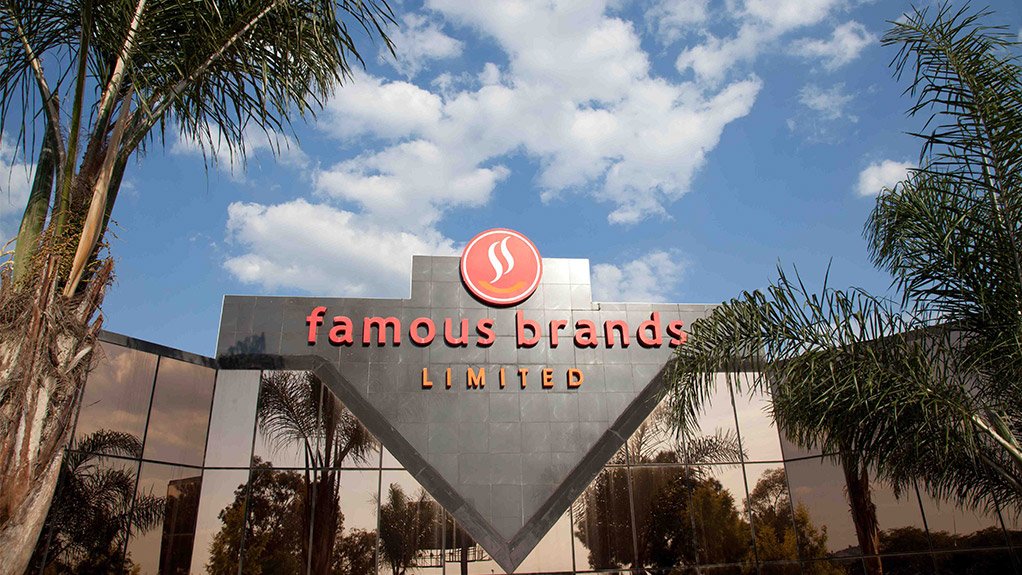
Namibia has emerged as one of the strongest performing markets within the Southern African operations of South African restaurant group Famous Brands, underscoring the resilience of consumer demand across parts of the region despite continuing pressure on household finances.
The company, which owns and franchises well known restaurant brands including Steers, Debonairs Pizza, Mugg & Bean, Wimpy and Fishaways, reported that system wide sales in Namibia increased by 7.3 per cent in local currency terms during the 2026 financial year. The performance came against a backdrop of moderating inflation and a challenging consumer environment in which households across the region continue to contend with elevated food, transport and utility costs.
The figures highlight the increasingly important role played by regional markets in supporting the growth ambitions of African consumer facing businesses. While economic conditions remain uneven across the continent, Namibia’s performance demonstrates that demand for accessible dining and value orientated offerings remains relatively robust in selected markets.



According to Famous Brands, consumers in Namibia continued to spend cautiously, with purchasing decisions increasingly influenced by affordability and value. The company noted that while discretionary spending remained under pressure, customers continued to engage with restaurant brands that offered competitive pricing and convenience.

Namibia’s contribution was particularly significant within the company’s Southern African Development Community portfolio, which spans 11 countries including Angola, Botswana, the Democratic Republic of Congo, Eswatini, Lesotho, Malawi, Mauritius, Mozambique, Zambia and Zimbabwe.
The broader regional picture reflected both opportunities and challenges. In Angola, system wide sales increased by 6.9 per cent, supported by growth in sectors beyond oil and continued demand for brands such as Mugg & Bean and Debonairs Pizza. The Democratic Republic of Congo recorded the fastest growth rate in the portfolio, with sales increasing by more than 350 per cent following the opening of the country’s first combined Steers and Debonairs Pizza restaurant in Lubumbashi.
The contrasting performances across markets illustrate the diversity of economic conditions and consumer behaviour across Africa. While some countries continue to experience subdued growth and weakened household purchasing power, others are benefiting from urbanisation, expanding middle income populations and increasing demand for formalised food service offerings.
Famous Brands’ latest annual results showed that the group generated revenue of R8.7 billion for the year ended 28 February 2026, representing growth of 5.6 per cent compared with the previous year. Operating profit increased by 4.5 per cent to R955 million, while headline earnings per share rose by 12.1 per cent. The company attributed the performance to continued consumer demand for its established brand portfolio, disciplined cost management and the strength of its vertically integrated operating model. Independent reporting of the results has confirmed these financial outcomes.
The group also reached a significant operational milestone during the reporting period, surpassing 3,000 restaurants across its network. Chairman Chris Boulle described the achievement as evidence of the durability of the franchise model and the commitment of franchise partners operating across multiple markets. The expansion reflects a broader trend in African food retail and restaurant sectors, where franchised business models continue to provide a pathway for local entrepreneurship, employment creation and market penetration. (MarketScreener)
Alongside physical expansion, Famous Brands has intensified its investment in digital technologies. The company continues to roll out digital ordering platforms, self service kiosks and enhanced delivery services across its operations. Such investments are intended to improve customer convenience while enabling franchise operators to respond more effectively to changing consumer preferences.
The company’s experience across Southern Africa offers a useful snapshot of the continent’s evolving consumer economy. Rather than a single narrative of either growth or constraint, African markets continue to demonstrate a complex mix of resilience, adaptation and uneven development. Consumer facing businesses are increasingly required to tailor their offerings to local realities, balancing affordability with innovation while responding to shifting demographic and economic trends.
For Namibia, the latest results suggest that despite persistent cost of living pressures, consumers remain willing to engage with trusted brands that can deliver value and consistency. As regional economies continue to navigate inflationary pressures and broader global economic uncertainty, the country’s performance stands out as an example of how local market dynamics can shape and support wider continental growth strategies.
With African urban centres continuing to expand and consumer markets becoming more sophisticated, companies operating across the continent are likely to place increasing emphasis on understanding local spending patterns rather than relying on broad regional assumptions. Namibia’s contribution to Famous Brands’ growth story offers a reminder that Africa’s economic trajectory is neither uniform nor linear, but is instead shaped by a diverse range of national experiences and consumer realities.