Zimbabwe’s evolving lithium policy reflects a broader continental effort to retain value within Africa’s mineral economies, even as global demand for battery materials intensifies. Recent developments involving Chinese firms underscore both the opportunities and tensions inherent in this transition, particularly as African governments seek to balance foreign investment with domestic beneficiation.
China’s Sichuan Yahua Industrial Group has secured a six month export quota for lithium concentrates from Zimbabwe, according to company statements released on 14 April 2026. The development follows Harare’s decision earlier this year to suspend exports of unprocessed lithium and other raw minerals, a policy move aimed at addressing concerns over revenue leakage and strengthening domestic processing capacity. The quota is expected to enable Yahua to maintain operations at its Kamativi mine, one of several projects linked to Chinese investment in Zimbabwe’s lithium sector.
Zimbabwe, widely recognised as Africa’s leading lithium producer, has in recent years become a focal point in the global energy transition. According to publicly reported trade data, the country exported approximately 1.13 million tonnes of lithium bearing spodumene concentrate to China in 2025, accounting for roughly 15 percent of China’s imports of the material. This trade relationship highlights both Zimbabwe’s strategic importance and the asymmetry in global value chains, where raw materials are often exported for processing abroad.



The government’s February suspension of lithium concentrate exports marked a decisive intervention in this pattern. Officials cited concerns about malpractice and under declaration, as well as the need to promote local beneficiation. Subsequent policy adjustments have introduced a quota system tied to commitments for in country processing, signalling a shift toward a more managed export regime. Details of the policy framework can be found through Zimbabwe’s Ministry of Mines and Mining Development at https://www.mines.gov.zw/.

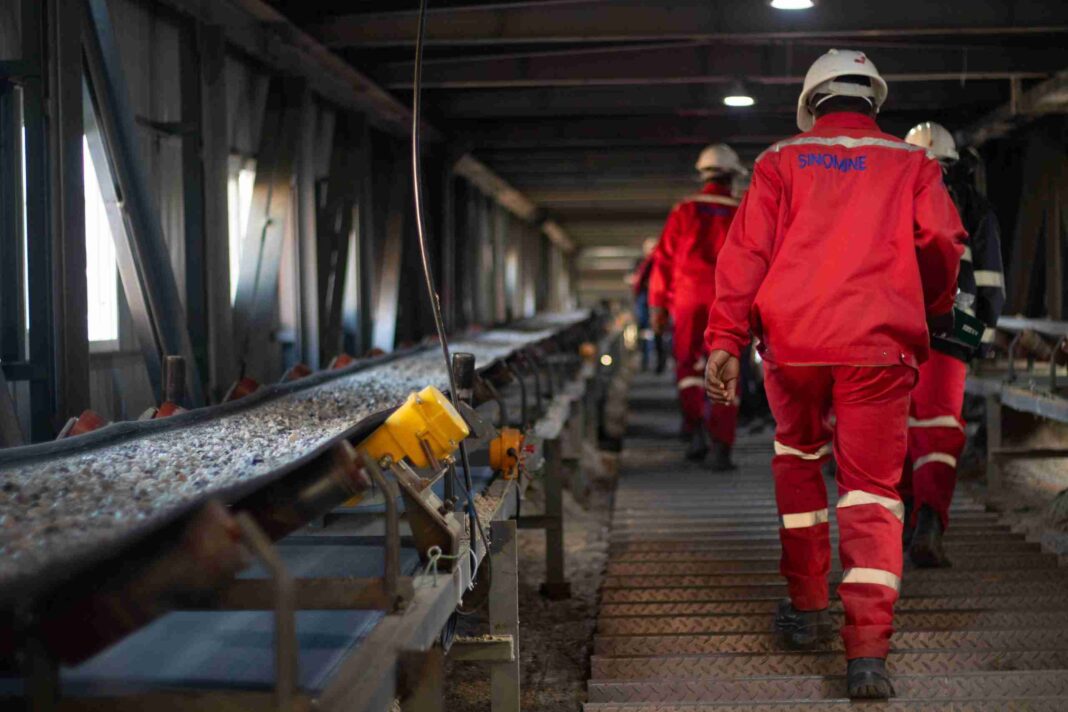
Alongside Yahua, other Chinese firms including Chengxin Lithium and Sinomine Resources have reportedly been granted export quotas, reflecting the continued centrality of Chinese capital and technical expertise in Zimbabwe’s mining sector. At the same time, companies such as Huayou Cobalt, also active in the country, have indicated that they are awaiting further clarification from authorities regarding their export status.
These developments occur within a broader African context in which governments are reassessing how mineral wealth is governed and distributed. Zimbabwe’s approach echoes similar policy debates in countries such as Namibia and the Democratic Republic of Congo, where export restrictions and local processing requirements are being considered or implemented. The African Union’s Africa Mining Vision, accessible at https://au.int/en/documents/20120601/africa-mining-vision, has long advocated for such strategies, emphasising the importance of value addition and industrialisation on the continent.
From a regional perspective, the introduction of export quotas can be seen as part of a gradual recalibration rather than a rupture. While foreign investors remain integral to the development of large scale mining projects, there is increasing emphasis on partnership models that deliver tangible benefits within African economies. This includes employment, infrastructure development, and the establishment of downstream industries linked to battery manufacturing and renewable energy technologies.
At the same time, the policy shift raises practical questions about implementation capacity, regulatory consistency, and the potential impact on investor confidence. Industry observers note that clarity and predictability will be essential to ensure that Zimbabwe continues to attract investment while advancing its beneficiation objectives. Information on Zimbabwe’s mineral export regulations and policy updates is also available through the Zimbabwe Investment and Development Agency at https://www.zidainvest.com/.
For communities in mining regions such as Matabeleland North, where Kamativi is located, the stakes are both economic and social. The promise of local processing carries the potential for job creation and skills development, yet it also requires sustained investment in infrastructure, energy supply, and environmental management. These local realities form an essential part of the broader narrative, grounding policy decisions in lived experience.
As global demand for lithium continues to grow, driven by the expansion of electric vehicles and energy storage systems, Zimbabwe’s policy choices will likely resonate beyond its borders. The current quota system represents an attempt to navigate complex interdependencies between global markets and national development priorities. Its outcomes may offer lessons for other African producers seeking to assert greater agency within the evolving landscape of critical minerals.