

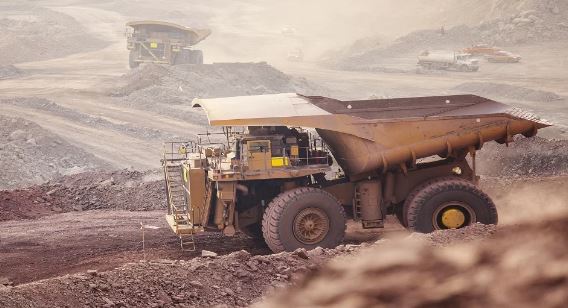
Namibia has, for decades, occupied a distinctive place within Africa’s extractive industries, anchored by uranium and diamonds yet increasingly characterised by diversification into a broader suite of mineral resources. Recent developments suggest that the country is consolidating its position not merely as a resource rich state but as a strategically significant participant in global supply chains linked to energy transition and industrial demand.
The Southern African Times understands that Namibia remains one of the world’s leading uranium producers, typically ranked behind Kazakhstan and Canada, with major operations such as the Rössing mine and the Husab and Langer Heinrich projects forming the backbone of this sector. According to the World Nuclear Association, uranium exports from Namibia supply energy markets across Europe, North America and Asia, reinforcing the country’s role within global nuclear energy systems.
While uranium continues to underpin mining investment, attention has increasingly shifted toward copper, gold and other critical minerals. Exploration activity along the Kaoko Belt in north western Namibia, which extends into southern Angola, has attracted junior mining companies seeking large scale copper deposits. Geological surveys and historical production in the broader region, including the Tsumeb mine, indicate the presence of high grade mineralisation, though much of the belt remains underexplored.



Gold production has also expanded in recent years. The development of the Otjikoto mine and continued operations at Navachab have demonstrated the viability of Namibia’s gold sector, with the Chamber of Mines of Namibia noting sustained output and ongoing exploration across the Damara Belt. Newer projects, including Twin Hills and Kokoseb, point to further resource potential, although these remain at varying stages of development.
Beyond precious and base metals, Namibia is positioning itself within the global discourse on critical minerals. Lithium, rare earth elements and other inputs essential to renewable energy technologies are being explored, particularly in the Erongo region. This aligns with broader continental trends, where African states are seeking to leverage mineral endowments to participate more actively in value chains associated with decarbonisation and industrial transformation.
Institutional factors continue to shape Namibia’s attractiveness to investors. The country is frequently cited for its relatively stable governance framework, established mining legislation and functioning infrastructure. The Fraser Institute Annual Survey of Mining Companies has historically ranked Namibia among Africa’s more favourable jurisdictions, although recent policy debates have introduced a degree of uncertainty. Proposals related to increased local ownership in mining ventures, alongside regulatory scrutiny of licence retention and environmental compliance, have prompted discussion within industry and government.
Authorities have since clarified that empowerment objectives are intended as policy directions rather than rigid requirements. This reflects a broader balancing act seen across the continent, where governments seek to expand domestic participation in resource sectors while maintaining competitiveness in attracting foreign capital. Namibia’s approach illustrates the complexity of aligning national development priorities with global investment dynamics.

Energy developments further contribute to Namibia’s evolving resource profile. Offshore exploration in the Orange Basin, involving international energy companies, has generated interest in potential hydrocarbon reserves. Although still at an exploratory stage, these activities highlight the interconnected nature of extractive industries and energy markets in the region.
From a pan African perspective, Namibia’s trajectory underscores the diversity of pathways through which mineral rich countries are engaging with shifting global demand. Rather than conforming to a singular narrative of resource dependency, the country presents a more layered picture, combining long standing mining expertise with emerging opportunities in new commodities. This evolution is shaped not only by geology but also by governance choices, regional linkages and changing geopolitical conditions.
In this context, Namibia’s mining sector cannot be understood in isolation. It forms part of a broader southern African ecosystem that includes established copper producers such as Zambia and the Democratic Republic of Congo, as well as emerging exploration frontiers. The extent to which Namibia can translate geological potential into sustained and inclusive economic outcomes will depend on continued policy clarity, infrastructure development and the capacity to integrate local communities into the benefits of resource extraction.

The current moment therefore reflects both opportunity and constraint. Namibia’s resource base and institutional framework provide a foundation for growth, yet the direction of that growth remains contingent on decisions taken within the country and across the continent. As global demand for critical minerals intensifies, Namibia’s experience may offer insights into how African states can navigate the intersection of natural resources, sovereignty and development in a rapidly changing world.


