Thursday, April 30, 2026
  • Login
The Southern African Times
  • Home
  • Southern Africa
  • Business
    • African Start ups
    • African Continental Free Trade Area
  • Technology
    • Lifestyle
      • Health
      • Culture
      • Food and Drink
      • Entertainment
  • Opinion
  • Sports
  • SAT Jobs
    • Events
  • About Us
    • Advertise with Us
    • Contact Us
No Result
View All Result
  • Home
  • Southern Africa
  • Business
    • African Start ups
    • African Continental Free Trade Area
  • Technology
    • Lifestyle
      • Health
      • Culture
      • Food and Drink
      • Entertainment
  • Opinion
  • Sports
  • SAT Jobs
    • Events
  • About Us
    • Advertise with Us
    • Contact Us
No Result
View All Result
The Southern African Times
No Result
View All Result
Home Opinion

OPINION | Africa Isn’t Failing Democracy — The Narrative Is

by The Editorial Board
April 6, 2026
in Opinion
0
OPINION | Africa Isn’t Failing Democracy — The Narrative Is

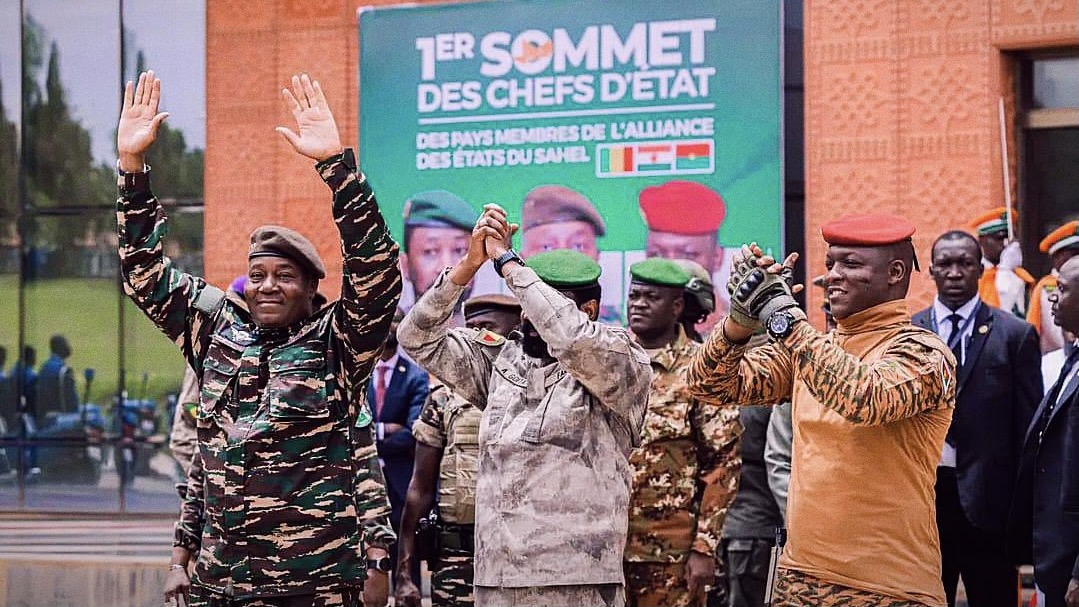
Recent reporting has once again revived a familiar thesis: that Africa has become the epicentre of global democratic decline, driven by coups in the Sahel. A case in point is this Semafor report, which presents the continent as accounting for a disproportionate share of global democratic regression.

It is a claim that reads well. It is also one that wilts under scrutiny.

The first difficulty is conceptual. The article treats Africa as though it were a singular political organism, coherent, uniform, and conveniently summarised. Fifty four countries are reduced to a single trajectory, as though Gaborone and Bamako, Port Louis and Ouagadougou, exist within the same institutional weather system. One struggles to imagine a similar argument applied to Europe without provoking polite laughter. Would democratic strain in Hungary or electoral tensions in Romania justify declaring the entirety of Europe in decline? Or would such reasoning be dismissed as analytically unserious?


ADVERTISEMENT

Africa, it appears, is rarely granted that level of intellectual dignity.

Instead, the Sahel has become shorthand for the continent. Mali, Burkina Faso and Niger, states grappling with insurgency, fragile institutions, and severe security pressures, are elevated from case studies to continental proxies. This is rather like judging the health of a forest by inspecting only its most fire scorched trees.

Beyond this narrow corridor, the picture is considerably less theatrical and far more instructive. Electoral processes continue to operate across much of the continent. Courts assert themselves. Civil society organisations mobilise with persistence, if not always with ease. In Southern Africa, in particular, democratic institutions, however imperfect, retain a quiet but notable resilience. Governments are contested, occasionally defeated, and frequently scrutinised.

These realities are less headline friendly, but they are no less real.

There is also a sleight of hand in the causal logic. Coups are presented as evidence of democratic decline, rather than as symptoms of deeper institutional erosion. Yet in many of the countries cited, democratic legitimacy had already been compromised, elections disputed, governance weakened, public trust depleted. The coup, in such instances, is not the genesis of collapse but its most visible consequence. One might say the fever is being mistaken for the disease.

But perhaps the more revealing issue lies in the language itself.

African governments are routinely described as “regimes”, a term seldom applied with equal enthusiasm to their Western counterparts. Africans who relocate are “migrants”; Europeans and North Americans, performing the same act, are “expatriates”, as though geography confers virtue. Instability in Africa is pathology; elsewhere, it is reframed as populism, polarisation, or, in moments of optimism, democratic recalibration.

These are not neutral distinctions. They reflect a longstanding habit of racialised framing, subtle, persistent, and often unexamined. In a global discourse ostensibly committed to equality and human rights, such asymmetries sit rather awkwardly.

There is, too, an unmistakable irony in the current moment. Africa is admonished for democratic fragility by a world in which democratic systems themselves are under visible strain. From legislative dysfunction in advanced economies to declining public trust across established democracies, the notion that democratic instability is uniquely African requires a certain selective blindness.

None of this absolves African governments of responsibility. Challenges of governance, inequality, corruption, and security are real, and in some cases acute. But they are precisely that, specific, contextual, and varied. They do not coalesce into a single story of continental failure, no matter how convenient that narrative may be.

If anything, what is striking is the persistence of democratic aspiration. Across the continent, citizens continue to vote, to challenge authority, to organise, and to demand accountability. These are not the habits of societies abandoning democracy; they are the instincts of societies engaged in its renegotiation.

And that, perhaps, is the deeper story. Democracy in Africa is not disappearing, it is being contested, adapted, and, in many places, quietly sustained. It does not conform neatly to imported frameworks, nor does it progress in the linear fashion preferred by global indices and annual reports.

The danger of narratives such as the one advanced in the Semafor report is not merely that they are incomplete. It is that they reinforce a long standing habit of seeing Africa not as it is, but as it is expected to be: perpetually in crisis, perpetually catching up, perpetually falling short.

Motsoeneng’s argument is right to draw attention to the seriousness of recent coups. But in elevating them to a continental diagnosis, it confuses visibility with significance. Africa is not democracy’s aberration. It is part of a broader global moment in which democratic systems are being tested, reworked, and, occasionally, misunderstood.

The real deficit, then, may not lie in Africa’s democracies, but in the frameworks used to interpret them.

Until those frameworks evolve, we will continue to mistake complexity for crisis, and nuance for inconvenience.

By the Editorial Board, The Southern African Times

Tags: Africa democracyAfrican politicsdemocracy discoursedemocratic declineglobal inequalitygovernanceInternational relationsmedia biaspolitical analysispostcolonial analysisracial narrativesSahel coupsSemaforSouthern Africa
Previous Post

Is JD Vance’s Hungary Visit About More Than Bilateral Diplomacy

Next Post

Namibia Expands Mining Sector Beyond Uranium into Copper and Gold

The Editorial Board

Related Posts

South Africa Cannot Turn on Africa and Expect to Stand Tall
Opinion

South Africa Cannot Turn on Africa and Expect to Stand Tall

by SAT Reporter
April 27, 2026
Feeding the Future: Why AI and Agriculture Must Work Together
Opinion

Feeding the Future: Why AI and Agriculture Must Work Together

by Sonny Iroche
April 19, 2026
Julius Malema Sentenced to Five Years in Firearm discharge case
Opinion

Malema’s Sentence: A Test of South Africa’s Rule of Law in a Polarized Age

by Kundai Vambe
April 18, 2026
Zambia’s Copper and the Social Cost of Extraction Deals
The Editorial Board

Zambia’s Copper and the Social Cost of Extraction Deals

by Nothando Ndlovu
April 17, 2026
Op-Ed by Yemi Osinbajo, Former Vice President of Nigeria: Africa Is Losing the Iran War
Opinion

Op-Ed by Yemi Osinbajo, Former Vice President of Nigeria: Africa Is Losing the Iran War

by SAT Reporter
April 13, 2026
Next Post
Namibia Expands Mining Sector Beyond Uranium into Copper and Gold

Namibia Expands Mining Sector Beyond Uranium into Copper and Gold

Browse by Category

  • Africa AI
  • African Continental Free Trade Area
  • African Debt
  • African Start ups
  • Agriculture
  • AI Africa
  • Algeria
  • All News
  • Analysis
  • Angola
  • Arts / Culture
  • Asia
  • Botswana
  • BOTSWANA
  • BREAKING NEWS
  • BRICS
  • Burkina Faso
  • Burundi
  • Business
  • Business
  • Business Wire
  • Cameroon
  • Central Africa
  • Chad
  • China
  • Climate Change
  • Climate Changev
  • Community
  • Congo Republic
  • Conservation
  • Côte d’Ivoire
  • COVID 19
  • CRYPTOCURRENCY
  • Culture
  • Democratic Republic of Congo
  • Diplomacy
  • Eastern Africa
  • Economic Development
  • Economy
  • Education
  • Egypt
  • Elections 2024
  • Energy
  • Entertainment
  • Environment
  • Eritrea
  • Ethiopia
  • Europe
  • Fashion
  • Feature
  • Finance
  • Financial Inclusion
  • Food
  • Food and Drink
  • Foods
  • GABON
  • Ghana
  • Global
  • Global Africa
  • Guinea
  • Health
  • Immigration
  • in Southern Africa
  • International news
  • International Relations
  • Investment
  • Ivory Coast
  • Just In
  • Kenya
  • Lesotho
  • Libya
  • Life Style
  • Lifestyle
  • Literature
  • Malawi
  • Malawi
  • Mali
  • Markets
  • Mauritius
  • Middle East
  • Mining in Africa
  • Morocco
  • Mozambique
  • Namibia
  • Niger
  • niger
  • Nigeria
  • North Africa
  • North-Eastern Africa
  • Obituaries
  • Obituary
  • Opinion
  • PARTNER CONTENT
  • Politics
  • Property
  • Racism
  • Rwanda
  • Rwanda
  • SADC
  • SAT Interviews
  • SAT Investigation
  • SAT Jobs
  • Saudi Arabia
  • Senegal
  • Seychelles
  • Somaliland
  • South Africa
  • South Sudan
  • Sports
  • Startup Africa
  • STOCK EXCHANGE
  • Sudan
  • Sustainability
  • Sustainablity
  • Tanzania
  • Technology
  • Telecommunications
  • The Editorial Board
  • The Power Of She
  • Togo
  • Trade
  • Travel
  • Travel
  • Tunisia
  • Uganda
  • Uncategorized
  • Wealth
  • West Africa
  • World
  • World
  • Zambia
  • ZAMBIA
  • Zimbabwe
  • ZIMBABWE

Browse by Tags

#NewsUpdate #SouthAfrica #SouthernAfricanTimes #TheSouthernAfricanTimes AfCFTA africa African Continental Free Trade Area African development African Development Bank African economies African economy African Union Agriculture Angola Botswana Business China Climate change Cyril Ramaphosa Economic Development economic growth energy transition fiscal policy industrialisation Inflation Infrastructure Infrastructure Development International relations Investment Kenya Mozambique Namibia news Nigeria Regional Integration renewable energy Rwanda SADC South Africa Southern Africa sustainable development Tanzania United States Zambia Zimbabwe
ADVERTISEMENT

WHO WE ARE

The Southern African Times is a regional bloc digital newspaper that covers Southern African and world news. The paper also gives a nuanced analysis on news and covers a wide range of reporting which include sports, entertainment, foreign affairs, arts and culture.

Welcome Back!

Login to your account below

Forgotten Password?

Retrieve your password

Please enter your username or email address to reset your password.

Log In

  • Home
  • Southern Africa
  • Business
    • African Start ups
    • African Continental Free Trade Area
  • Technology
    • Lifestyle
      • Health
      • Culture
      • Food and Drink
      • Entertainment
  • Opinion
  • Sports
  • SAT Jobs
    • Events
  • About Us
    • Advertise with Us
    • Contact Us
Are you sure want to unlock this post?
Unlock left : 0
Are you sure want to cancel subscription?