Friday, May 1, 2026
  • Login
The Southern African Times
  • Home
  • Southern Africa
  • Business
    • African Start ups
    • African Continental Free Trade Area
  • Technology
    • Lifestyle
      • Health
      • Culture
      • Food and Drink
      • Entertainment
  • Opinion
  • Sports
  • SAT Jobs
    • Events
  • About Us
    • Advertise with Us
    • Contact Us
No Result
View All Result
  • Home
  • Southern Africa
  • Business
    • African Start ups
    • African Continental Free Trade Area
  • Technology
    • Lifestyle
      • Health
      • Culture
      • Food and Drink
      • Entertainment
  • Opinion
  • Sports
  • SAT Jobs
    • Events
  • About Us
    • Advertise with Us
    • Contact Us
No Result
View All Result
The Southern African Times
No Result
View All Result
Home Mining in Africa

Africa’s Critical Minerals Gain Strategic Attention as Global Competition Intensifies

by SAT Reporter
March 16, 2026
in Mining in Africa
0
Africa’s Critical Minerals Gain Strategic Attention as Global Competition Intensifies

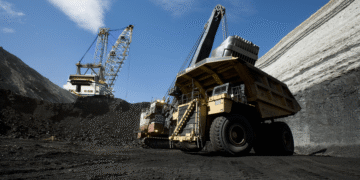
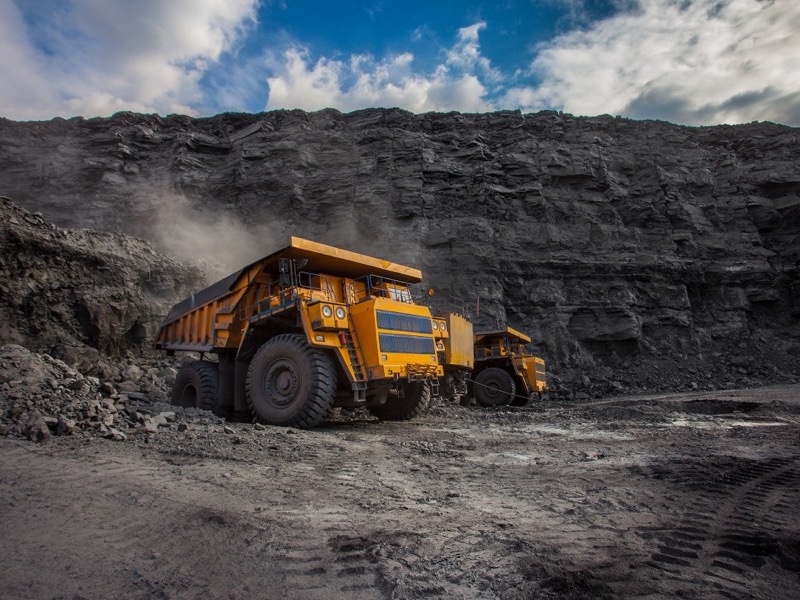
mining dump trucks loaded in a coal mine

Recent reporting in international media has renewed attention on the strategic significance of rare earth elements and other critical minerals as geopolitical tensions reshape global supply chains. Discussions within policy and defence circles in the United States have highlighted concerns about the resilience of its strategic mineral reserves, particularly those used in advanced defence technologies.

Rare earth elements are essential inputs in a wide range of modern military systems, including precision guided munitions, radar technologies, jet propulsion components, advanced communications infrastructure and electronic warfare systems. Their specialised magnetic and electronic properties make them difficult to substitute in high performance defence applications.

Analysts and policy researchers have long observed that global supply chains for these materials are highly concentrated. China plays a central role in the mining, processing and refining of many rare earth elements and related strategic minerals. Several studies on global mineral supply networks indicate that China has developed a dominant position not only in extraction but also in downstream processing, which is often the most technically complex stage of the supply chain.


ADVERTISEMENT

This concentration has periodically generated concerns among governments and defence planners in North America, Europe and Asia regarding the security of supply. Export controls imposed by China on certain dual use materials, including gallium and germanium used in semiconductor and defence technologies, have further intensified debate about the vulnerability of global industrial supply chains.

In this context, the mineral wealth of the African continent has attracted growing international attention. Africa hosts significant reserves of several minerals that are considered critical to both industrial development and the global energy transition. These include cobalt, lithium, manganese, platinum group metals and rare earth elements.

The Democratic Republic of the Congo remains the world’s largest producer of cobalt, accounting for the majority of global supply. Cobalt is widely used in battery technologies as well as specialised alloys and defence related manufacturing. Southern Africa also contains substantial deposits of manganese, platinum group metals and vanadium, all of which have industrial and technological applications.

South Africa has long been recognised as one of the world’s major sources of platinum group metals and manganese, resources that are integral to catalytic technologies, specialised electronics and advanced materials. Namibia and Tanzania have also advanced several rare earth exploration and development projects over the past decade as global demand for critical minerals has increased.

Botswana has recently drawn particular interest following the announcement of a rare earth discovery believed to contain a broad spectrum of the seventeen rare earth elements that are widely referenced in mineral classification systems. Early geological assessments suggest the deposit may also contain associated minerals such as copper, cobalt and nickel, although further exploration and feasibility studies will be required to determine its commercial viability.

For many African governments, the rising global interest in critical minerals presents both opportunities and complex policy considerations. Resource governance, environmental stewardship and value addition within the continent remain central themes in discussions among policymakers, researchers and regional institutions.

Scholars examining Africa’s mineral economies emphasise that the continent’s resource wealth has historically been integrated into global supply chains primarily through the export of raw materials. Increasingly, African governments and regional bodies are exploring strategies aimed at strengthening local beneficiation, industrial development and regional value chains linked to critical minerals.

This shift reflects a broader continental conversation about how natural resources can contribute more effectively to long term economic transformation rather than reinforcing patterns of extractive dependence.

At the same time, international partnerships around mineral development continue to evolve. China has maintained a strong presence in Africa’s mining sector over the past two decades through infrastructure investment, joint ventures and long term extraction agreements. Western governments and multinational companies have also begun expanding engagement with African producers as they seek to diversify supply chains for minerals deemed essential to advanced manufacturing and defence technologies.

The growing strategic importance of rare earth elements and related minerals suggests that Africa’s resource endowment will remain central to global industrial and technological transitions in the coming decades. For African states, the challenge lies not only in supplying these materials to global markets but also in shaping development pathways that ensure the continent derives lasting economic and social benefits from its mineral resources.

Tags: Africa MiningAfrican resource governanceBotswana rare earth discoveryChina rare earth dominancecritical mineralsdefence supply chainsDemocratic Republic of Congo cobaltglobal supply chainsrare earth elementsSouth Africa minerals
Previous Post

Fresh Economic Pressures Emerge for Botswana as Diamond Market Weakens

Next Post

African Women Who Shaped History and Why Their Legacies Continue to Matter

SAT Reporter

Related Posts

Namibia Mining Revenue Surges Despite Output Decline in 2025
Mining in Africa

Namibia Mining Revenue Surges Despite Output Decline in 2025

by SAT Reporter
April 30, 2026
ArcelorMittal reports resilient first quarter with Africa driven mining growth
Mining in Africa

ArcelorMittal reports resilient first quarter with Africa driven mining growth

by SAT Reporter
April 30, 2026
DR Congo to deploy 20,000 strong Mining Guard to reinforce sector governance
Mining in Africa

DR Congo Clarifies Financing Strategy for Planned Mining Guard

by SAT Reporter
April 29, 2026
Zimbabwe Enters Lithium Value Chain with Lithium Sulphate Export
Mining in Africa

Zimbabwe Enters Lithium Value Chain with Lithium Sulphate Export

by SAT Reporter
April 28, 2026
DR Congo to deploy 20,000 strong Mining Guard to reinforce sector governance
Mining in Africa

DR Congo to deploy 20,000 strong Mining Guard to reinforce sector governance

by SAT Reporter
April 28, 2026
Next Post
African Women Who Shaped History and Why Their Legacies Continue to Matter

African Women Who Shaped History and Why Their Legacies Continue to Matter

Browse by Category

  • Africa AI
  • African Continental Free Trade Area
  • African Debt
  • African Start ups
  • Agriculture
  • AI Africa
  • Algeria
  • All News
  • Analysis
  • Angola
  • Arts / Culture
  • Asia
  • Botswana
  • BOTSWANA
  • BREAKING NEWS
  • BRICS
  • Burkina Faso
  • Burundi
  • Business
  • Business
  • Business Wire
  • Cameroon
  • Central Africa
  • Chad
  • China
  • Climate Change
  • Climate Changev
  • Community
  • Congo Republic
  • Conservation
  • Côte d’Ivoire
  • COVID 19
  • CRYPTOCURRENCY
  • Culture
  • Democratic Republic of Congo
  • Diplomacy
  • Eastern Africa
  • Economic Development
  • Economy
  • Education
  • Egypt
  • Elections 2024
  • Energy
  • Entertainment
  • Environment
  • Eritrea
  • Ethiopia
  • Europe
  • Fashion
  • Feature
  • Finance
  • Financial Inclusion
  • Food
  • Food and Drink
  • Foods
  • GABON
  • Ghana
  • Global
  • Global Africa
  • Guinea
  • Health
  • Immigration
  • in Southern Africa
  • International news
  • International Relations
  • Investment
  • Ivory Coast
  • Just In
  • Kenya
  • Lesotho
  • Libya
  • Life Style
  • Lifestyle
  • Literature
  • Malawi
  • Malawi
  • Mali
  • Markets
  • Mauritius
  • Middle East
  • Mining in Africa
  • Morocco
  • Mozambique
  • Namibia
  • niger
  • Niger
  • Nigeria
  • North Africa
  • North-Eastern Africa
  • Obituaries
  • Obituary
  • Opinion
  • PARTNER CONTENT
  • Politics
  • Property
  • Racism
  • Rwanda
  • Rwanda
  • SADC
  • SAT Interviews
  • SAT Investigation
  • SAT Jobs
  • Saudi Arabia
  • Senegal
  • Seychelles
  • Somaliland
  • South Africa
  • South Sudan
  • Sports
  • Startup Africa
  • STOCK EXCHANGE
  • Sudan
  • Sustainability
  • Sustainablity
  • Tanzania
  • Technology
  • Telecommunications
  • The Editorial Board
  • The Power Of She
  • Togo
  • Trade
  • Travel
  • Travel
  • Tunisia
  • Uganda
  • Uncategorized
  • Wealth
  • West Africa
  • World
  • World
  • ZAMBIA
  • Zambia
  • ZIMBABWE
  • Zimbabwe

Browse by Tags

#NewsUpdate #SouthAfrica #SouthernAfricanTimes #TheSouthernAfricanTimes AfCFTA africa African Continental Free Trade Area African development African Development Bank African economies African economy African Union Agriculture Angola Botswana Business China Climate change Cyril Ramaphosa Economic Development economic growth energy transition fiscal policy industrialisation Inflation Infrastructure Infrastructure Development International relations Investment Kenya Mozambique Namibia news Nigeria Regional Integration renewable energy Rwanda SADC South Africa Southern Africa sustainable development Tanzania United States Zambia Zimbabwe
ADVERTISEMENT

WHO WE ARE

The Southern African Times is a regional bloc digital newspaper that covers Southern African and world news. The paper also gives a nuanced analysis on news and covers a wide range of reporting which include sports, entertainment, foreign affairs, arts and culture.

Welcome Back!

Login to your account below

Forgotten Password?

Retrieve your password

Please enter your username or email address to reset your password.

Log In

  • Home
  • Southern Africa
  • Business
    • African Start ups
    • African Continental Free Trade Area
  • Technology
    • Lifestyle
      • Health
      • Culture
      • Food and Drink
      • Entertainment
  • Opinion
  • Sports
  • SAT Jobs
    • Events
  • About Us
    • Advertise with Us
    • Contact Us
Are you sure want to unlock this post?
Unlock left : 0
Are you sure want to cancel subscription?