Tuesday, April 14, 2026
  • Login
The Southern African Times
  • Home
  • Southern Africa
  • Business
    • African Start ups
    • African Continental Free Trade Area
  • Technology
    • Lifestyle
      • Health
      • Culture
      • Food and Drink
      • Entertainment
  • Opinion
  • Sports
  • SAT Jobs
    • Events
  • About Us
    • Advertise with Us
    • Contact Us
No Result
View All Result
  • Home
  • Southern Africa
  • Business
    • African Start ups
    • African Continental Free Trade Area
  • Technology
    • Lifestyle
      • Health
      • Culture
      • Food and Drink
      • Entertainment
  • Opinion
  • Sports
  • SAT Jobs
    • Events
  • About Us
    • Advertise with Us
    • Contact Us
No Result
View All Result
The Southern African Times
No Result
View All Result
Home in Southern Africa Botswana

Fresh Economic Pressures Emerge for Botswana as Diamond Market Weakens

by SAT Reporter
March 16, 2026
in Botswana, in Southern Africa
0
Fresh Economic Pressures Emerge for Botswana as Diamond Market Weakens

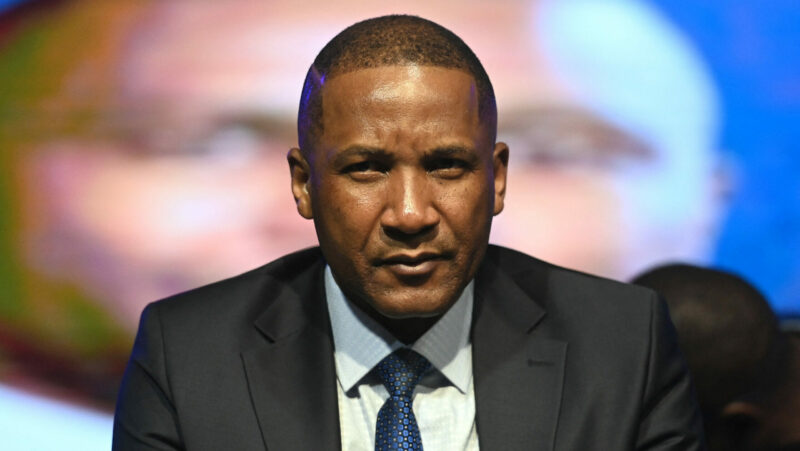
Umbrella for Democratic Change (UDC) presidential candidate Duma Boko watches from the stage during a campaign rally in Gaborone on October 26, 2024, ahead of Botswana's upcoming general election. (Photo by Monirul Bhuiyan / AFP) (Photo by MONIRUL BHUIYAN/AFP via Getty Images)

Botswana, Africa’s leading producer of natural diamonds, is confronting renewed economic pressures following a downgrade of its sovereign credit rating by S&P Global Ratings. The agency recently lowered the country’s long term foreign and local currency ratings from BBB to BBB minus, citing prolonged weakness in the global diamond market and the resulting vulnerability of Botswana’s mineral dependent economy.

The Southern African nation has long been regarded as one of the continent’s most stable and carefully managed resource economies. Since the discovery of diamonds in the late 1960s, Botswana has built a development model in which revenues from mining have funded public services, infrastructure and social programmes. However, the concentration of national income within a single commodity sector continues to expose the economy to fluctuations in global demand and commodity cycles.

Diamonds account for a significant share of Botswana’s economic activity. The sector contributes roughly seventy per cent of the country’s export earnings and around one third of government revenue, largely through the activities of Debswana, the joint venture between the Government of Botswana and De Beers that dominates the country’s diamond production. This structural reliance has historically delivered strong growth but has also heightened sensitivity to global market conditions.


ADVERTISEMENT

S&P Global Ratings stated that the downgrade reflects a sustained downturn in the international diamond market, which has affected production levels and export revenues. According to available industry data, Debswana’s output declined to approximately 17.9 million carats in 2024 and further to around 15.1 million carats in 2025. Production is expected to remain close to 15 million carats in 2026, representing a substantial reduction compared with output levels recorded in 2023.

The global diamond market has been undergoing structural change in recent years. One notable factor is the rapid emergence of laboratory grown diamonds, which have gained market share due to lower prices and evolving consumer preferences. These stones have become particularly visible in segments of the jewellery market where price sensitivity is higher, including engagement rings in key markets such as the United States.

In addition, weaker consumer demand in major jewellery markets, including China and the United States, has contributed to the slowdown in sales of natural diamonds. Economic uncertainty and shifts in luxury spending patterns have also played a role in moderating global demand for polished stones. Industry analysis suggests that such market dynamics can have direct consequences for resource dependent economies where mineral exports represent a large share of national income.

Botswana’s economic trajectory illustrates both the strengths and the limitations of resource led development. The country is frequently cited as an example of prudent mineral governance, having established strong institutions and fiscal frameworks to manage diamond revenues. Yet the concentration of economic activity in the mining sector continues to raise questions about long term resilience and the importance of expanding other productive sectors.

Recent projections reflect the pressures associated with the current downturn. Economic growth is expected to remain modest in the near term, with forecasts suggesting expansion of roughly 2.5 per cent in 2026 following contractions in preceding years. Fiscal balances have also come under strain as declining mineral revenues intersect with rising public spending demands. The fiscal deficit is projected to approach 8.9 per cent of gross domestic product in the 2026 to 2027 financial year.

Beyond short term market conditions, Botswana faces structural challenges that resonate across many resource dependent economies in Africa. These include youth unemployment, the need for expanded industrial capacity, and the importance of developing sectors such as tourism, financial services and manufacturing in order to support broader economic resilience.

The evolving dynamics of the diamond market therefore present both a challenge and a moment of reflection for the country’s economic strategy. While diamonds remain central to Botswana’s global economic identity, policy debates increasingly focus on how the wealth generated by the sector can support broader economic transformation and regional integration within Southern Africa.

Botswana’s experience continues to hold significance across the African continent. It illustrates how natural resources, when governed with strong institutions, can contribute to national development while also highlighting the importance of diversification in a changing global economy. As the diamond industry undergoes technological and market shifts, the country’s policy responses may offer valuable lessons for other mineral rich economies seeking sustainable growth.

Tags: African mining sectorBotswana economyDebswanadiamond industryeconomic diversification Africaglobal diamond marketlab-grown diamondsresource dependent economiesS&P Global RatingsSouthern African economy.
Previous Post

KKR sign Muzarabani as Mustafizur replacement after World Cup surge

Next Post

Africa’s Critical Minerals Gain Strategic Attention as Global Competition Intensifies

SAT Reporter

Related Posts

Namibia Reports Significant Decline in Wildlife Crime Following Intensified Enforcement
Conservation

Namibia Reports Significant Decline in Wildlife Crime Following Intensified Enforcement

by SAT Reporter
April 12, 2026
Zambia Maintains Fertiliser Stability Despite Global Disruptions
in Southern Africa

Zambia Maintains Fertiliser Stability Despite Global Disruptions

by SAT Reporter
April 12, 2026
4,496 South Africans Admitted as US Refugees in Six Months
in Southern Africa

4,496 South Africans Admitted as US Refugees in Six Months

by SAT Reporter
April 12, 2026
Flooding Halts Rail Traffic Along Angola’s Lobito Corridor
Angola

Flooding Halts Rail Traffic Along Angola’s Lobito Corridor

by SAT Reporter
April 12, 2026
Congo Enters Global Capital Markets with 1.25 Billion Dollar Debut Bond Issue
Democratic Republic of Congo

Congo Enters Global Capital Markets with 1.25 Billion Dollar Debut Bond Issue

by SAT Reporter
April 10, 2026
Next Post
Africa’s Critical Minerals Gain Strategic Attention as Global Competition Intensifies

Africa’s Critical Minerals Gain Strategic Attention as Global Competition Intensifies

Browse by Category

  • Africa AI
  • African Continental Free Trade Area
  • African Debt
  • African Start ups
  • Agriculture
  • AI Africa
  • Algeria
  • All News
  • Analysis
  • Angola
  • Arts / Culture
  • Asia
  • Botswana
  • BOTSWANA
  • BREAKING NEWS
  • BRICS
  • Burkina Faso
  • Burundi
  • Business
  • Business
  • Business Wire
  • Cameroon
  • Central Africa
  • Chad
  • China
  • Climate Change
  • Climate Changev
  • Community
  • Congo Republic
  • Conservation
  • Côte d’Ivoire
  • COVID 19
  • CRYPTOCURRENCY
  • Culture
  • Democratic Republic of Congo
  • Diplomacy
  • Eastern Africa
  • Economic Development
  • Economy
  • Education
  • Egypt
  • Elections 2024
  • Energy
  • Entertainment
  • Environment
  • Eritrea
  • Ethiopia
  • Europe
  • Fashion
  • Feature
  • Finance
  • Financial Inclusion
  • Food
  • Food and Drink
  • Foods
  • GABON
  • Ghana
  • Global
  • Global Africa
  • Guinea
  • Health
  • Immigration
  • in Southern Africa
  • International news
  • International Relations
  • Ivory Coast
  • Just In
  • Kenya
  • Lesotho
  • Libya
  • Life Style
  • Lifestyle
  • Literature
  • Malawi
  • Malawi
  • Mali
  • Markets
  • Mauritius
  • Middle East
  • Mining in Africa
  • Morocco
  • Mozambique
  • Namibia
  • niger
  • Niger
  • Nigeria
  • North Africa
  • North-Eastern Africa
  • Obituaries
  • Obituary
  • Opinion
  • PARTNER CONTENT
  • Politics
  • Property
  • Racism
  • Rwanda
  • Rwanda
  • SADC
  • SAT Interviews
  • SAT Investigation
  • SAT Jobs
  • Saudi Arabia
  • Senegal
  • Seychelles
  • South Africa
  • South Sudan
  • Sports
  • Startup Africa
  • STOCK EXCHANGE
  • Sudan
  • Sustainability
  • Sustainablity
  • Tanzania
  • Technology
  • Telecommunications
  • The Editorial Board
  • The Power Of She
  • Togo
  • Trade
  • Travel
  • Travel
  • Tunisia
  • Uganda
  • Uncategorized
  • Wealth
  • West Africa
  • World
  • World
  • ZAMBIA
  • Zambia
  • ZIMBABWE
  • Zimbabwe

Browse by Tags

#NewsUpdate #SouthAfrica #SouthernAfricanTimes #TheSouthernAfricanTimes AfCFTA africa African Continental Free Trade Area African development African Development Bank African economies African economy African Union Agriculture Angola Botswana Business China Climate change Cyril Ramaphosa Economic Development economic growth energy transition fiscal policy food security industrialisation Inflation Infrastructure Development International relations Investment Kenya Mozambique Namibia news Nigeria Regional Integration renewable energy Rwanda SADC South Africa Southern Africa sustainable development Tanzania United States Zambia Zimbabwe
ADVERTISEMENT

WHO WE ARE

The Southern African Times is a regional bloc digital newspaper that covers Southern African and world news. The paper also gives a nuanced analysis on news and covers a wide range of reporting which include sports, entertainment, foreign affairs, arts and culture.

Welcome Back!

Login to your account below

Forgotten Password?

Retrieve your password

Please enter your username or email address to reset your password.

Log In

  • Home
  • Southern Africa
  • Business
    • African Start ups
    • African Continental Free Trade Area
  • Technology
    • Lifestyle
      • Health
      • Culture
      • Food and Drink
      • Entertainment
  • Opinion
  • Sports
  • SAT Jobs
    • Events
  • About Us
    • Advertise with Us
    • Contact Us
Are you sure want to unlock this post?
Unlock left : 0
Are you sure want to cancel subscription?